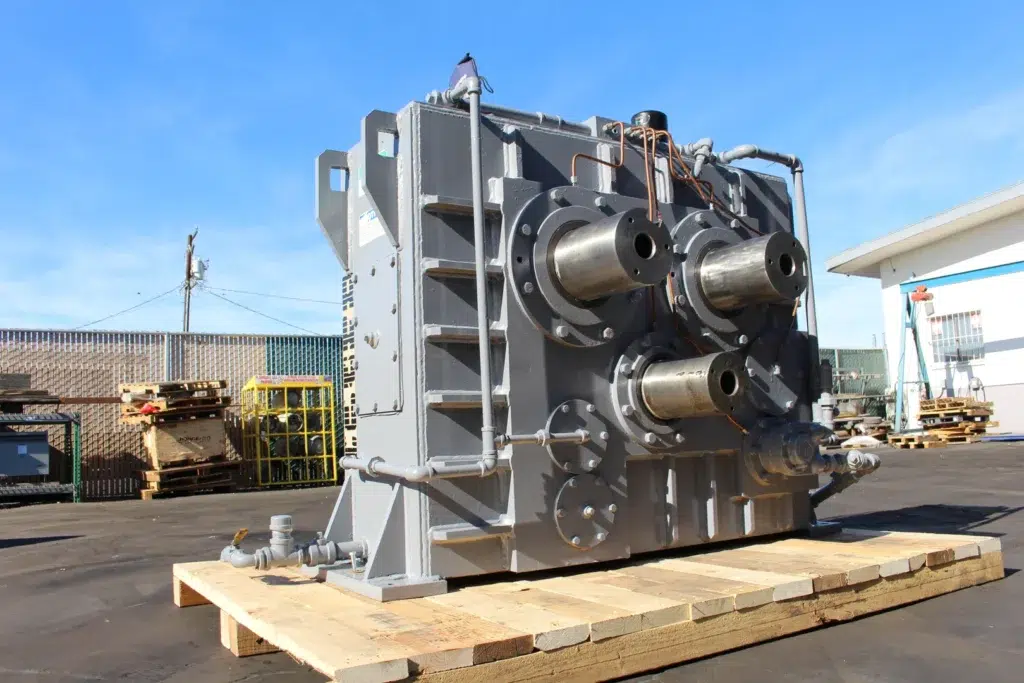
When a Gearbox Bore Fails, Every Hour of Downtime Has a Price Tagla
Line boring 24 hour emergency service exists for one reason: a failed bearing bore in a gearbox housing doesn’t wait for business hours, and neither can your production line.
If you need a fast answer, here is what you need to know:
- What it is: Line boring restores worn, misaligned, or damaged bores inside gearbox housings back to OEM tolerances using precision machining.
- Who needs it: Plant managers and maintenance engineers in mining, pulp and paper, chemical processing, power generation, and marine operations across the Southeast U.S.
- How fast: Specialty Gear Drives offers expedited in-shop line boring with rapid pickup and return logistics for facilities in Florida, Georgia, Alabama, South Carolina, Mississippi, and Louisiana.
- Why it matters: Even minor bore misalignment causes vibration, accelerated gear wear, and bearing failure. Left unaddressed, it compounds into a far more expensive repair or a full gearbox replacement.
- What we do: All line boring work is performed in-house at our Largo, Florida facility under controlled shop conditions, not on a job site, so tolerances stay tight and results are repeatable.
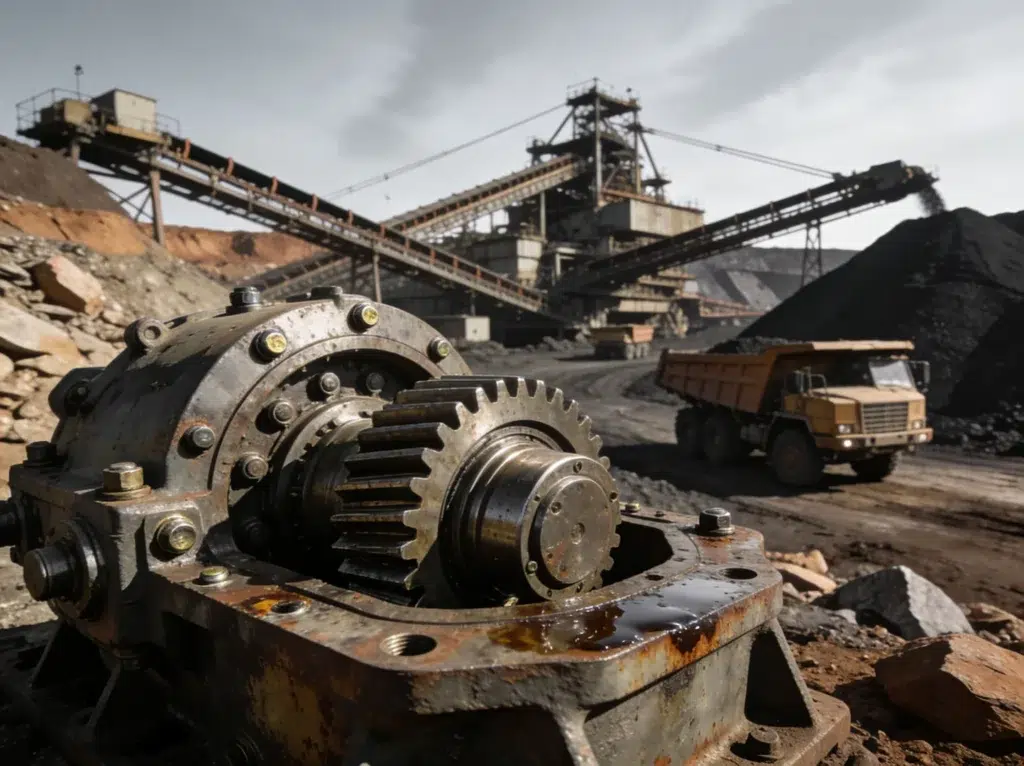
When a bearing bore in a large gear reducer or helical gearbox housing wears out of round, the machine doesn’t just run rough. It starts destroying adjacent components: gears, shafts, seals, and bearings all take the hit. The longer it runs in that condition, the worse the damage gets. In high-demand environments like a conveyor drive on a processing line or a speed reducer feeding a cement mill, that kind of cascading failure can shut down an entire facility.
I’m Peter Clark, and in this guide I’ll walk you through exactly how our team handles emergency line boring repairs, what the process looks like from intake to final inspection, and how we get gearbox housings back to spec as fast as possible.
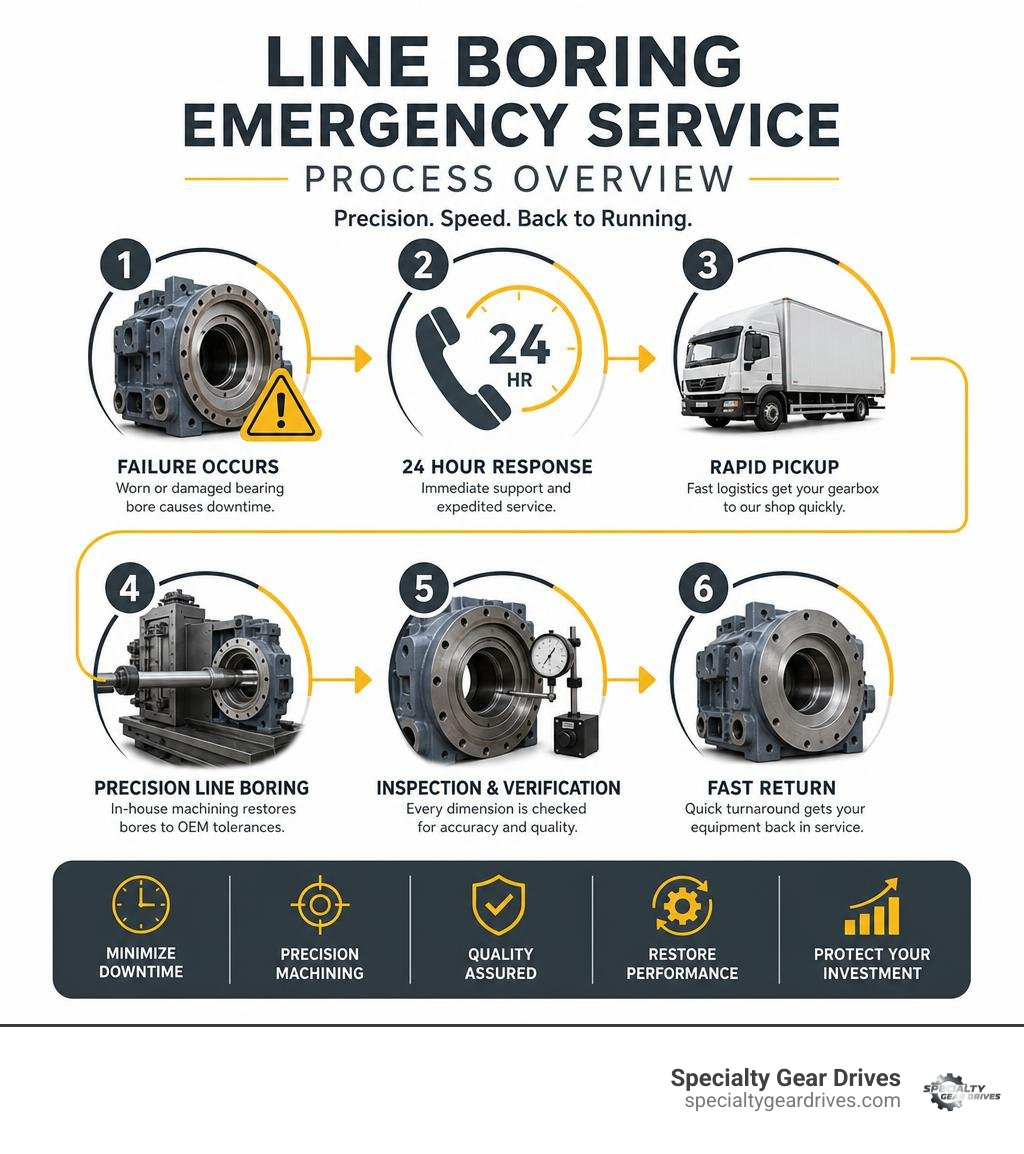
Why Industrial Gearboxes Require Line Boring 24 Hour Turnaround
Industrial gearbox housings must maintain near-perfect structural integrity to support heavy rotating shafts under immense torque. The bearing bores within these housings hold the bearings in precise alignment, ensuring that gear teeth mesh correctly along their designated pitch lines. When a bore undergoes wear or physical damage, the entire shaft shifts, causing severe vibration and rapid gear tooth degradation.
A rapid turnaround is necessary because a compromised bore will quickly destroy a new set of bearings and gears if the housing is not restored first. Standard repair timelines can keep a plant offline for weeks, which is why an expedited in-shop service is the only practical path forward. By utilizing dedicated machining shifts, we can rebuild and machine damaged housings back to original specifications within a fraction of the standard timeframe.
Restoring the housing structure is always a superior choice to running a damaged box to failure. Precision line boring returns the bore to its original concentricity, ensuring that load distribution across the gear teeth remains uniform. This precise restoration is detailed in our guide on The Complete Guide to Line Boring Housing Machining, which explains the mechanics of housing geometry.
Common Causes of Bore Damage in Heavy Machinery
Bore damage typically starts with a primary component failure, such as a bearing seizing or spinning within its pocket. When a bearing fails, the outer race can lock up, causing it to spin against the softer cast iron or steel housing. This friction generates extreme heat, which deforms the bore and wears away the parent metal, leaving an oversized or out-of-round hole.
Poor lubrication, thermal distortion, and heavy operational loads also contribute to structural deformation over time. Under high-vibration conditions, the bearing housing experiences micro-movements that gradually fret the mating surfaces. You can read more about how these forces impact heavy machinery in our analysis of Bore No More How Housing Line Boring Repairs Heavy Equipment.
The Cost of Unplanned Downtime in Industrial Plants
For continuous-production facilities like paper mills, chemical plants, and power generation stations, unplanned downtime is measured in thousands of dollars per hour. A single failed gear reducer on a critical conveyor or pump can halt an entire production line, idling labor and delaying customer shipments. In these scenarios, waiting weeks for a replacement gearbox is financially unacceptable.
Our expedited logistics and fast shop turnaround are designed specifically to mitigate these losses. By pulling the damaged gearbox, transporting it to our Largo facility, and executing a rapid rebuild, we help plants resume operations in days rather than weeks. This approach to minimizing operational losses is covered in our resource on Emergency Gearbox Repair How to Never Worry About It Again.
Our Precision In-House Line Boring Process
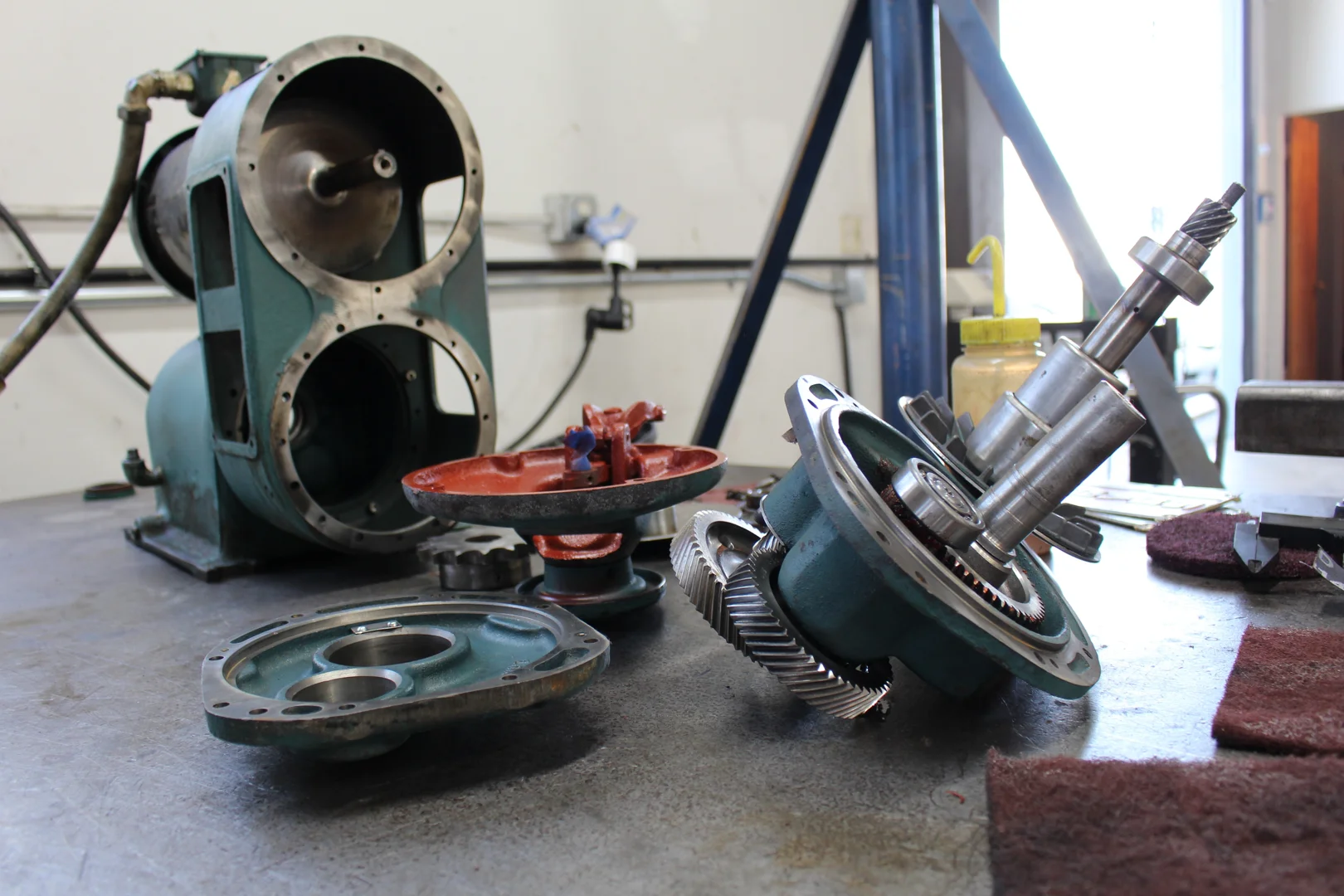
We perform all line boring operations inside our controlled shop environment in Largo, Florida, rather than attempting on-site field repairs. Field machining is highly vulnerable to environmental factors like wind-blown dust, humidity, and temperature fluctuations, which can easily compromise tight machining tolerances. By bringing your gearbox housing to our facility, we ensure that every cut is made under stable, optimal conditions.
Our shop utilizes heavy-duty boring bars, precision dial indicators, and calibrated alignment systems to set up each job. We secure the housing to massive, vibration-dampening setup plates, ensuring that the boring bar is perfectly aligned with the original shaft centerline. This meticulous process is described further in Everything You Need to Know About Line Boring Machining.
How We Achieve Line Boring 24 Hour Turnaround in Our Shop
Our ability to provide rapid turnaround times relies on owning our specialized machining equipment and employing dedicated, highly trained technicians. We do not waste time waiting on third-party equipment rentals or outside contractors. When an emergency gearbox arrives at our Largo shop, our team immediately begins disassembly, cleaning, and inspection.
We utilize heavy-duty portable boring systems, such as the CLIMAX BB5000, mounted to custom shop fixtures to handle boring diameters from 1.5 to 24 inches. For the rebuilding phase, we use automated bore welders like the BORTECH BW1000 to apply consistent, high-quality weld overlays before machining. This integrated setup allows us to move from welding to boring without moving the workpiece, saving valuable hours. For details on preparing your team for this process, see How to Get Emergency Line Boring in 24 Hours.
Rebuilding Parent Metal vs. Sleeve Inserts
When repairing an oversized or damaged bore, we prioritize rebuilding the parent metal over installing sleeve inserts. Sleeve inserts introduce an additional joint interface into the housing, which can act as a point of structural weakness under high-torque, high-vibration conditions. Over time, sleeves can loosen, spin, or fret, leading to a repeat failure of the bearing pocket.
By using automated spiral welding to deposit high-strength filler metal directly onto the worn bore, we restore the housing’s original metallurgical integrity. Once welded, we machine the parent metal back to the exact OEM dimensions, resulting in a seamless, single-piece structure.
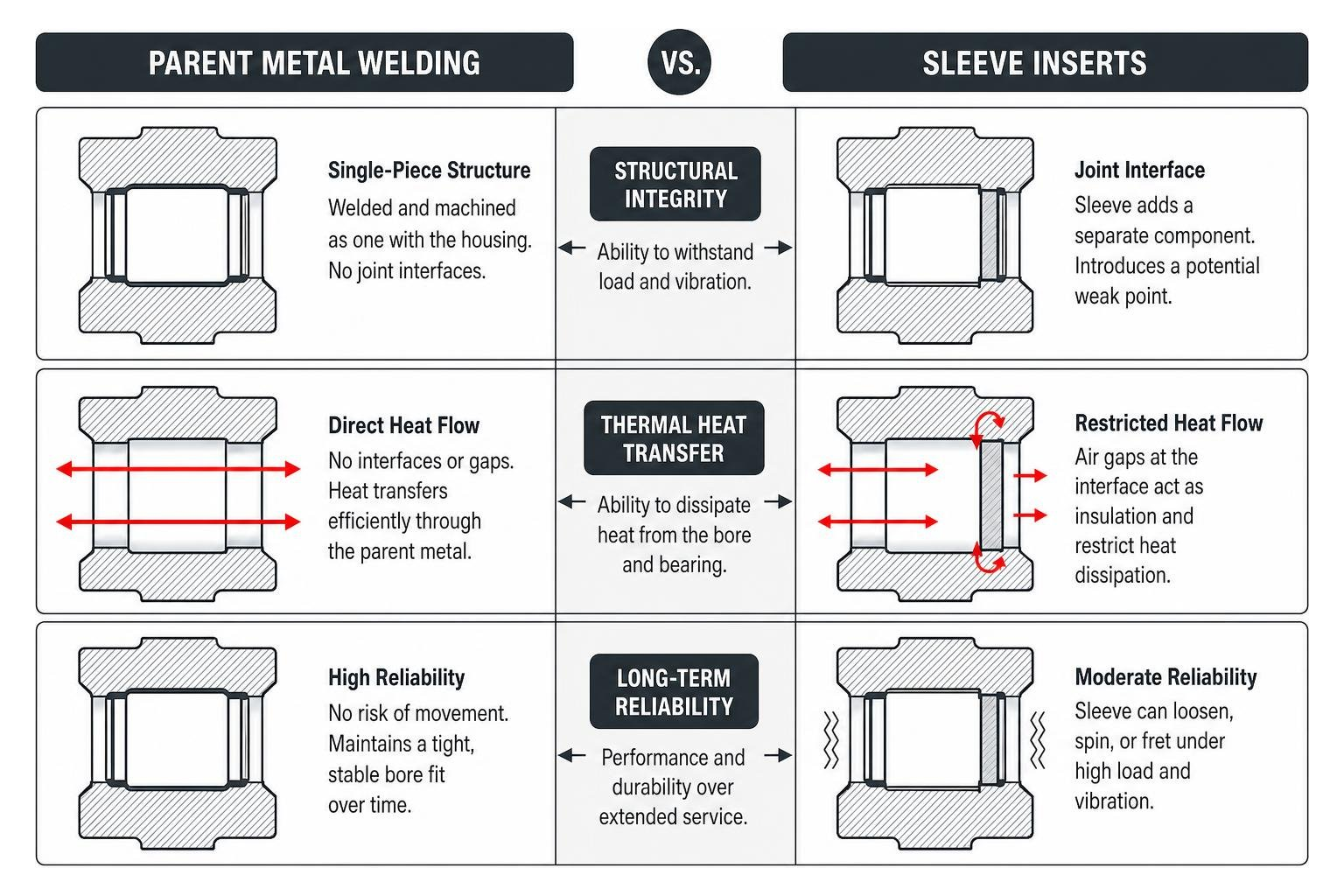
| Repair Method | Structural Integrity | Thermal Heat Transfer | Long-Term Reliability |
|---|---|---|---|
| Parent Metal Welding | Excellent (restores original single-piece housing strength) | Excellent (no joint interfaces to block heat dissipation) | High (no risk of sleeve movement or spinning) |
| Sleeve Inserts | Moderate (adds a joint interface; can introduce weak points) | Poor (air gaps at the interface restrict heat flow) | Moderate (sleeve can loosen or spin under heavy load) |
To understand how our welding processes restore these castings, read our detailed guide on How Gearbox Housing Welding Services Restore Damaged Castings.
Regional Logistics and Rapid Response for the Southeast
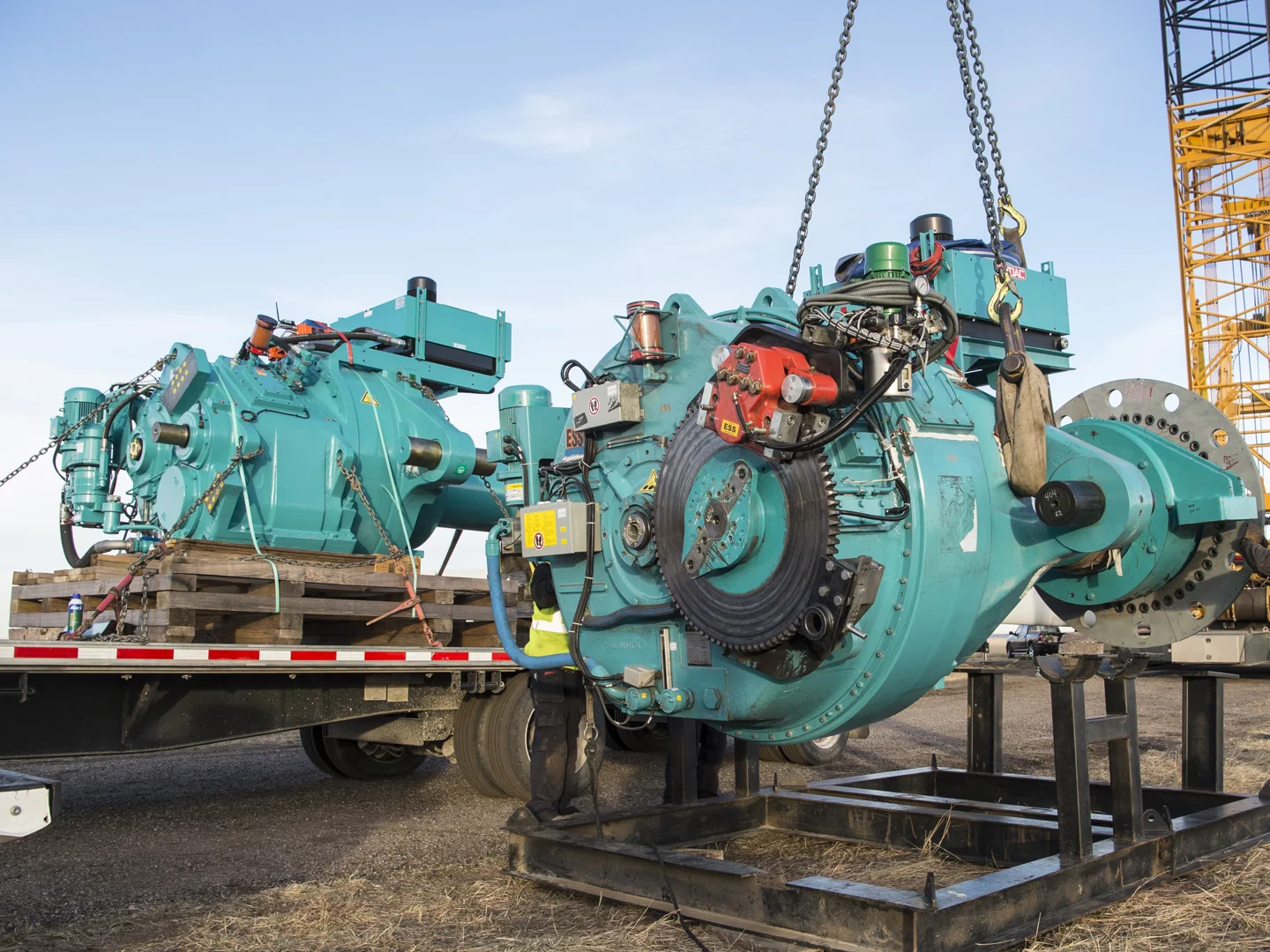
Operating out of Largo, Florida, we provide rapid-response logistics across the entire Southeastern United States, including Georgia, Alabama, South Carolina, Mississippi, and Louisiana. We understand that transporting a multi-ton industrial gearbox is a major logistical hurdle for plant maintenance teams. To eliminate this friction, we manage the entire transport process from start to finish.
We offer free pickup and delivery throughout our service region, utilizing our own fleet of transport vehicles to ensure secure, immediate transit. This regional logistical support is a core component of our The Ultimate Guide to Line Boring Rebuild Services.
Minimizing Downtime with Line Boring 24 Hour Logistics
When you contact us with an emergency, we do not wait for standard freight carriers to schedule a pickup. We dispatch our transport team immediately to your facility to load the damaged gearbox. Our drivers understand the urgency of industrial shutdowns and transport your equipment directly to our Largo facility without unnecessary transit delays.
As of July 2026, our standard emergency workflow guarantees a 24-to-48-hour turnaround once the gearbox arrives at our shop. By combining rapid regional logistics with round-the-clock shop shifts, we dramatically reduce the total time your machinery is offline. Learn more about avoiding costly logistical mistakes in Emergency Gearbox Repair Florida 5 Common Mistakes You Cant Afford to Make.
Frequently Asked Questions About Emergency Line Boring
What is the difference between in-shop and on-site line boring
In-shop line boring is performed within a highly controlled environment, shielded from wind, dust, and temperature swings that can cause metal expansion or contraction during machining. This controlled setting allows us to achieve precision tolerances down to +/-0.0005 inches and maintain perfect concentricity across multiple bores.
On-site line boring, while convenient for non-transportable structural components, is highly vulnerable to field conditions and setup movement. For high-precision industrial gearboxes, bringing the housing to our Largo facility ensures a higher-quality, more reliable repair. You can explore professional housing repair options in Line Boring Gearbox Housing Find Professional Services.
How do you guarantee alignment accuracy during emergency repairs
We guarantee alignment accuracy by using a combination of laser-guided alignment systems, precision dial indicators, and heavy-duty boring bars that resist deflection. Before making any cuts, we verify the centerline alignment against the original OEM specifications to ensure perfect concentricity.
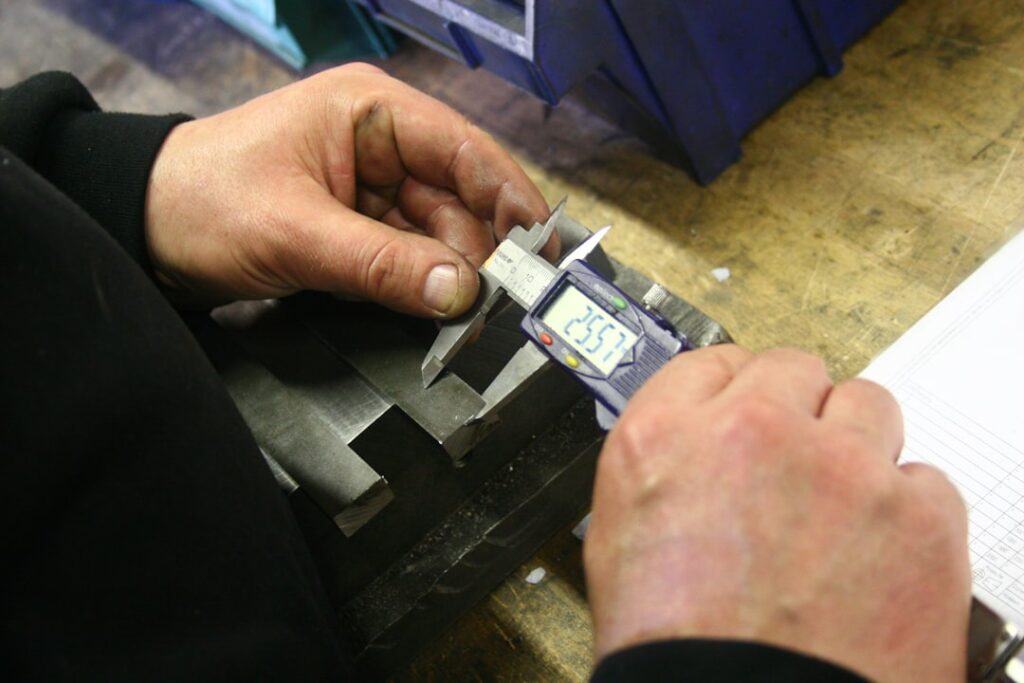
Once the machining passes are complete, we use high-precision touch probes and inside micrometers to verify that the bore diameter and roundness are within hundredths of a millimeter. This double-verification process ensures that your new bearings will fit perfectly with the correct clearance, preventing premature failure.
What industries benefit most from expedited gearbox housing repairs
Pulp and paper mills, chemical processing plants, power generation facilities, mining operations, and marine systems benefit the most from our expedited services. These industries rely on massive, high-torque gear reducers that are incredibly expensive to replace and have long manufacturing lead times.
Our emergency turnaround allows these facilities to restore their existing gearboxes to like-new condition quickly, avoiding the massive capital expense and extended lead times of ordering new equipment.
Conclusion
When a critical gearbox bore fails, Specialty Gear Drives is ready to restore your housing to factory specifications. Operating from our state-of-the-art facility in Largo, Florida, we provide rapid in-shop line boring and comprehensive rebuild services for plants throughout Florida, Georgia, Alabama, South Carolina, Mississippi, and Louisiana.
By managing our own transport fleet, we offer free pickup and delivery, bringing your damaged equipment to our controlled shop and returning it quickly to minimize your downtime. Our repairs can save you up to 60% compared to the cost of buying a new gearbox, and we back our work with an industry-leading 24-month warranty. For reliable, rapid-response support, contact us today through our Industrial Gearbox Repair page.