In-Depth Guide to Nuclear Facility Gearbox Repair Suppliers in Alabama
Finding Gearbox Repair Support for Alabama Nuclear Facilities
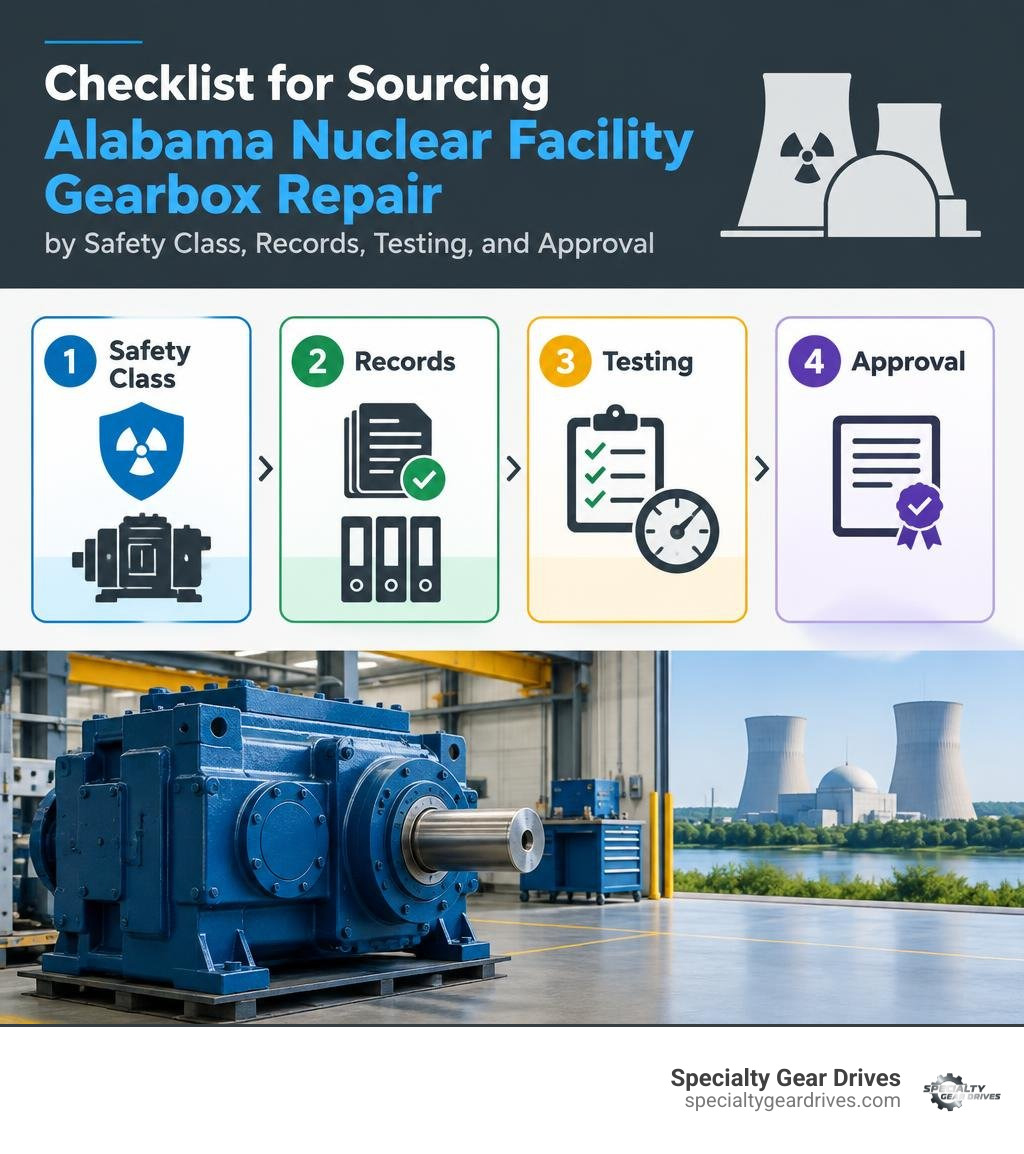
Start with the gearbox’s safety classification, not the repair quote. For a gearbox serving an Alabama nuclear facility, ask the plant’s engineering team for its approved specifications, quality records, and supplier requirements. A drive tied to a safety function may require different controls than a non-safety-related auxiliary drive. Confirm that a repair shop can meet those requirements before sending the unit out.
That distinction matters at plants such as Browns Ferry and Farley, where equipment reliability supports day-to-day operation. When managing maintenance for a nuclear facility gearbox, Alabama plant engineers must verify inspection records, spin-testing procedures, and quality documentation before selecting a repair provider.
I’m Peter Clark, owner of Specialty Gear Drives, where I oversee in-house rebuilding of heavy industrial helical, bevel, and worm gearboxes at our Florida facility. I bring that experience to plant teams evaluating overhaul options for nuclear gear drives across the Southeast.
Helpful Alabama drive repair resources:
- Florida industrial gearbox repair
- gearbox vibration analysis Alabama
- heavy equipment gear overhaul Alabama
Critical Drive Applications and Alabama Nuclear Facility Gearbox Infrastructure
Industrial gear drives in Alabama nuclear power stations transmit mechanical power across continuous-duty cooling loops, auxiliary water circuits, emergency systems, and secondary plant infrastructure. These facilities rely on gearboxes to step down electric motor speeds while multiplying output torque, ensuring critical pumps, fans, and actuators perform within tight design tolerances.
Alabama generates a substantial portion of its clean baseload energy through commercial nuclear generation. The state hosts two operating multi-unit stations:
- Browns Ferry Nuclear Plant (TVA): Located along the Tennessee River near Athens, this three-unit Boiling Water Reactor (BWR) facility provides over 3,400 megawatts of electric output. Units here underwent significant power uprates, placing higher torque and thermal loads on secondary circulating drives, cooling tower fans, and auxiliary fluid pumps.
- Joseph M. Farley Nuclear Plant (Southern Nuclear): Situated near Dothan in Houston County, this two-unit Pressurized Water Reactor (PWR) plant supplies roughly 1,800 megawatts. Operating licenses targeting 60 to 80 years of service demand total mechanical integrity across every drive unit supporting secondary cooling, turbine auxiliary machinery, and standby emergency infrastructure.
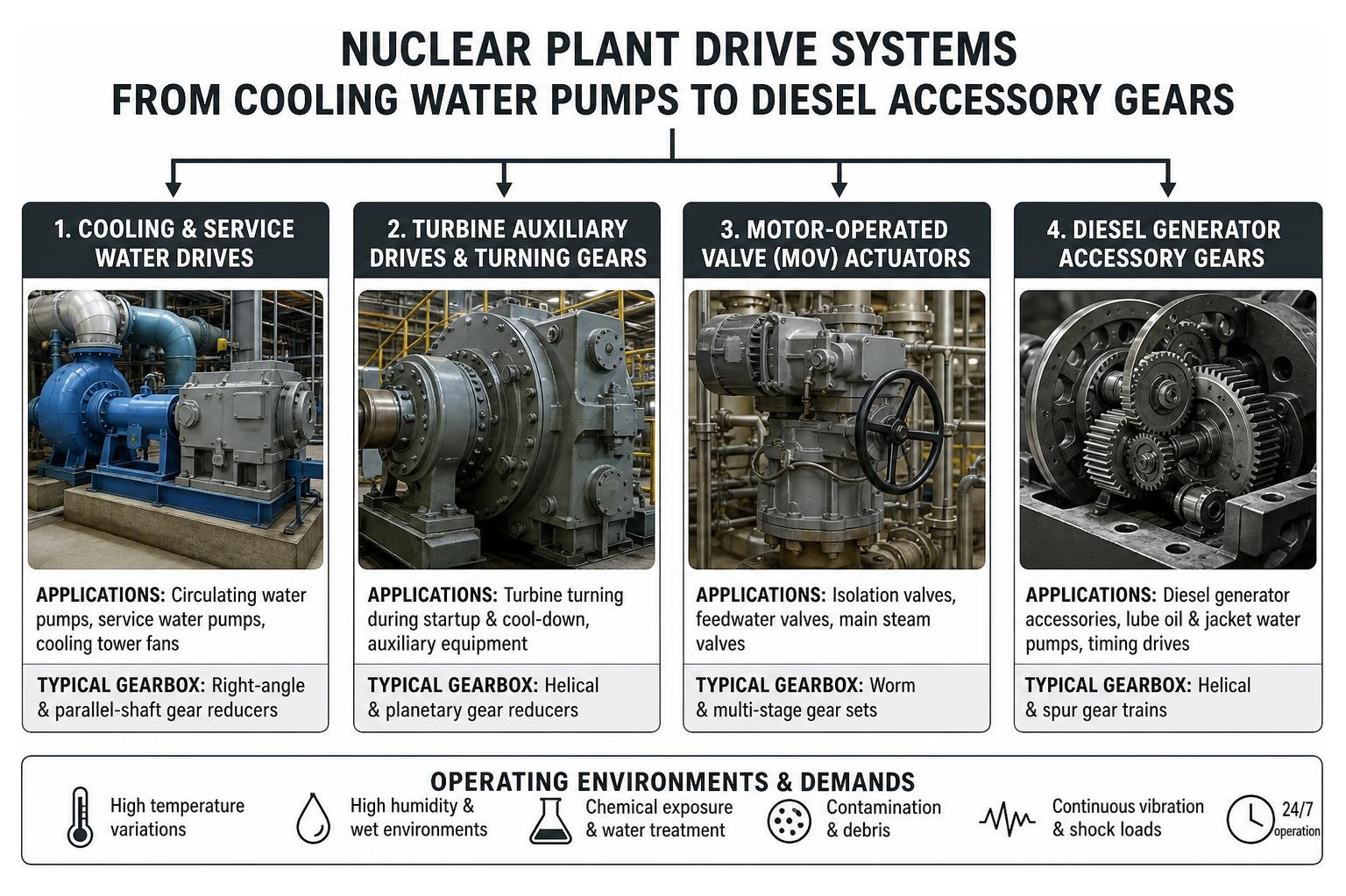
Mechanical equipment in these facilities spans several distinct drive categories:
- Circulating and Service Water Drives: High-capacity right-angle and parallel-shaft gear reducers drive large vertical pumps and induced-draft fans. For deeper background on these wet-environment drives, see our breakdown of cooling tower drive terms in Alabama.
- Turbine Auxiliary Drives and Turning Gears: Heavy helical and planetary reducers provide slow-roll turning during startup and cool-down to prevent thermal distortion of main turbine shafts.
- Motor-Operated Valve (MOV) Actuator Gearing: Worm and multi-stage epicyclic gear sets position containment isolation, feedwater, and main steam valves under severe line pressures.
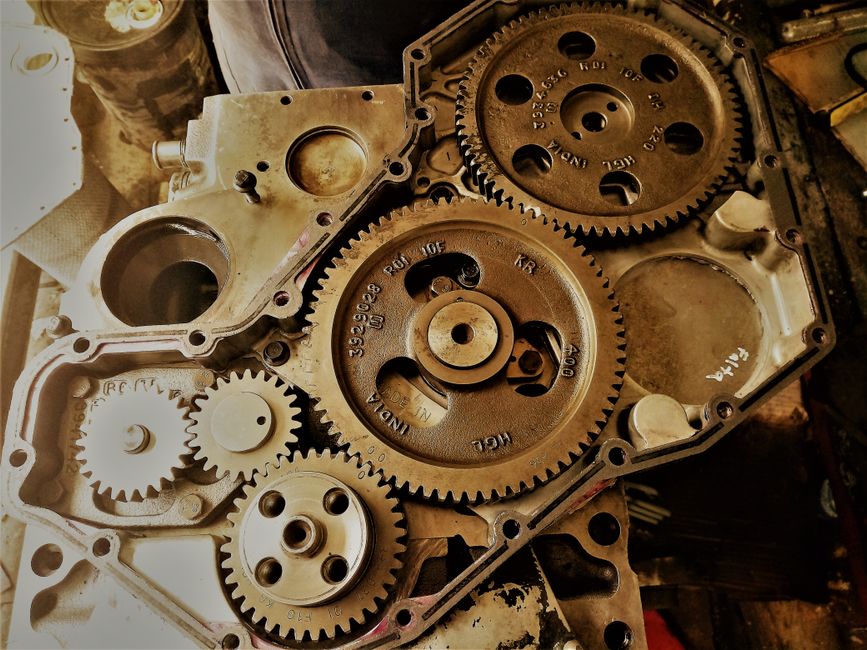
- Standby Diesel Generator Accessory Gearing: Internal timing gears, idler gear trains, and jacket water pump speed reducers transmit emergency mechanical drive power when offsite grid connectivity drops.
When mechanical wear or gear tooth degradation occurs within secondary balance-of-plant systems, relying on comprehensive gear overhaul services in Alabama ensures that units are re-engineered to precise mechanical tolerances.
Operational Demands on Alabama Nuclear Facility Gearbox Units
Nuclear drive units encounter operating environments far more severe than typical manufacturing plants. Gear teeth, bearing races, and input/output shaft journals must withstand:
- High Continuous Duty Cycles: Baseload plants run at capacity factors exceeding 90%, demanding non-stop operation between refueling outages scheduled 18 to 24 months apart.
- Radiation Exposure: Radiation in containment and auxiliary rooms degrades conventional hydrocarbon lubricants and elastomeric seals, necessitating synthetic radiation-tolerant greases and specialized fluoroelastomer compounds.
- Thermal Expansion and Ambient Gradients: Ambient temperatures inside auxiliary buildings frequently exceed 120 degrees Fahrenheit, creating localized case distortion if shaft alignments and bearing endplays are not set correctly.
- Seismic and Dynamic Shock Loads: Housings and mounting configurations must resist torsional shocks and design-basis earthquake spectrums without allowing shaft deflection or gear teeth bind.
- Torsional Vibration: High-torque pumping applications induce severe cyclic stress. Plant engineers routinely rely on vibration analysis services in Alabama to pinpoint early misalignment, unbalance, and bearing distress before gear mesh frequencies shift out of spec.
Differences Between Commercial and Nuclear-Grade Speed Reducers
Safety-related speed reducers differ fundamentally from conventional industrial drives in quality verification, raw material certification, and failure tolerance. While a standard manufacturing gearbox is engineered for standard economic service life, a safety-related nuclear gear unit requires absolute proof of material composition and flawless manufacturing traceability.
| Engineering Parameter | Standard Commercial Heavy Industrial Drive | Nuclear Safety-Related / Critical Gear Drive |
|---|---|---|
| Metallurgical Traceability | Standard mill test reports, batch-level tracking | Certified Material Test Reports (CMTR) tied to specific heats with full chemical and physical verification |
| Quality Assurance Standard | ISO 9001 / Standard shop QA | 10 CFR 50 Appendix B, ASME NQA-1 compliant programs |
| Inspection Rigor | Visual inspection, dial indicator runout checks | 100% NDE (wet fluorescent MPI, ultrasonic shaft scanning), CMM profile metrology |
| Gear Tooth Accuracy | AGMA Class 9–11 (commercial cut/shaved) | AGMA Class 12–14 / ISO Grade 4–6 (precision CNC profile ground) |
| Lubrication Requirements | Standard industrial EP mineral/synthetic oils | Nuclear-qualified, radiation-resistant synthetic lubricants |
| Failure Tolerance | Unplanned downtime managed through plant spares | Zero-tolerance for unmitigated failure; redundant safety paths |
| Documentation Package | Standard repair report and invoice | Comprehensive Certificate of Conformance, dimensional logs, and heat treat charts |
NRC Compliance, Quality Assurance, and Engineering Standards
Gear rebuilding for nuclear facilities demands rigorous documentation and adherence to federal safety frameworks. The Nuclear Regulatory Commission (NRC) enforces strict quality standards through Title 10 of the Code of Federal Regulations.
Every safety-significant component must comply with 10 CFR 50 Appendix B, which governs quality assurance criteria for design, procurement, fabrication, and testing. When defects or machining errors are discovered in safety-related gearing, 10 CFR Part 21 mandates formal reporting across the industry to prevent identical equipment failures at other stations.
For plants updating their licensing bases under 10 CFR 50.71(e), every replacement gear, shaft, or bearing housing must match or exceed original design specifications. Engineering standards follow strict American Gear Manufacturers Association (AGMA) geometry standards and ASME NQA-1 quality assurance requirements.
To review how heavy gear drives are dismantled, mapped, and rebuilt under controlled conditions, see our step-by-step gearbox rebuilding guide.
Maintenance Protocols and Rigorous Shop Rebuilding Procedures
High-reliability rebuilding starts when the unit arrives at our dedicated Florida machine shop. Field teams cannot achieve precision cleanroom assembly on an active plant deck, which is why complete overhauls occur within a climate-controlled shop environment.

Our systematic rebuilding procedure follows strict milestones:
- Incoming Inspection and Nondestructive Examination: Technicians clean the housing, strip internal gear trains, and record as-found backlash and endplay. We perform wet magnetic particle inspection (MPI) on all gear teeth and ultrasonic testing (UT) on input and output shafts to identify subsurface fractures.
- Housing Bore Line Boring and Stress Relief: Gear cases undergo coordinate measuring machine (CMM) dimensional verification. Worn bearing bores are brought back to original factory centerline tolerances via in-house sleeving or precision CNC horizontal boring.
- Precision CNC Gear Re-Manufacturing: Replacement helical, spur, bevel, or worm gears are cut from premium alloy forgings (such as 4340 or 8620 steel), carburized or nitrided, and finish-ground to AGMA Class 13+ standards. Review our detailed overview of precision gearbox rebuild services for details on these machining tolerances.
- Dynamic Spin Testing and Contact Pattern Verification: Once assembled with new bearings and premium seals, the gearbox undergoes full-speed spin testing on our test stand. Engineers check tooth contact patterns with Prussian blue transfer dye under loaded conditions, verifying symmetrical contact across 85% or more of the tooth flank.
Mitigating Common Nuclear Gear Drive Failures
Historical plant data underscores the danger of subtle manufacturing and assembly flaws. A documented NRC Part 21 alert highlighted an incident where shallow tooth root machining on emergency diesel jacket water pump gears caused abnormal double-line contact wear, threatening the reliability of backup power systems across multiple nuclear utilities.
Other common failure modes we resolve during rebuilding include:
- Subsurface Fatigue and Tooth Micro-Pitting: Caused by high cyclic torque and microscopic surface irregularities. We correct this by applying precision tooth crown modifications and CNC profile grinding to eliminate stress concentrations at tooth edges.
- Bearing Sleeve Cracking During Assembly: Over-chilling bearings with liquid nitrogen without precise thermal controls can cause thermal shock cracking. We use controlled induction heating and precision-chilled bore insertion protocols to ensure micro-accurate fits without metallurgical damage.
- Startup Lubrication Starvation: Large gear drives in standby service can drain dry while sitting idle. We engineer auxiliary pre-lube plumbing circuits or spec specialized tackified synthetics to protect upper bearings during rapid startup sequences.
For an extensive analysis of gear tooth wear patterns and failure prevention methods, consult our resource covering everything you need to know about gearbox repair.
Sourcing Nuclear Facility Gearbox Repair and Rebuild Services in Alabama
Managing major equipment overhauls during scheduled refueling outages requires dependable regional logistics. Sourcing a rebuild partner within the Southeast provides significant operational advantages over waiting for distant original equipment manufacturers (OEMs).
Specialty Gear Drives coordinates rapid transport logistics across Alabama, Florida, Georgia, South Carolina, Mississippi, and Louisiana. We provide free pickup and delivery directly from your facility gate to our specialized rebuilding facility in Largo, Florida.
Our expedited turnaround capabilities support planned refueling outages as well as unexpected balance-of-plant mechanical issues. Rather than relying on slow OEM supply chains, our in-house engineering team manufactures custom gearing, restores housings, and delivers rebuilt units back to the station within narrow outage schedules. If an unexpected drive failure threatens plant operations, explore our technical advice on handling emergency gearbox repair without operational disruption.
We also serve heavy industrial plants across neighboring states with dedicated regional services, such as our heavy-duty gearbox engineering solutions in South Carolina.
Lifecycle Economics: Rebuild vs OEM Replacement
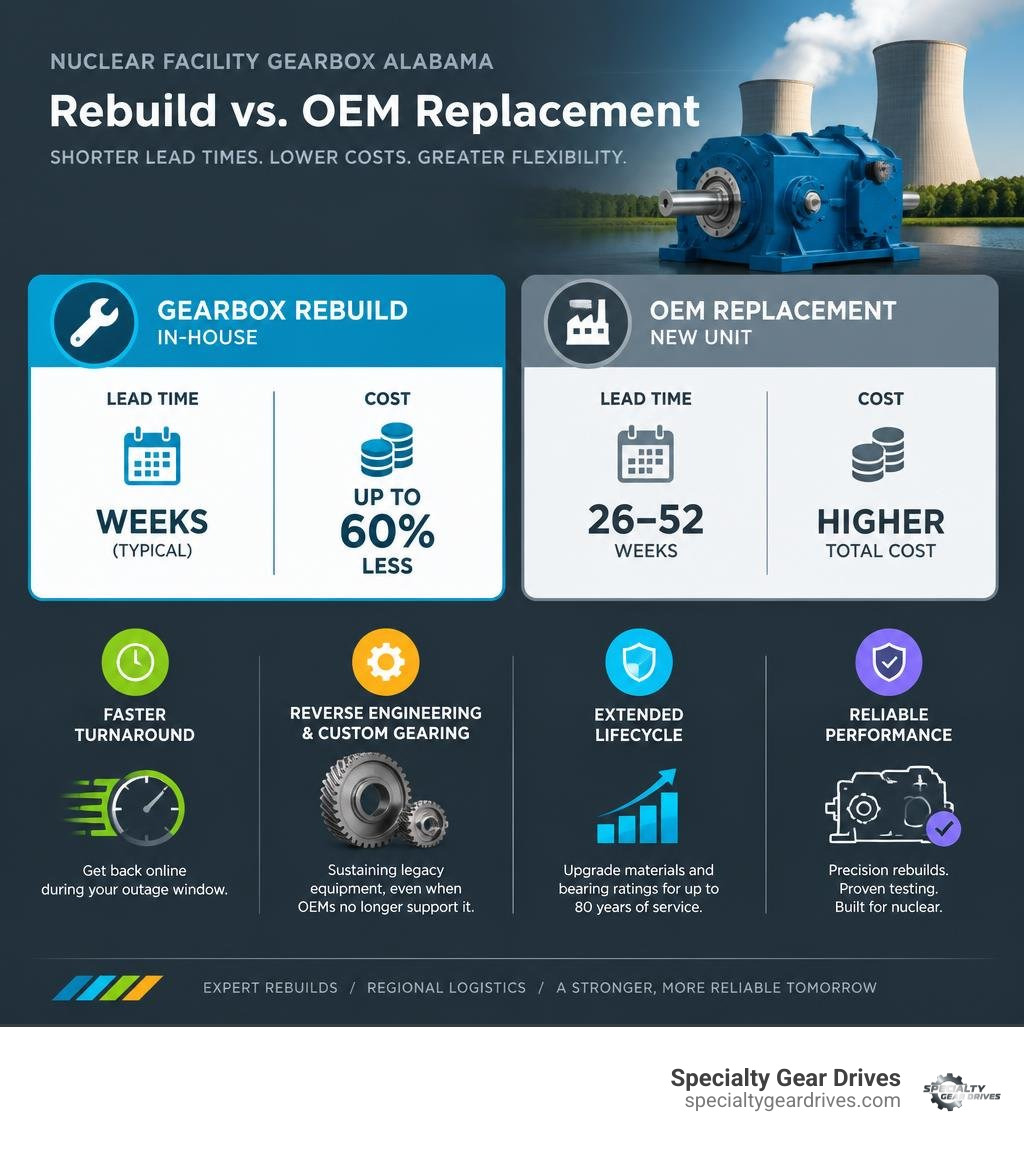
Rebuilding an industrial speed reducer in-house yields up to 60% savings compared to purchasing a new replacement unit from an OEM. For legacy nuclear infrastructure, OEM lead times for complete custom gearboxes frequently stretch from 26 to 52 weeks due to specialized casting and qualification requirements.
Rebuilding delivers significant operational and economic advantages:
- Lead Time Compression: Complete reverse engineering, gear grinding, bearing replacement, and spin testing are typically completed in a fraction of OEM delivery schedules.
- Obsolescence Mitigation: Many legacy gearboxes installed during original plant construction are no longer supported by their original manufacturers. We reverse-engineer obsolete helical, double-enveloping worm, and planetary gear trains directly from sample components.
- Life Extension Alignment: Rebuilding allows engineering teams to upgrade gear metallurgy and bearing load ratings, supporting license renewal extensions up to 80 years.
Every fully rebuilt industrial drive from Specialty Gear Drives includes a comprehensive 24-month operational warranty. Learn how our comprehensive quality process delivers peace of mind in our guide to gearbox rebuilds backed by a 24-month warranty.
Modern Upgrade Considerations for Nuclear Drives
Station modifications and power uprates demand increased performance from auxiliary gear systems. When overhauling legacy gear units, we integrate several modern engineering improvements:
- Advanced Metallurgy and Heat Treatment: Replacing through-hardened gearing with high-grade alloy steels (such as 18CrNiMo7-6 or 8620) that undergo deep carburizing and case hardening to achieve 58–62 HRC surface hardness with a ductile, shock-absorbing core.
- Optimized Tooth Micro-Geometry: Applying tip and root relief, longitudinal crowning, and optimized helix angle corrections to compensate for shaft deflection under full thermal load.
- Synthetic Radiation-Resistant Lubricants: Specifying high-viscosity synthetic PAO (polyalphaolefin) or polyol ester lubricants designed to resist shear breakdown, oxidation, and radiation exposure.
Frequently Asked Questions About Nuclear Gear Drives
What are the main causes of gearbox failure in power plant facilities?
The primary causes of gearbox failure in balance-of-plant power generation equipment include high-cycle gear tooth bending fatigue, bearing cage degradation, lubrication breakdown under high ambient heat, and housing bore misalignment resulting from foundation settling or pipe strain.
Mechanical wear often starts when degraded lubricants fail to maintain an elastohydrodynamic oil film, leading to metal-to-metal contact, scuffing, and progressive micro-pitting. Selecting qualified gearbox repair specialists ensures that every mechanical component is restored to precise AGMA tolerances.
How are nuclear-grade gear drives tested prior to reinstallation?
Before leaving our Florida shop, rebuilt gear reducers undergo rigorous inspection and testing:
- Full-Speed Spin Testing: Running the drive at rated input RPM to monitor bearing operating temperatures, seal integrity, and oil distribution.
- Vibration Spectrum Baseline Analysis: Measuring overall vibration velocity (in/sec RMS) and recording peak acceleration spectra across every bearing location to verify absence of gear mesh harmonics or bearing defect frequencies.
- Infrared Thermal Tracking: Thermographic imaging across the housing to ensure uniform heat dissipation without localized bearing hotspots.
- Contact Pattern Verification: Applying transfer blue paste to verify tooth contact across the active face width under light load.
For more information on diagnostic testing, review our guide to industrial drive repair and reliability standards.
What quality documentation is required for safety-related gear rebuilding?
Safety-related gearbox overhauls require a complete Quality Assurance Documentation Package, which includes:
- Certified Material Test Reports (CMTR) detailing chemical analysis and mechanical tensile/yield properties for all newly manufactured gears and shafts.
- Heat treatment charts showing case depth, core hardness, and surface hardness verification.
- Nondestructive Examination (NDE) inspection reports signed by certified Level II/III inspectors for magnetic particle and ultrasonic testing.
- Precision Coordinate Measuring Machine (CMM) dimensional inspection reports detailing backlash, tooth pitch variation, lead error, and housing bore concentricity.
- Certificate of Conformance (CoC) confirming all work complies with approved procurement specifications and applicable 10 CFR 50 Appendix B and ASME NQA-1 requirements.
Precision Heavy Gearbox Rebuilding for Alabama Industrial and Nuclear Facilities
Maintaining mechanical reliability across Alabama’s power generation infrastructure requires proven engineering capabilities, uncompromising quality controls, and rapid turnaround. Specialty Gear Drives provides complete in-house rebuilding and manufacturing for heavy-duty industrial speed reducers, gearboxes, and custom gear sets.
All machining, gear cutting, CNC grinding, line boring, and dynamic spin testing are performed directly inside our dedicated machine shop in Largo, Florida. We support plant engineers and maintenance managers across Alabama, Florida, Georgia, South Carolina, Mississippi, and Louisiana with free pickup and delivery, rapid shop turnaround for critical outage windows, and up to 60% savings compared to purchasing new OEM equipment. Every rebuilt drive is backed by our industry-leading 24-month operational warranty.
Contact our engineering team today to review your drive specifications or request expedited logistics for your next equipment overhaul through our industrial gearbox repair department.