Line Boring Gearbox Housing: Find Professional Services
What is Line Boring Gearbox Housing and Why is it Critical?
Line boring a gearbox housing is the precision machining process used to restore worn, damaged, or misaligned bearing bores inside a gearbox casting back to their original specifications. If a bearing has spun in its housing, vibration has opened up a bore beyond tolerance, or a housing has distorted over years of thermal cycling, line boring is how you fix it without scrapping the entire unit.
Here is what you need to know upfront:
- What it does: Restores bore diameter, roundness, and alignment to OEM tolerances, typically within 0.001 inch (0.025 mm)
- Where it happens: On-site at your facility or in a repair shop, depending on gearbox size and accessibility
- Who does it: Experienced machinists using portable or shop-based line boring equipment with hydraulic drive systems
- How long it takes: In many cases, two technicians can complete a bore repair in a single shift
- Why it matters: A misaligned or oversized bore causes bearing failure, shaft stress, and eventually a full gearbox seizure that stops your production line
A single failed gearbox bore, left unaddressed, does not stay a bore problem for long. It becomes a bearing problem, then a shaft problem, then a production shutdown. Line boring stops that chain before it completes.
The sections below cover how the process works, what causes housing bores to fail, when on-site repair makes more sense than pulling the unit, and what to look for in a qualified service provider.
Line boring a gearbox housing is a specialized machining process that restores worn or out-of-round bearing bores to their correct alignment and diameter. This procedure is critical because even a tiny misalignment in a heavy-duty speed reducer causes uneven gear tooth contact, rapid bearing wear, and eventual shaft breakage. When we line bore a housing, we are not just making a hole round again. We are correcting its axiality, which means ensuring that the centerline of the bore is perfectly parallel and aligned with all other shaft centerlines in the gear train.
When a gearbox operates under heavy industrial loads, the internal shafts must remain perfectly parallel or perpendicular, depending on the gear design. If a bearing bore wears out by even a few thousandths of an inch, the shaft shifts. This shift alters the gear mesh, concentrating immense forces on the edges of the gear teeth rather than distributing the load evenly across the tooth face. The result is rapid gear tooth pitting, chipping, and eventual catastrophic tooth breakage.
By utilizing precision machining to restore OEM tolerances, we eliminate this misalignment at the source. The process involves inserting a straight, rigid boring bar through the housing, securing it with specialized bearing supports, and rotating a cutting tool to shave away microscopic layers of metal. This restores the bore to a perfectly round shape that is concentric with the rest of the gearbox geometry. To understand more about how this process saves heavy machinery from the scrap heap, you can read about the details in Bore No More: How Housing Line Boring Repairs Heavy Equipment.
Common Causes of Gearbox Housing Bore Damage
Gearbox housing bore damage is primarily caused by spun bearings, structural vibration, and thermal distortion of the cast housing during operation. When a bearing outer ring slips and rotates within its seat, it quickly wears away the metal, destroying the interference fit required for stable operation. This loss of fit allows the bearing to walk inside the housing, compounding the wear with every rotation of the shaft.
Heavy industrial gearboxes operate in harsh environments where they face several destructive forces:
- Spun bearings: If a bearing seizes or loses its lubrication, the shaft forces the outer race of the bearing to spin inside the cast housing, gouging the bore.
- Thermal cycles: Over years of starting, stopping, and running at high temperatures, cast iron and cast steel housings release internal casting stresses, which leads to physical distortion of the bores.
- Abrasive contamination: Coal dust, cement particles, or metal shavings can migrate into the bearing seats during maintenance or seal failures, acting as an abrasive paste that grinds down the housing.
- Structural vibration: Unbalanced loads or poor foundation mounting create cyclic stresses that deform the bearing pockets over time, turning perfectly round bores into oval shapes.
When these issues occur, the parent metal must be restored before machining can begin. If the bore has lost too much material, we cannot simply machine it larger without using an oversized bearing, which is rarely a viable option. Instead, we must build the worn area back up to size. This is where advanced welding techniques come into play, allowing us to deposit fresh metal into the worn pocket. To see how we repair these damaged castings before the final machining stage, take a look at How Gearbox Housing Welding Services Restore Damaged Castings.
On-Site vs. Shop-Based Gearbox Housing Repair
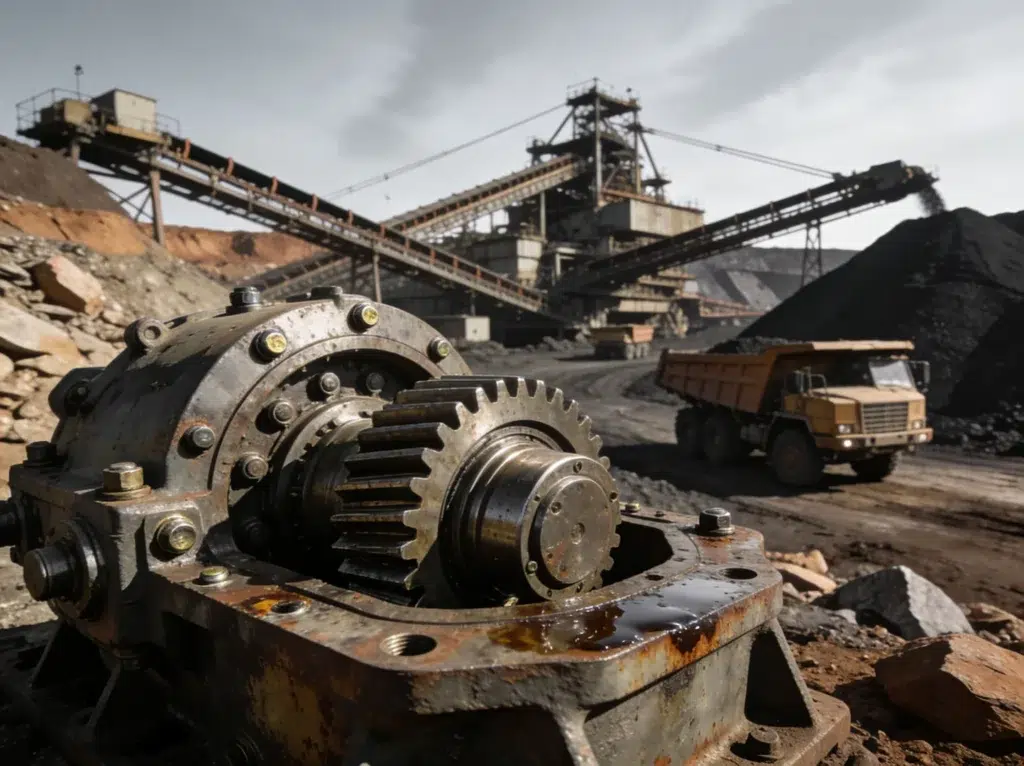
Choosing between on-site line boring and shop-based repair depends on the size of the gearbox and the feasibility of transporting the unit. On-site machining eliminates the high logistics costs and downtime associated with complete disassembly and transport, while shop-based repair offers a fully controlled environment for complex overhauls. For massive gear reducers used in mining, marine propulsion, or cement production, removing the gearbox from the facility is incredibly difficult and expensive.
| Feature | On-Site Line Boring | Shop-Based Repair |
|---|---|---|
| Logistics & Transport | None; equipment is brought to the machine | High; requires heavy rigging, cranes, and trucking |
| Downtime | Minimal; often completed in a single shift | High; includes transit time and shop scheduling |
| Disassembly Required | Partial; only the shaft and bearings are removed | Full; the entire gearbox must be stripped and cleaned |
| Environmental Control | Moderate; subject to plant or vessel conditions | Excellent; clean room assembly and stable temperatures |
| Best Suited For | Oversized gearboxes, marine vessels, integrated machinery | Small to medium gearboxes, total rebuilds, severe housing cracks |
On-site line boring utilizes portable boring bars and modular mounting systems that bolt directly to the gearbox housing. This means we can perform precision machining right on the factory floor or inside a ship’s engine room. By keeping the housing in place, we preserve the original mounting alignment to the electric motor and driven equipment, eliminating the need for complex realignments during reinstallation.
If you are trying to decide which route is best for your specific breakdown, it helps to weigh the logistical challenges of moving heavy machinery. You can explore your options further by reading Don’t Grind Your Gears and Find the Best Gearbox Repairing Near Me.
The Technical Process of Precision Line Boring

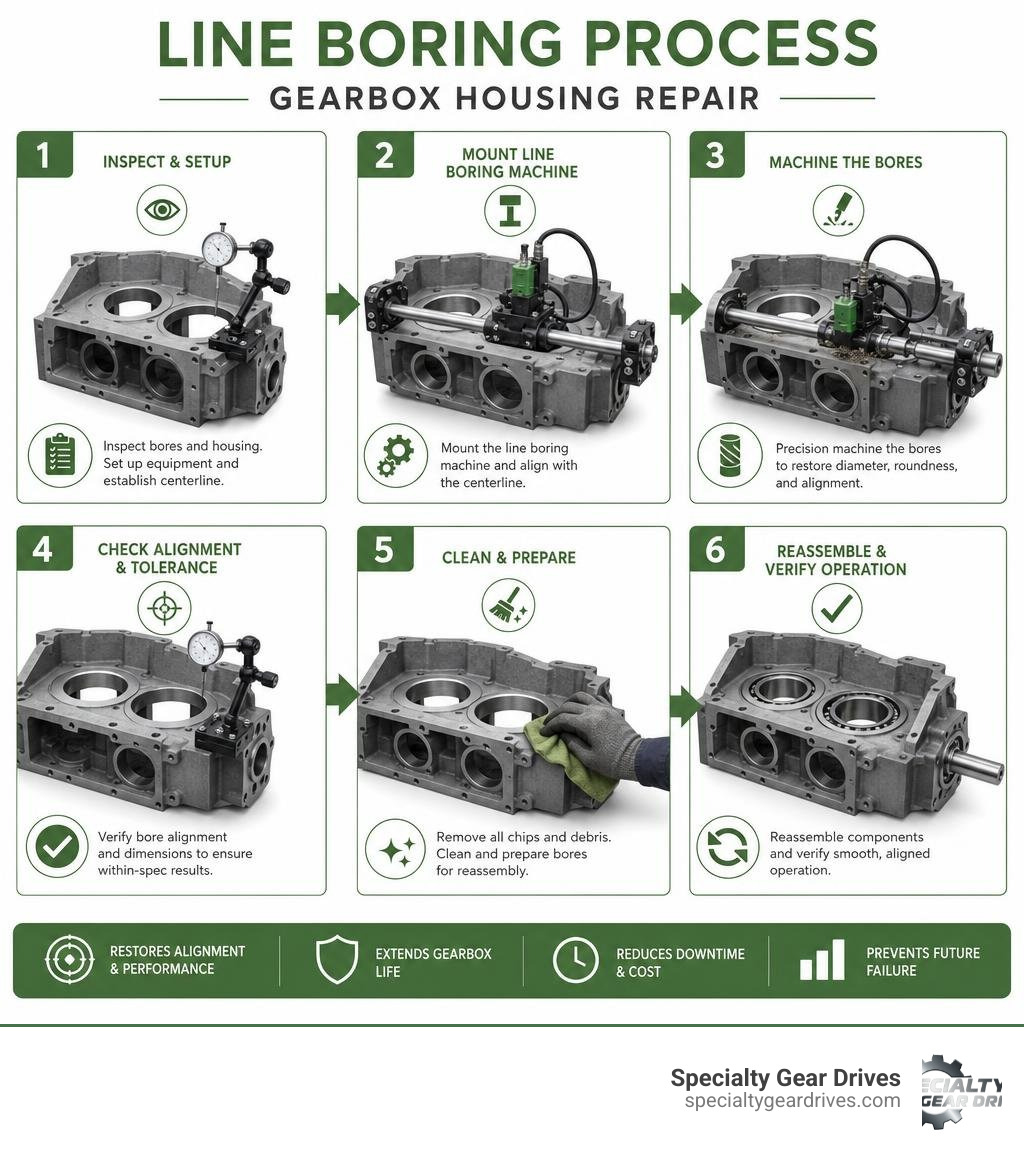
The technical process of precision line boring begins with rigid mounting of custom fixture plates to the gear case to establish a stable foundation for the boring bar. Technicians align the bar using spherical bearings or laser systems, then execute controlled machining passes to restore the bore diameter. This requires specialized, heavy-duty equipment capable of delivering high torque at low speeds to prevent tool chatter and ensure a smooth surface finish.
First, we clean and inspect the damaged housing. If the bore is severely worn, we perform automated bore welding to build up the parent metal with a compatible alloy. Once the welding is complete, we mount the portable line boring machine. We use high-rigidity setup fixtures and spherical taper-lock bearings that can accommodate slight misalignments during the initial setup phase.
For large industrial gearboxes, we use powerful hydraulic power units. A machine like the CLIMAX BB6100 can handle bore diameters from 8.8 to 40.8 inches, delivering up to 1,435 ft-lb of torque at the bar. This immense torque allows us to cut through tough, work-hardened weld metals and cast steel housings without stalling.
The machining process itself consists of several steps:
- Roughing cuts: We remove the bulk of the excess weld metal, bringing the bore close to the target diameter.
- Finishing cuts: We reduce the feed rate and depth of cut to achieve the final dimension and the required surface finish.
- Facing and chamfering: We use specialized facing attachments to machine the thrust faces of the housing, ensuring they are perfectly square to the bore centerline.
This integration of welding and machining is what makes the repair seamless. If you want to understand the relationship between building up worn metal and machining it back to precision tolerances, read The Art of the Weld: How to Build Up and Repair Worn Shafts.
Frequently Asked Questions about Gearbox Line Boring
What tolerances are achieved during line boring gearbox housing projects?
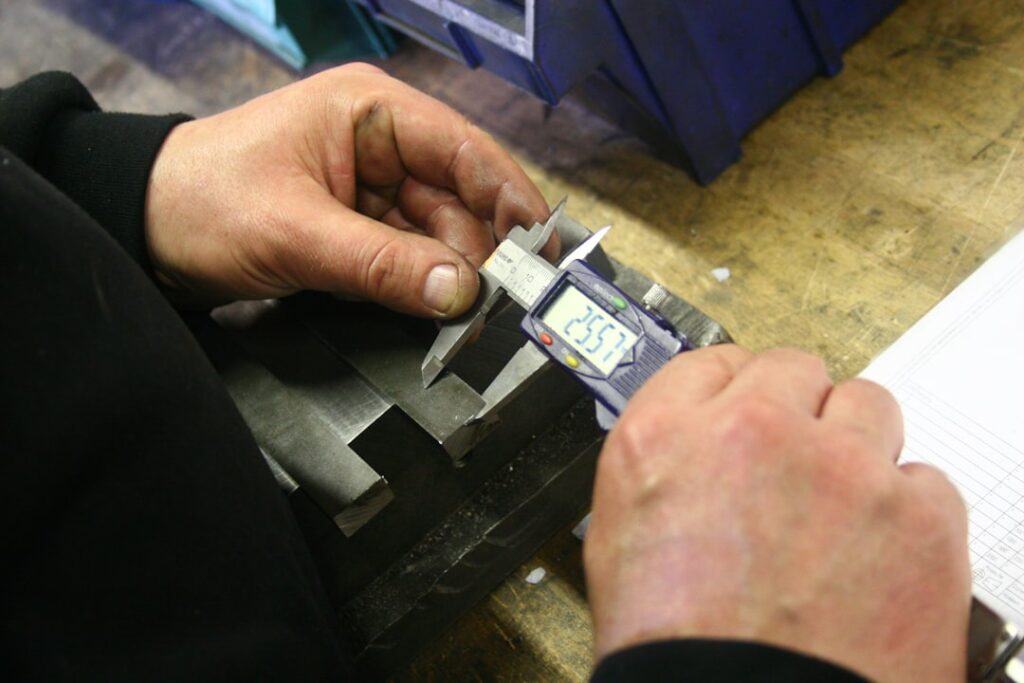
Precision line boring can restore gearbox housing bores to within 0.001 inch (0.025 mm) of OEM tolerances. This level of accuracy is verified using specialized dial calipers, inside micrometers, and tool positioners to ensure the final bore is perfectly round and free of taper.
Achieving this precision requires extreme rigidity in the boring bar setup. Any flex or vibration in the bar will cause chatter marks and dimensional errors. By placing support bearings as close as possible to the cutting tool and using induction-hardened, chrome-plated steel bars, we can hold these tight tolerances even on deep, hard-to-reach bores.
How do technicians ensure alignment when line boring gearbox housing assemblies?
Technicians ensure perfect alignment by taking reference measurements from undamaged forward and aft bores using dial indicators or laser alignment systems. This establishes a highly accurate centerline across all bearing pockets in a multi-shaft gear train before machining begins.
We use custom-manufactured fixture plates bolted directly to the gear case. By sweeping the undamaged bores with a dial indicator mounted on the boring bar, we can adjust the end-mount bearings until the bar is perfectly centered. Once the bar is locked in place, any cuts made along that line will be concentric with the original design of the gearbox.
What materials are used to sleeve or rebuild worn gearbox bores?
Worn gearbox bores are typically rebuilt using bore welding with compatible steel alloys or by machining the bore oversize to accept a custom-machined sleeve or cast iron liner. The replacement sleeve is installed with a precise interference fit to ensure it remains locked inside the parent housing.
When sleeving a bore, we machine the housing to a clean, oversized diameter. We then turn a sleeve from mild steel or cast iron, making the outside diameter slightly larger than the machined housing bore. By cooling the sleeve with liquid nitrogen or heating the housing, we shrink or expand the metals to slip the sleeve into place. Once the temperatures equalize, the heavy interference fit locks the sleeve permanently, allowing us to perform the final line boring pass to the exact bearing specification.
Conclusion
Restoring a damaged gearbox housing through precision line boring is a cost-effective alternative to purchasing a brand-new unit. A professional repair not only saves money but also gets your operations back online far quicker than waiting for an OEM replacement.
At Specialty Gear Drives, based in Largo, Florida, we specialize in complete industrial gearbox overhaul and manufacturing services. We proudly serve heavy industries across Florida, Georgia, Alabama, Mississippi, Louisiana, and South Carolina.
Our key advantages include:
- 24-48 Hour Emergency Service: We know that downtime costs money, which is why our teams are ready to respond to emergency breakdowns immediately.
- Free Pickup and Delivery: We handle the logistics of getting your equipment to our shop and back, taking the hassle out of the repair process.
- Up to 60% Savings: Rebuilding and line boring your existing housing can save you up to 60% compared to the cost of buying a new gearbox.
- 24-Month Warranty: We stand behind our work with an industry-leading 24-month warranty on all of our industrial gearbox repairs.
When a critical gearbox fails, do not let a worn bearing pocket force you into a costly replacement. Contact us to discuss how we can restore your housing to OEM specifications. For more information on our complete capabilities, visit our Industrial Gearbox Repair service page.