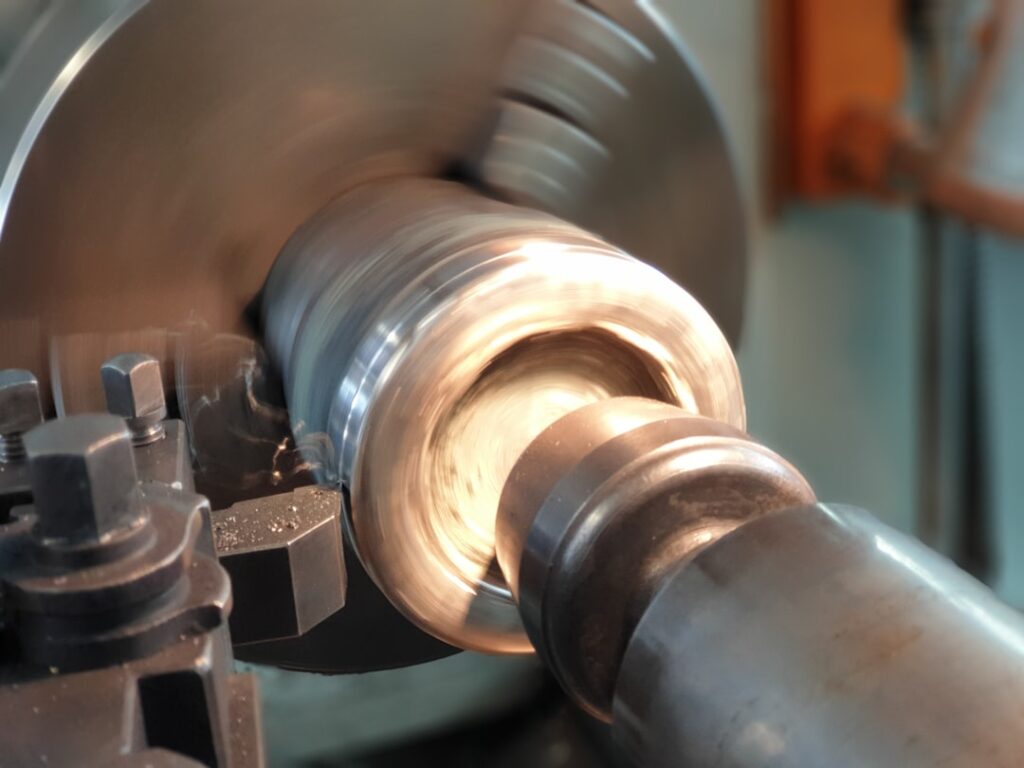
Housing line boring is a precision machining process that restores worn, damaged, or misaligned cylindrical bores inside equipment housings — bringing them back to exact specifications without replacing the entire component.
If your gearbox is failing and you need a fast answer, here’s what matters most:
- What it fixes: Worn, out-of-round, or misaligned bearing bores inside gearbox housings, engine bedplates, pivot points, and other heavy equipment housings
- How it works: A rotating cutting tool is mounted and fed through the bore along a central axis, removing material to restore the correct diameter, roundness, and alignment
- Why it matters: A bore that’s even slightly out of tolerance causes bearing failure, shaft misalignment, and gear damage — leading to full production shutdowns
- Repair vs. replace: Line boring typically costs a fraction of a new housing and can be done on-site, cutting downtime from weeks to days
- Who needs it: Plant managers dealing with recurring gearbox failures, worn pivot bores, or equipment that can’t wait months for OEM parts
Bores wear out. It’s not a question of if — it’s when. Heavy loads, constant vibration, and years of operation gradually push a bore out of its original shape. Once it’s out of tolerance, everything downstream suffers: bearings seat wrong, shafts run off-center, gears mesh unevenly. Before long, you’re looking at an unplanned shutdown.
For a plant manager already dealing with tight production schedules and long OEM lead times, that’s a serious problem. Ordering a replacement housing can take months. But housing line boring can restore that same housing to factory specs — often on-site, in a fraction of the time.
This guide explains exactly how the process works, what equipment is involved, and when line boring is the right call for your operation.
What is Housing Line Boring and How Does It Work?
To understand how housing line boring works, it helps to picture the anatomy of a heavy industrial gearbox or machine housing. These housings contain bored circular openings that hold bearings. The bearings, in turn, support rotating shafts. For the machine to run smoothly, these bores must be perfectly round, sized to the micrometer, and completely concentric—meaning their centerlines must align perfectly across the entire length of the housing.
Over time, heavy loads and mechanical stress cause these bores to stretch, warp, or ovalize. When this happens, simple replacement of the bearing won’t solve the problem because the new bearing will sit in a distorted pocket.
According to the machining experts at SPR, What is Line Boring & How Do Line Boring Machines Work?, the process is a highly specialized machining method that restores these cylindrical holes by enlarging or repairing existing bores.
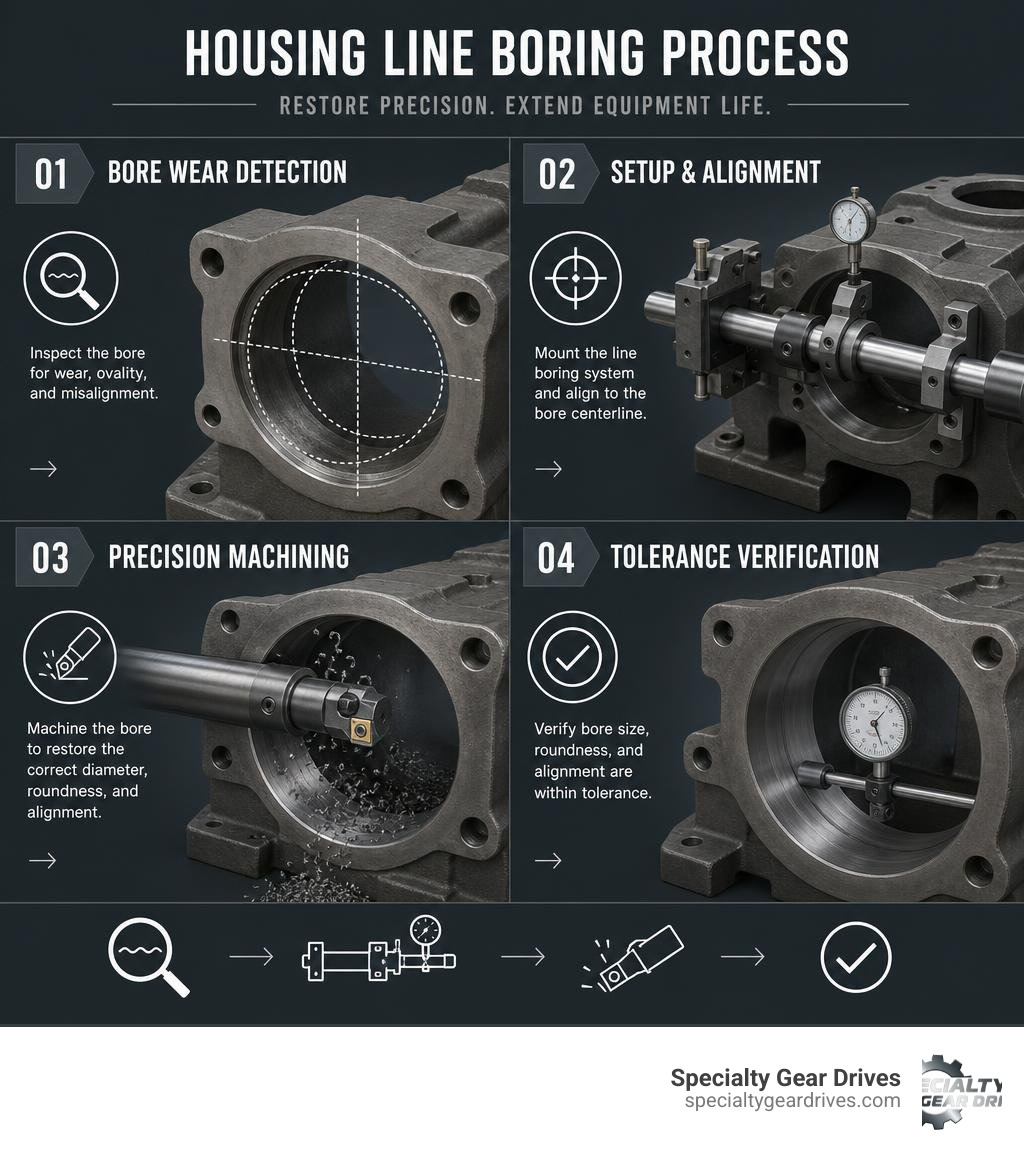
The process typically follows a clear, step-by-step sequence:
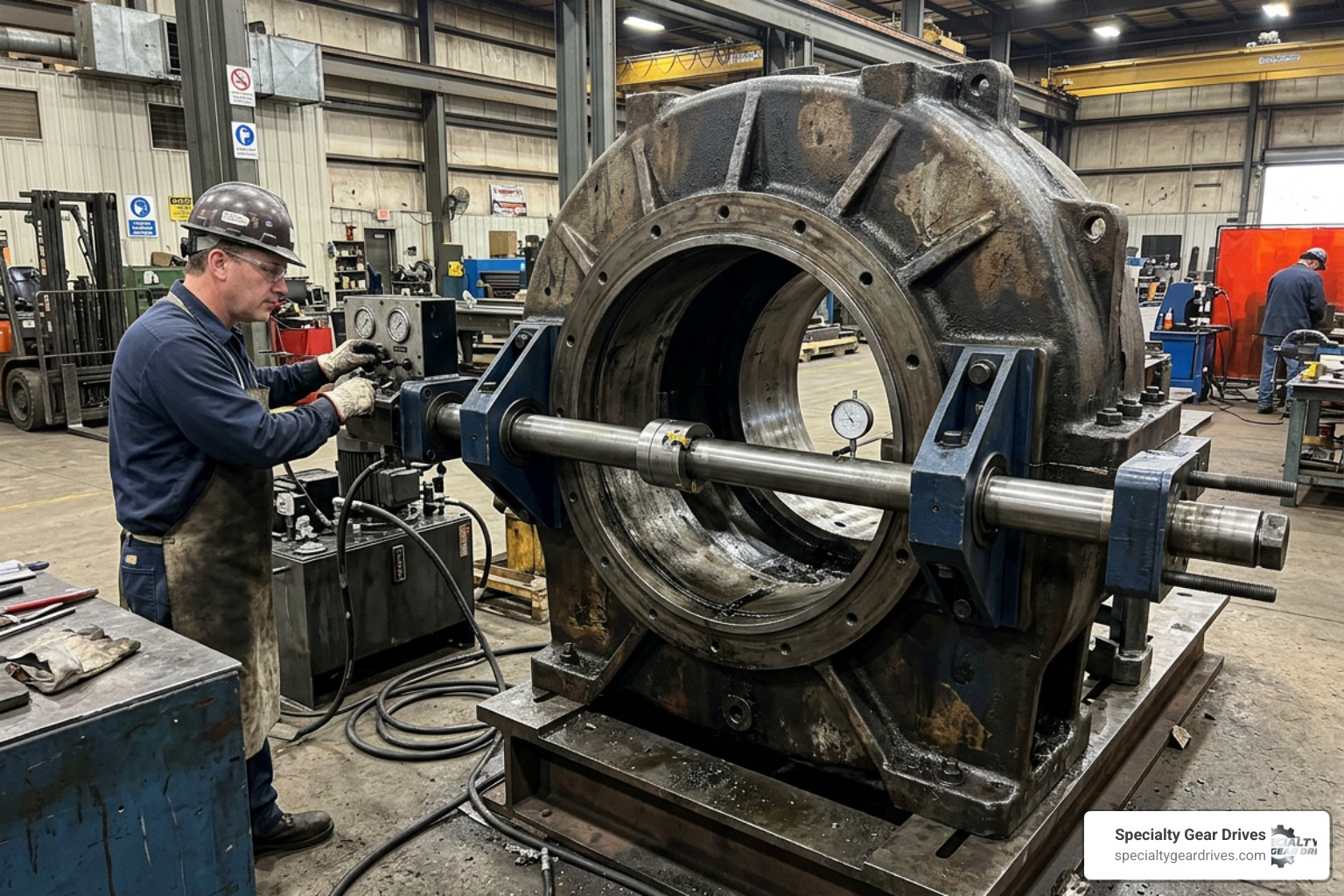
- Alignment and Setup: A boring bar is passed through the worn bores. It is supported by spherical bearings mounted on brackets on either side of the housing. Using digital dial indicators or laser alignment systems, the bar is positioned exactly along the original centerline of the housing.
- Bore Welding (Buildup): If the bore has lost too much metal, a process called bore welding is used. An automatic bore welder deposits a fresh layer of weld metal onto the inner surface of the worn bore, building it back up so there is enough material to machine.
- Rough and Finish Cuts: A cutting tool (often a carbide or high-speed steel bit) is secured inside a slot on the boring bar. The bar is rotated and mechanically fed through the bore. As it spins, the tool shaves away the welded metal, correcting any axiality issues and bringing the bore back to its precise, original diameter.
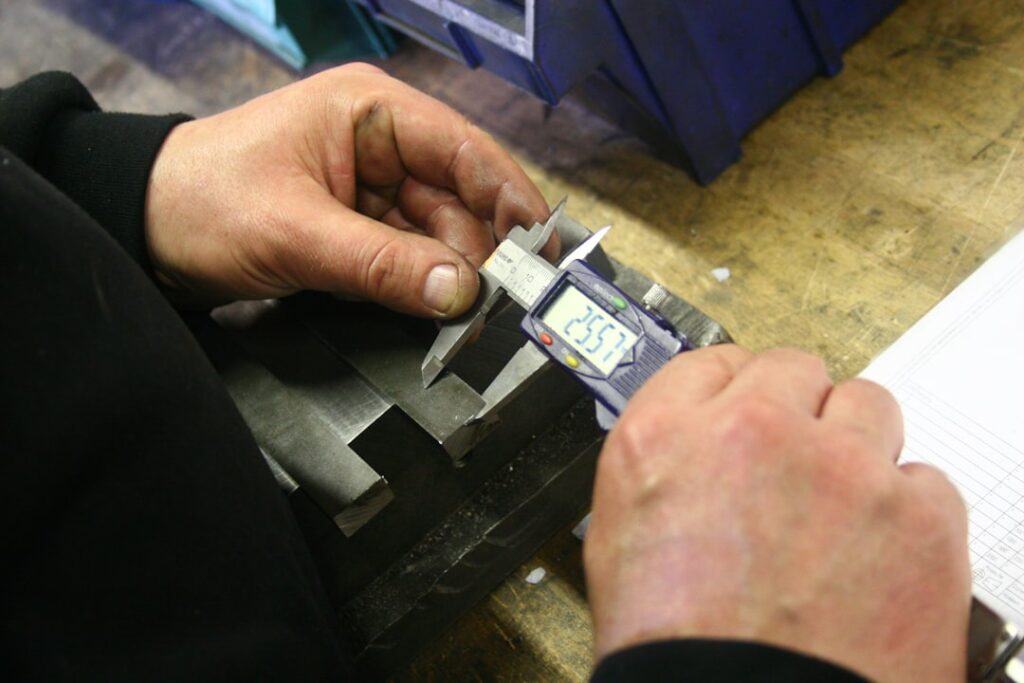
- Final Inspection: The machinist measures the bore using micrometers or dial bore gauges to verify that the final dimensions meet OEM tolerances, often down to a fraction of a thousandth of an inch.
By utilizing specialized mounting brackets and self-centering setup cones, technicians can perform this work even in confined spaces, correcting misalignment across multiple bores that are spaced several feet apart, as noted in the Line Boring – Worldwide Line Boring Service – Hydraulic Ram documentation.
Portable vs. Stationary Equipment for Housing Repairs
When a housing bore fails, you face a major logistical choice: do you transport the entire machine housing to a specialized workshop, or do you bring the machining equipment to the machine?
Stationary boring mills in a dedicated machine shop offer unmatched rigidity and are ideal for complex, multi-axis machining. However, the cost and time required to dismantle, rig, and transport a multi-ton gearbox or engine block can be astronomical.
This is where portable line boring machines shine. These modular units are designed to be mounted directly onto the workpiece. By using the machine’s own housing as the foundation, portable setups eliminate the need for massive stationary machine tables.
To help you evaluate the best path for your specific project, here is a direct comparison of the two approaches:
| Feature | Portable Line Boring | Stationary Workshop Machining |
|---|---|---|
| Primary Location | On-site, directly on the machinery | Off-site machine shop |
| Rigging & Transport Costs | Minimal (only the technician and portable kit travel) | High (requires heavy rigging, transport permits, and freight) |
| Setup Time | Quick setup using self-centering cones and magnetic mounts | Longer setup; requires securing the workpiece on a large mill bed |
| Downtime | Extremely low (often completed in 24 to 48 hours) | High (weeks of transit, scheduling, and shop queue time) |
| Ideal Applications | Large gearbox housings, structural pivots, on-site industrial repairs | Small-to-medium loose components, complex multi-axis manufacturing |
| Power Sources | Hydraulic, pneumatic, or electric motor drives | High-voltage stationary electric grids |
For many field operations, a portable kit powered by a heavy-duty magnetic drill press or a portable hydraulic power unit offers the perfect balance of precision and speed. As detailed in the resources on Portable Line Boring Machine Tools and Bore Repair Equipment, these portable systems utilize chrome-plated, induction-hardened boring bars that resist weld splatter and rust, ensuring that field repairs match the quality of shop-machined components.
Key Applications of Housing Line Boring in Industrial Machinery
In heavy industrial operations, machine housings are subjected to extreme torsional stress, continuous vibration, and massive radial loads. These forces inevitably take a toll on the structural integrity of the metal.
Whether your plant is running a high-speed extruder in a plastics facility, a heavy conveyor in a food processing plant, or a massive pulper in a paper mill, housing line boring is the ultimate tool for extending the service life of your capital assets. Let’s look at the primary areas where this process is applied.
Restoring Gearbox Housings with Housing Line Boring
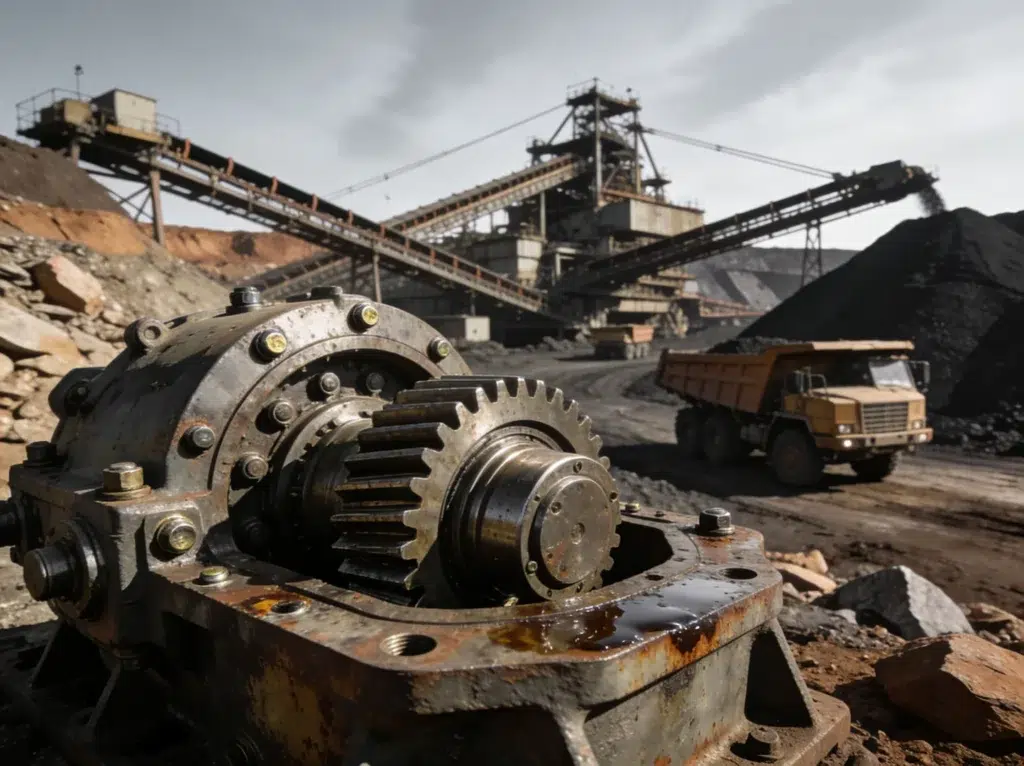
Industrial gearboxes are the heart of your production line. Inside a gearbox, gears must mesh with absolute precision. If the bearing pockets in the gearbox housing wear out or become ovalized, the shafts will shift. Even a tiny fraction of a millimeter of shaft misalignment will cause the gears to ride on their edges. This concentrates forces on a small area of the gear teeth, leading to rapid wear, pitting, and eventual tooth breakage.
Through precision housing line boring, we can restore these bearing pockets to their exact dimensions. This ensures that the shafts are perfectly parallel and that the gears mesh exactly as designed.
By restoring the housing rather than replacing it, you can achieve massive cost savings while maintaining your production schedule. This process is highly complementary to custom gear manufacturing, as installing high-precision custom gears into a worn, unaligned housing will simply lead to premature gear failure.
Engine Bedplates and Heavy Equipment Housing Line Boring
Beyond gearboxes, line boring is critical for maintaining the structural components of large diesel engines and heavy earthmoving equipment.
In large industrial engines, the main bearing journals in the engine bedplate must be perfectly aligned to support the crankshaft. If the bedplate warps due to thermal cycling or a catastrophic bearing failure, the main bearing line must be bored back to a true axis. Specialized tooling, such as the designs referenced in the Overhead cambearing line boring tool – BANOCZKY; BELA patent, allows technicians to align and bore overhead camshaft bearings and engine blocks with incredible accuracy.
In the heavy construction and mining sectors, line boring is regularly used to repair worn pivot points, hinge pin bores, and steering cylinder mounts on:
- Excavator booms and buckets
- Dozer push arms
- Crane slew ring supports
- Backhoe linkages
When these pin joints wear out, the equipment develops “slop,” making precise control impossible and accelerating wear on hydraulic cylinders. Line boring restores these joints to a tight, factory-fresh fit.
Choosing the Right Line Boring Machine and Specifications
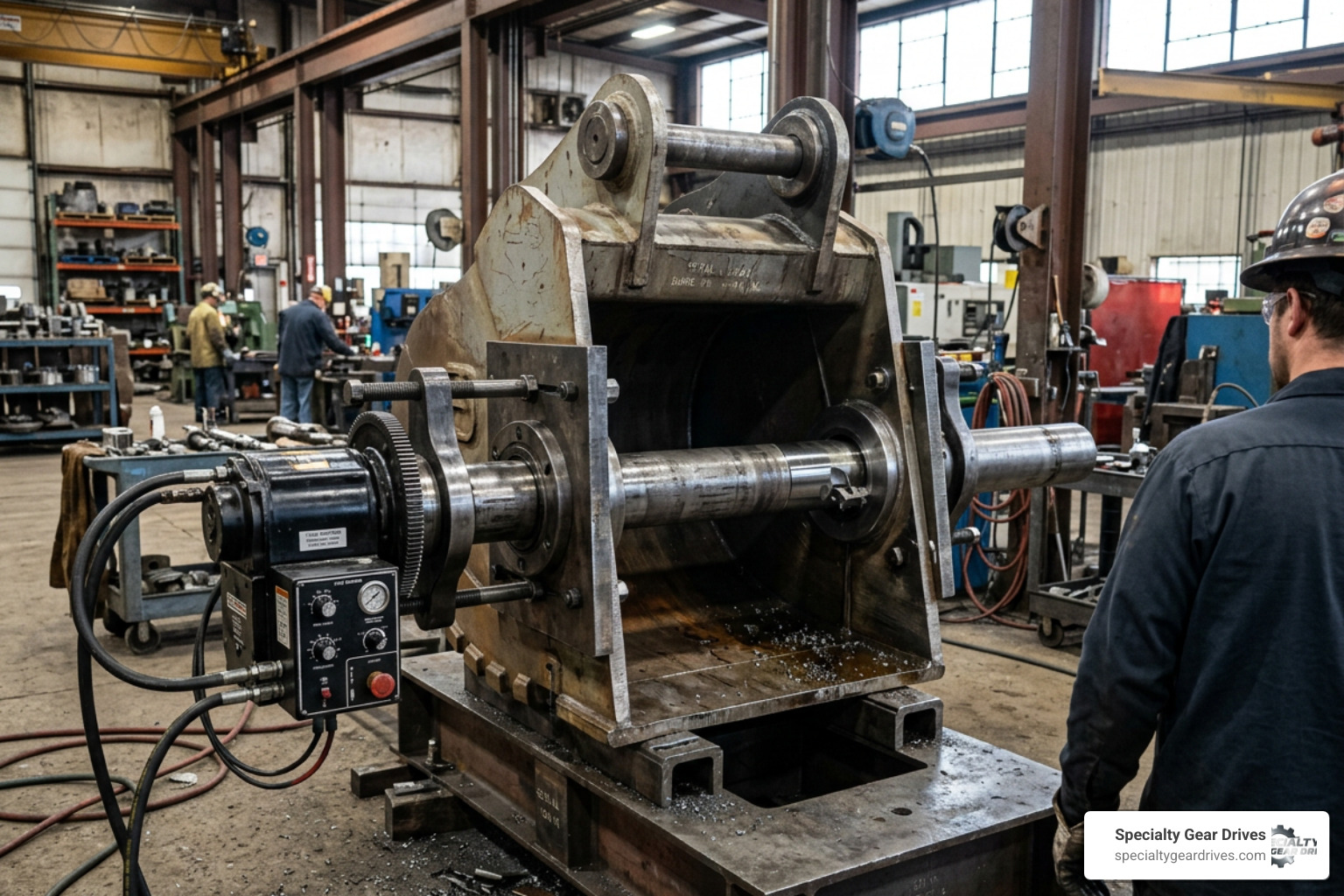
Selecting the right equipment for a line boring job depends entirely on the scale and geometry of the housing you are repairing. Using a machine that is too small leads to bar deflection and poor surface finishes, while a machine that is too large may not fit into the tight confines of a compact gearbox housing.
Industry leaders like Climax offer a wide range of portable boring systems designed for different scales of operation. When reviewing specifications from Line Boring Machines – climax, several key factors must be evaluated:
- Boring Bar Diameter: The boring bar must be rigid enough to span the distance between supports without bending. Standard bar diameters range from 1.25 inches for small, tight-space repairs up to 8 inches or more for massive industrial housings.
- Torque and Power Source: Line boring machines can be driven by electric, pneumatic, or hydraulic motors. For heavy-duty industrial housing repairs, hydraulic drives are preferred because they can deliver up to 350 ft-lbs of torque, allowing for deep cuts in tough alloy steels without stalling.
- Feeding Mechanisms: Precise feeding is crucial for a smooth surface finish. Modern machines feature mechanical or variable-speed automatic feed units that advance the cutting tool smoothly, typically ranging from 0.05 to 0.5 mm per revolution.
- Mounting Systems: Look for self-aligning, spherical bearing mounts. These allow the operator to align the boring bar precisely, even if the mounting brackets are welded to a surface that is not perfectly flat.
Additionally, many modern systems are designed to share mounting brackets with automatic bore welding systems. This “single-setup” compatibility means you can mount the brackets once, weld the worn bore, swap the welder for the boring bar, and complete the machining without ever losing your alignment centerline.
Frequently Asked Questions About Housing Line Boring
What are the typical bore diameter ranges for housing repairs?
Housing line boring can accommodate an incredibly wide range of sizes. For smaller industrial applications, such as small pump housings or compact gearboxes, specialized kits can bore diameters down to 1.5 inches (approx. 38 mm).
For larger industrial equipment, standard portable machines like the Portable Line Boring Machine can easily handle diameters from 2.5 inches up to 24 inches (65 mm to 600 mm). On the massive end of the spectrum, heavy industrial and marine boring bars can machine diameters up to 80 inches (2030 mm) for applications like steam turbine casings and ship rudder shafts.
What are the common challenges during the line boring process?
The most common challenge in line boring is tool chatter and vibration. If the boring bar is too long or lacks adequate mid-span support, it will flex under the force of the cut, leaving an uneven, wavy finish inside the bore. This is solved by using auxiliary center supports whenever the distance between bearing mounts exceeds 15 to 17 inches.
Another challenge is thermal expansion. As the cutting tool shaves away metal, it generates heat, which can cause the boring bar or the housing itself to expand slightly. Machinists must manage feed rates, use proper lubrication, and allow the metal to cool before taking final precision measurements to ensure micro-tolerances are maintained.
How much does housing line boring cost compared to replacement?
On average, repairing a worn housing using line boring costs 40% to 60% less than purchasing a brand-new replacement housing. However, the financial benefits go far beyond the price of the metal.
The real savings come from the dramatic reduction in downtime. Ordering a new industrial gearbox housing from an OEM can take weeks or even months. On-site line boring can often be completed in just a few days, saving your plant hundreds of thousands of dollars in lost production.
Restoring Precision When It Matters Most
When a critical gearbox or machine housing wears out, you don’t have to face the massive expense and long lead times of a total replacement. Housing line boring is a proven, high-precision solution that restores your machinery to original factory tolerances, ensuring your operations run smoothly and efficiently.
At Specialty Gear Drives, based in Largo, Florida, we specialize in the complete overhaul and rebuilding of industrial gearboxes for the plastics, food processing, pulp and paper, and manufacturing industries. We understand that every hour of downtime costs you money. That’s why we offer:
- 24 to 48-Hour Emergency Service to get your lines running again fast
- Free Pickup and Delivery throughout our service area
- Up to 60% Savings compared to the cost of buying new equipment
- An Industry-Leading 24-Month Warranty on all our gearbox repairs
Don’t let a worn bearing bore halt your production. Let our team of expert machinists restore your equipment with the precision and speed your business demands.
Ready to get your machinery back to peak performance? Visit our Industrial Gearbox Repair page to learn more about our capabilities, or head over to our Contact Us page to request a fast quote today.