When Worn Bores Shut Down Production, a Line Boring Rebuild Is the Answer
A line boring rebuild is a precision machining process that restores worn, oversized, or misaligned bores in heavy industrial equipment back to their original specifications, without scrapping the housing or waiting months for a replacement casting.
If you’re dealing with a worn gearbox housing, a spun bearing, or a misaligned bore on a conveyor drive or processing line, here is what you need to know upfront:
What line boring rebuild involves:
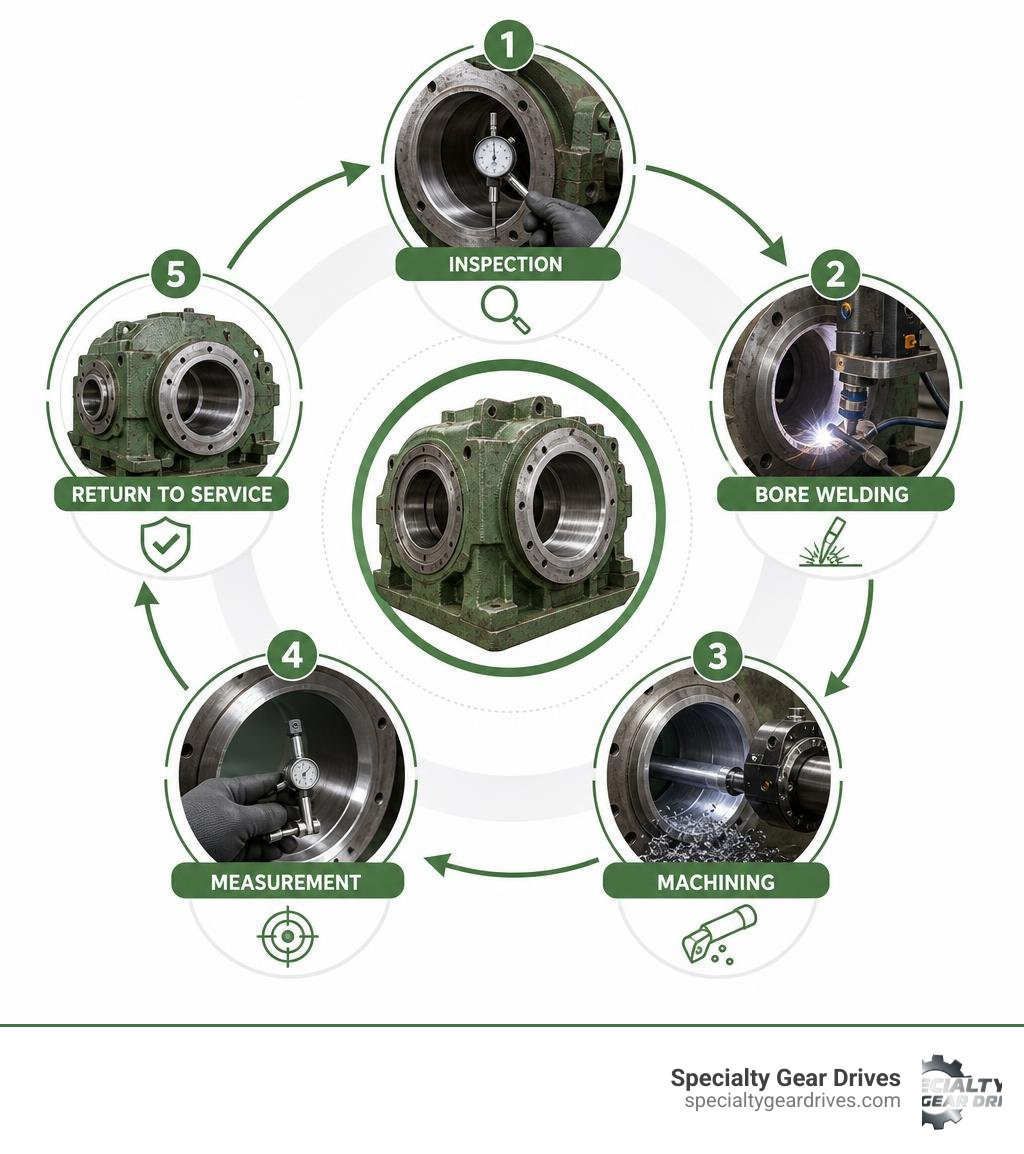
- Inspect and measure the damaged bore to determine how far out of spec it has drifted
- Weld up the worn surface using an automated bore welder to restore material
- Machine the rebuilt surface back to the correct diameter and concentricity
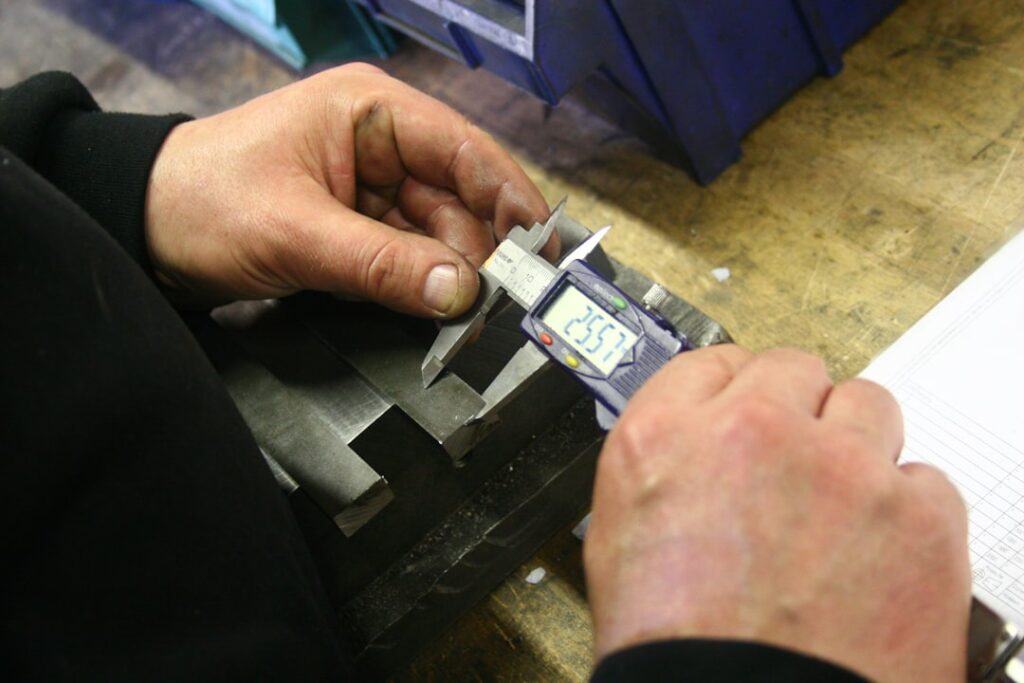
- Verify tolerances with precision measuring tools before returning to service
When you need it:
- Bearing bores worn oversize from continuous load cycling
- Misaligned or out-of-round housings after a spun bearing or overheating event
- Pin and bushing locations worn beyond acceptable clearance
- After welding repairs to a damaged housing
Key facts at a glance:
| Factor | Line Boring Rebuild |
|---|---|
| Bore diameter range | 1.75″ to 24″ depending on equipment |
| In-place or shop-based | Both options available |
| Welding required | Often, using a bore welder before final machining |
| Compared to replacement | Fraction of the cost and lead time |
A single failed gearbox bore on a cement plant or phosphate processing line can halt an entire production shift. The real cost is not the housing itself; it is the hours or days of lost output while you wait for parts or a replacement unit. Line boring changes that calculation entirely.
Easy line boring rebuild glossary:
What is Line Boring and How Does It Restore Heavy Industrial Machinery?
Line boring is a specialized machining process that uses a rotating boring bar to cut and align multiple bores along a single concentric axis. This method corrects out-of-roundness, misalignment, and oversized wear in critical structural and mechanical openings.
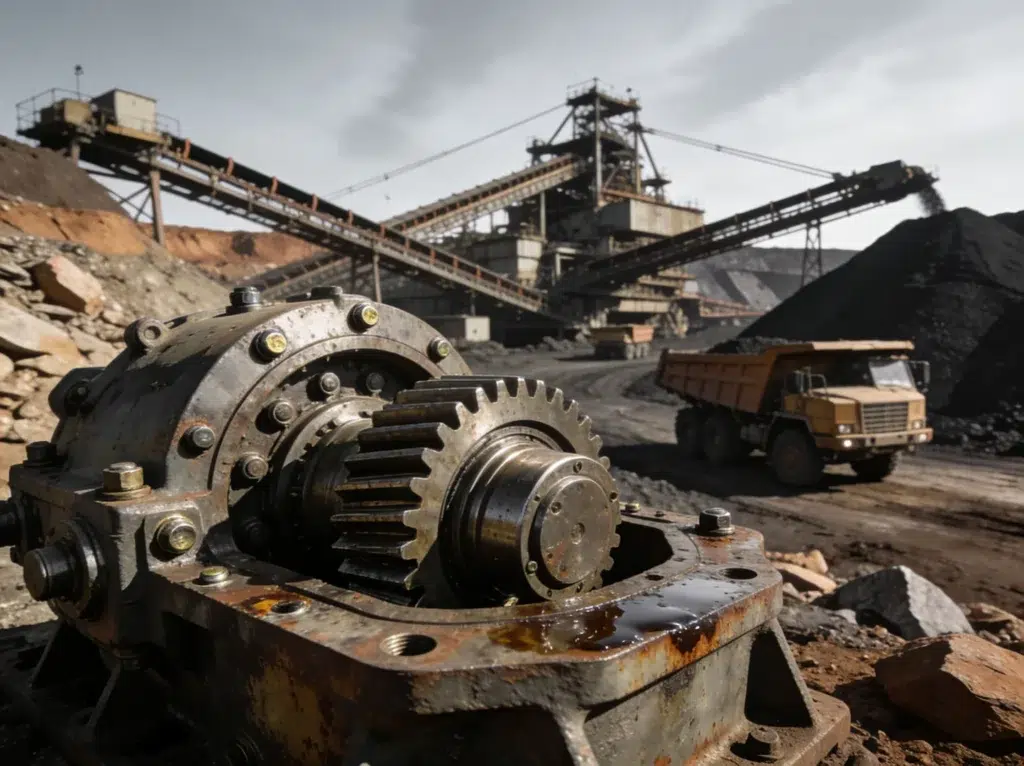
Continuous operational stress in heavy industrial environments causes connection points and bearing fits to distort over time. When a high-torque gearbox in a South Carolina paper mill or a heavy-duty conveyor drive in a Florida phosphate plant operates under severe load, the bearings can seize or spin. This spinning action friction-wears the inner diameter of the housing, leaving the bore out-of-round and incapable of holding a new bearing to the required tolerance.
To restore these components, we use line boring to machine away the damaged metal, rebuild the surface with specialized welding techniques, and then bore the opening back to its original design dimension. This process ensures that new pin fits and bushing inserts seat with the precise interference required for industrial operations. By restoring the original concentricity of the bearing bores, we prevent shaft deflection and eliminate the vibration that leads to premature gear failure.
You can read more about how this process saves critical components in our detailed guide on Bore No More How Housing Line Boring Repairs Heavy Equipment.
The Economics of a Line Boring Rebuild vs. Component Replacement
Choosing a line boring rebuild over purchasing a new industrial gearbox housing typically reduces capital expenditure by up to 60 percent. Beyond the direct financial savings, the reduction in equipment downtime is often the most significant economic benefit for industrial facilities.
When a large speed reducer fails at an Alabama chemical plant or a Mississippi paper mill, ordering a replacement housing from the original equipment manufacturer can carry lead times of several months. During this period, the affected production line remains offline, resulting in substantial financial losses. A line boring rebuild can often be completed in our shop or on-site in a matter of days, keeping your fleet life extension goals on track without the wait.
The following table outlines the key differences between rebuilding an existing housing through line boring and purchasing a complete OEM replacement:
| Metric | Line Boring Rebuild | OEM Housing Replacement |
|---|---|---|
| Average Cost | Approximately 40% of replacement cost | Full capital expenditure |
| Lead Time | 24 to 48 hours for emergency repairs | 8 to 26 weeks depending on casting |
| Shipping & Logistics | Localized pickup and delivery | High freight costs for oversized imports |
| Equipment Lifespan | Restored to original factory specifications | Equal to original factory specifications |
| Environmental Impact | Minimal; recycles existing heavy castings | High; requires new casting and transport |
For maintenance managers looking to optimize their budgets, restoring the physical dimensions of the gear drive locally is the most logical path forward. For a deeper look at the machining tolerances and structural benefits, consult The Complete Guide to Line Boring Housing Machining.
Portable Line Boring Equipment and Bore Welder Capabilities

Portable line boring systems allow technicians to bring machine-shop precision directly to the factory floor or field site. High-rigidity systems, such as the CLIMAX BB5000, utilize heavy-duty boring bars and self-aligning bearing mounts to ensure near-zero runout over long spans.
These portable setups are designed to handle demanding industrial dimensions. The boring bars are made from high-tensile alloy steel rated at 100,000 PSI, which is chrome-plated to resist wear and prevent weld splatter from sticking during the rebuild process. Cutter mounting holes are spaced precisely along the bar to maintain maximum rigidity while allowing the tool to reach deep inside complex gear housings.
To rebuild the worn metal before machining, automated bore welders integrate directly with the boring bar mounting setup. The bore welder uses a rotating and stepping torch to deposit a clean, uniform weld overlay inside the worn bore. This automated process ensures consistent heat input, which minimizes the risk of warping the surrounding cast iron or steel housing.
If you are trying to determine whether your specific machinery can be repaired in-place, you can read our resource on Line Boring Gearbox Housing Find Professional Services.
The Step-by-Step Line Boring Rebuild Process
Restoring a heavily worn housing requires a careful balance of metallurgy and machining. Because industrial gearboxes are subjected to immense torque, the interface between the rebuilt bore and the parent metal must be free of structural defects.
We begin by preheating the housing where necessary, especially when dealing with heavy cast iron or specialized alloy steels. Preheating prevents rapid cooling of the weld puddle, which can create brittle zones or cause the casting to crack. Once the preheat temperature is reached and verified, the welding process can begin.
The initial machining stages involve taking rough cuts to remove any irregular weld build-up and establish a consistent, round path. After the roughing stages are complete, technicians perform precision finish cuts to bring the bore within its exact design tolerance, often holding dimensions to within a few ten-thousandths of an inch.
For more information on how we prepare and repair these heavy cast structures, refer to our article on How Gearbox Housing Welding Services Restore Damaged Castings.
Step-by-Step Execution of a Line Boring Rebuild
- Inspection and Cleaning: We thoroughly clean the housing to remove grease, oil, and rust, then inspect the bore for cracks using non-destructive testing methods like dye penetrant or magnetic particle inspection.
- Setup and Alignment: Technicians install the boring bar through the housing, using centering cones and dial indicators to align the bar perfectly with the original centerline of the shaft.
- Bore Welding: We mount the automated bore welder to the setup and deposit a high-quality weld overlay, building up the worn surface so there is sufficient material for machining.
- Rough Machining: We swap the welder for the boring toolholder and use carbide tooling to take progressive rough cuts, removing the uneven weld metal and making the bore round again.
- Finish Machining and Measurement: We adjust the cutter for the final finish cuts to achieve the exact target diameter, then verify the final dimension, roundness, and surface finish using precision inside micrometers.
Why Some Line Boring Rebuild Projects Fail Prematurely
Premature failure of a rebuilt bore is almost always caused by poor execution during the welding or final machining stages. If the technician does not thoroughly clean the parent metal before welding, oil and grease trapped in the porous casting will vaporize, creating weld porosity that weakens the repair.
Another common issue is a mismatch in parent metal hardness. If the weld wire alloy does not match the characteristics of the housing casting, the welded zone may turn out significantly harder or softer than the surrounding material, leading to uneven wear or cutting tool chatter during the machining process.
Finally, achieving the correct interference fit is critical for bearing longevity. If the bore is finished even slightly oversized, the bearing outer ring will eventually spin, destroying the new surface. The final surface finish must also be smooth; a rough finish might feel tight initially, but the microscopic peaks of metal will quickly flatten under load, causing the bearing to lose its press fit and fail.
Frequently Asked Questions About Line Boring Rebuilds
What is the typical bore diameter range for portable line boring?
Portable line boring systems can typically machine bore diameters ranging from 1.75 to 8 inches with standard portable kits, and from 2.375 to 24 inches when using heavier industrial systems. Standard setups can easily handle in-line bores spaced up to 80 inches apart, ensuring that multi-bearing gearboxes remain perfectly aligned across the entire length of the housing.
Can line boring be performed on-site in confined spaces?
Yes, line boring can be performed directly on-site to eliminate the need to transport massive machinery. This field machining approach is commonly used for large marine propulsion systems, paper mill dryer section housings, and heavy chemical processing equipment where removing the housing from the facility is physically or economically impractical.
How does bore welding integrate with the machining process?
Bore welding integrates with the machining process by sharing the same mounting fixtures and alignment axes. Once the boring bar is aligned and the worn bore is prepped, the boring bar is temporarily replaced or augmented with the automated bore welder torch. This allows the welder to deposit a perfectly concentric weld overlay along the exact centerline that will be used for the final machining cuts.
Conclusion
A successful line boring rebuild restores your critical industrial machinery to factory-gate specifications, saving your operation from the high costs and long lead times of purchasing new components. When a critical drive system fails, you need a partner who can respond immediately with the technical expertise required to get your plant back up and running.
At Specialty Gear Drives, we repair and rebuild industrial gearboxes for heavy industries across the Southeast, including pulp and paper mills, phosphate mines, petrochemical plants, and manufacturing facilities. Based in Largo, Florida, we proudly serve operations throughout Florida, Georgia, Alabama, South Carolina, Mississippi, and Louisiana.
We stand behind our work with a 24-month warranty and offer free pickup and delivery to minimize your logistical headaches. When every hour of downtime counts, our 24–48 hour emergency service ensures that your operations are restored quickly and safely.
If you have a worn gearbox housing that needs expert attention, contact us today to learn how we can help you save up to 60% compared to the cost of buying new.
Explore our complete range of services on our Industrial Gearbox Repair page.