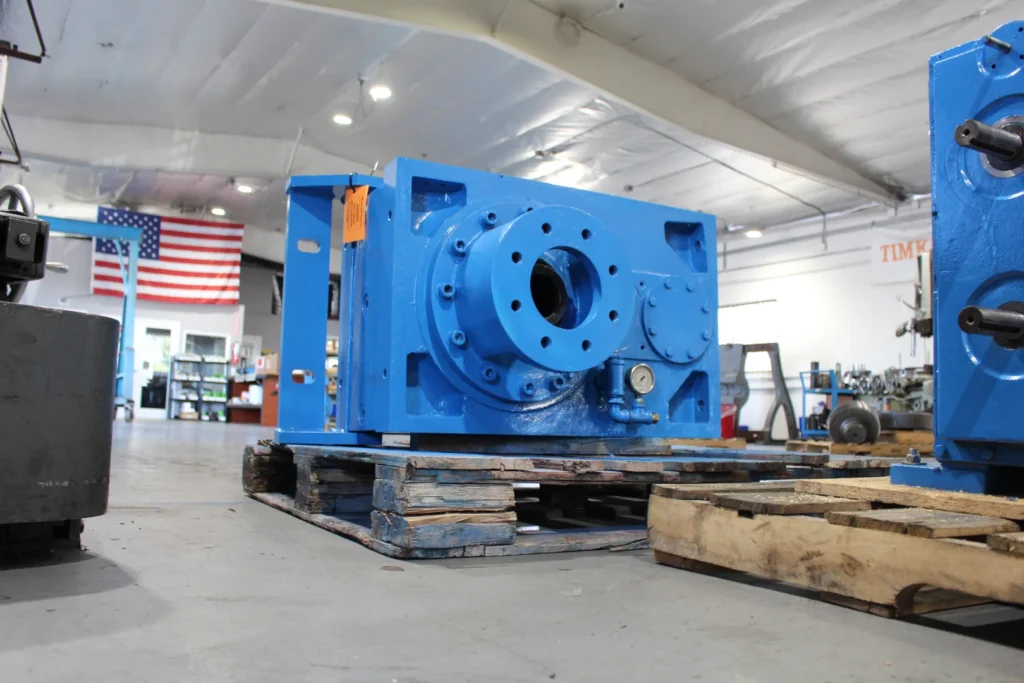
When a Gearbox Fails, Every Hour Counts
A gearbox rebuild is the process of fully disassembling an industrial gearbox, inspecting every component, replacing worn or damaged parts, and reassembling the unit to original performance specifications. It is the most cost-effective way to restore a failed or degrading gearbox without the long lead times and high cost of buying new equipment.
Quick answer: what does a gearbox rebuild involve?
- Teardown and inspection – Full disassembly, photography, and documentation of all components
- Cleaning and non-destructive testing – Chemical cleaning, crack detection, and dimensional inspection
- Component replacement – New bearings, seals, gaskets, and any worn gears or shafts
- Reassembly – Rebuilt to OEM specifications with backlash and tooth contact verified
- Testing – No-load spin test and performance verification before return to service
Why rebuild instead of replace?
- Saves 40% to 60% compared to buying a new gearbox
- Avoids OEM lead times that can stretch to months or longer
- Gets your equipment back in service faster
- Can include engineering upgrades that make the unit stronger than the original
A single gearbox failure on a conveyor line or processing mill can shut down an entire production shift. For facilities across the Gulf Coast and Southeast, from phosphate processing plants in Florida to pulp mills in Alabama and Mississippi, that downtime is measured in real dollars, not just inconvenience. The decision to rebuild versus replace is rarely straightforward, but understanding the full process helps you make the right call.
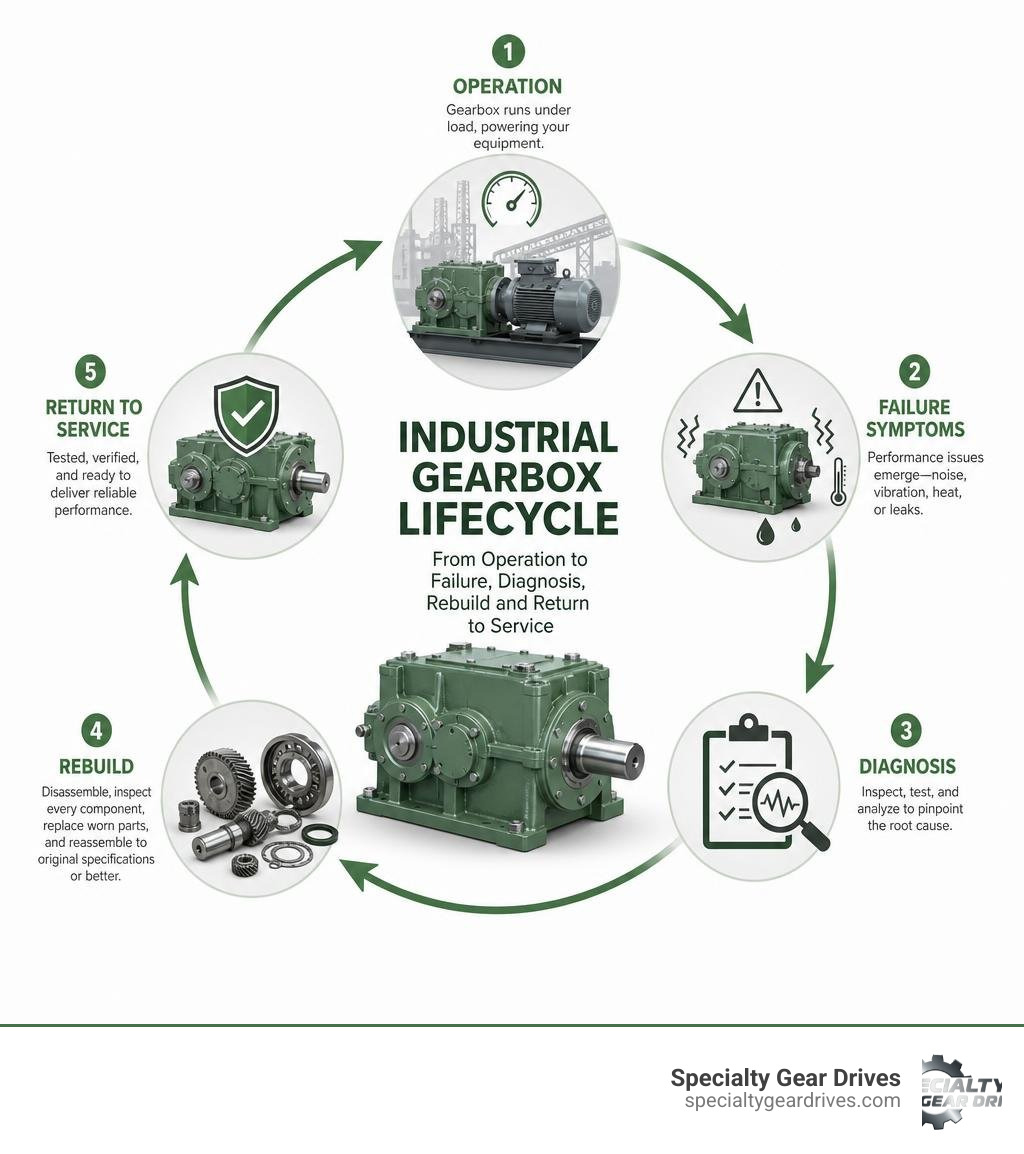
Diagnosing the Need for an Overhaul
We diagnose the need for a gearbox rebuild by evaluating vibration data, analyzing oil contamination levels, and performing visual inspections of gear tooth wear. These diagnostic methods allow us to identify internal mechanical degradation before a catastrophic failure occurs. Implementing structured How Gearbox Condition Monitoring Saves Your Machinery and Your Sanity helps plant maintenance teams track these health indicators over time.
Oil analysis is particularly critical in the high-humidity environments of the Southeast. Coastal pulp mills in Mississippi or chemical plants along the Louisiana Gulf Coast often deal with moisture intrusion, which rapidly breaks down lubrication. When gear oil loses its viscosity or becomes contaminated with metal particulates, gears and bearings wear out at an accelerated rate.
Vibration analysis acts as an early warning system for rotating components. By measuring the frequency and amplitude of vibrations, we can pinpoint exactly which bearing or gear set is beginning to fail. Catching these changes early prevents a failing component from destroying the surrounding gear teeth and housing.
Warning Signs That Require a Gearbox Rebuild
The primary warning signs that indicate a gearbox needs a rebuild are abnormal noise, high operating temperatures, and excessive shaft play. If you notice any of these symptoms during routine maintenance walks, the internal components are likely already experiencing severe wear. Ignoring these signs can lead to total unit destruction, so we always recommend taking immediate action when they appear.
Abnormal noise often presents as a high-pitched whine or a low-frequency rumble. A whine typically indicates gear teeth misalignments or wear, while a rumble points directly to failing rolling-element bearings. If you hear grinding or clunking, gear teeth may have already chipped or broken. To find immediate professional inspection when these noises start, plant managers can search for specialized local services using Don’t Grind Your Gears and Find the Best Gearbox Repairing Near Me to locate our nearest technicians.
Overheating is another clear indicator of internal distress. When bearings wear out or gears lose their proper tooth profile, friction increases, raising the oil temperature. If a housing feels unusually hot to the touch or if your temperature sensors trigger alerts, the gearbox is operating under extreme stress. This heat further degrades the lubricant, creating a destructive cycle that rapidly leads to seized components.
Simple Repair vs. Complete Overhaul
A simple repair focuses on resolving a single localized issue, while a complete overhaul addresses all internal wear by restoring the entire unit to original specifications. We recommend a simple repair for isolated, external problems like a leaking shaft seal on an otherwise healthy unit. If the unit has high operating hours or exhibits signs of bearing fatigue, a complete overhaul is necessary to ensure long-term reliability.
When a bearing fails, it rarely happens in isolation. The resulting metal debris circulates through the oil, scratching gear teeth and damaging other bearings. In these situations, simply replacing the single failed bearing is a temporary fix that guarantees a repeat failure. A full rebuild ensures that all circulating debris is removed and every compromised component is replaced.
Housing damage also dictates whether an overhaul is required. If a bearing spins inside its bore or a shaft suffers from severe run-out, the housing itself must be restored. We utilize specialized techniques like How Gearbox Housing Welding Services Restore Damaged Castings to repair structural cracks and worn bores before machining them back to original tolerances.
The Step-by-Step Professional Rebuild Process
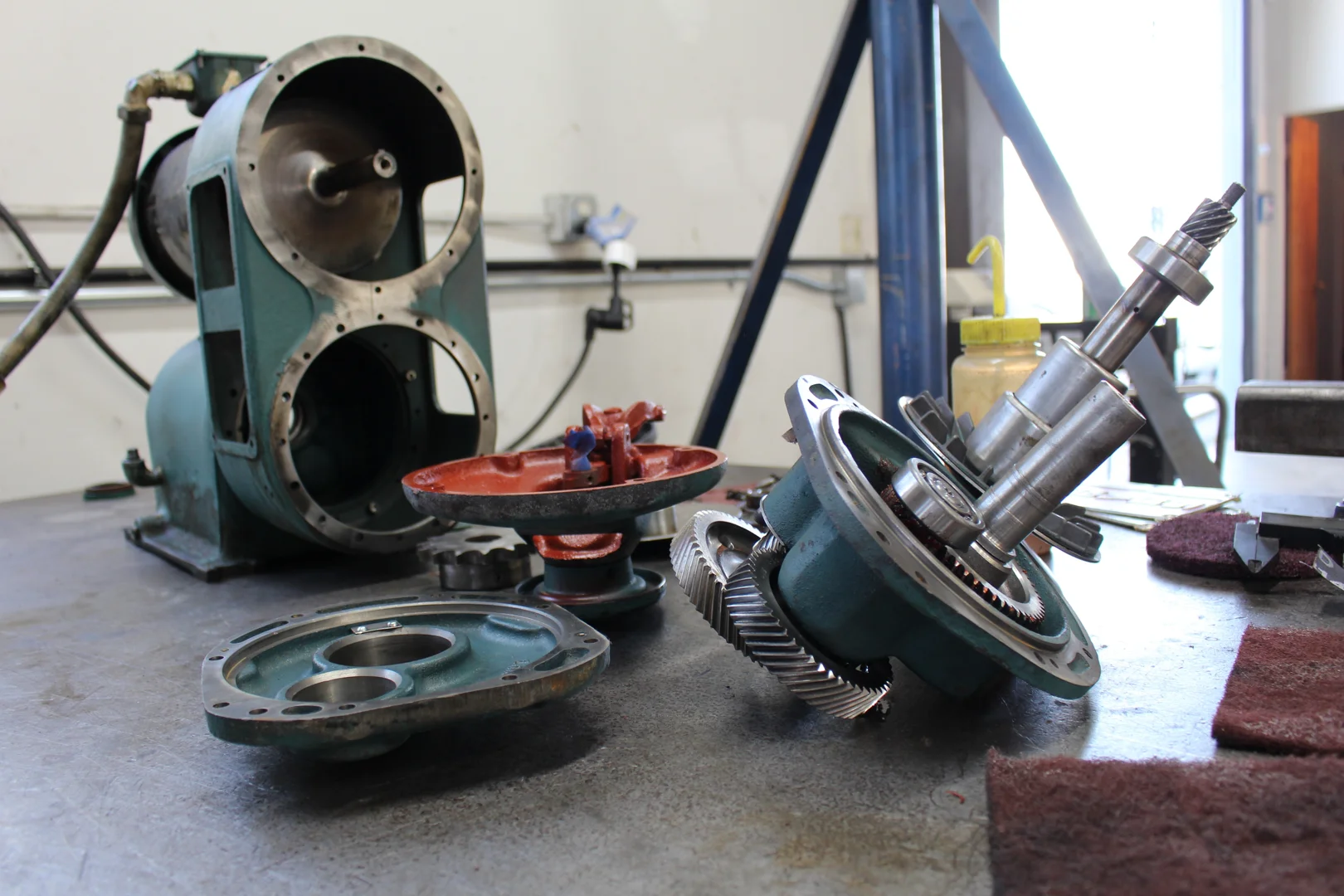
The professional gearbox rebuild process begins with complete disassembly and a detailed teardown inspection. Every component must be systematically documented and photographed to preserve crucial failure analysis data. After the unit is completely stripped, all parts undergo thorough chemical cleaning to remove baked-on grease, sludge, and paint.
Once clean, we perform non-destructive testing on all load-bearing components. We use magnetic particle and dye penetrant testing to identify microscopic cracks in gear teeth, shafts, and housing structures. This rigorous testing ensures we never reuse a component that is on the verge of structural failure. Our comprehensive approach to Industrial Gearbox Repair guarantees that every rebuild meets or exceeds original equipment standards.
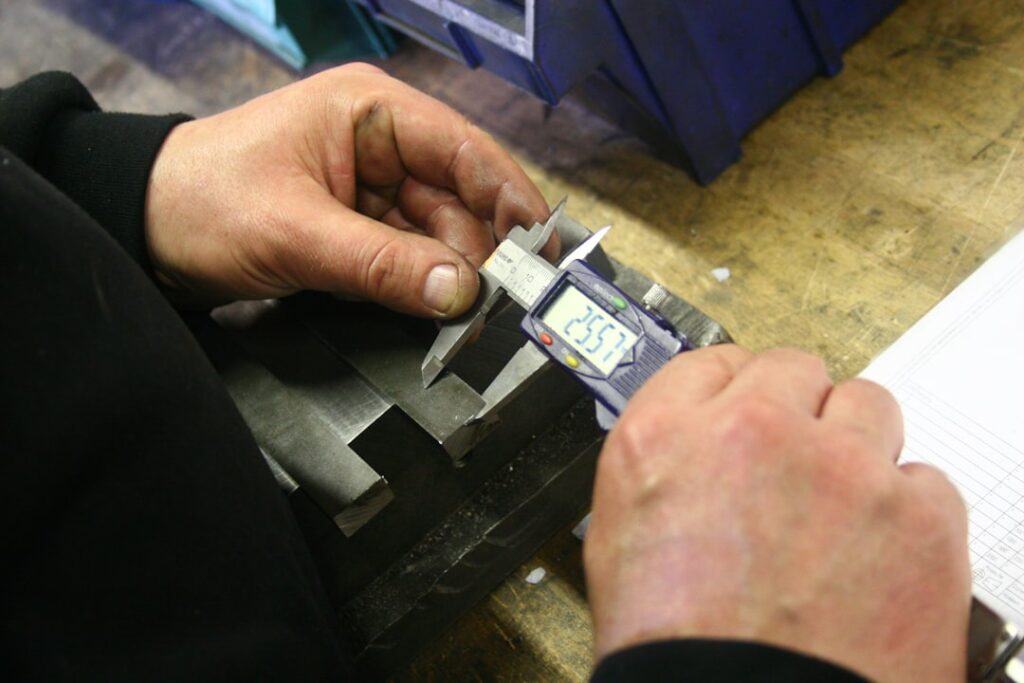
Our engineering team then measures every critical dimension using high-precision micrometers and coordinate measuring machines. We compare these measurements against OEM specifications to identify wear that may not be visible to the naked eye. This data forms the foundation of our repair plan, outlining exactly which components require replacement or machining.
Engineering and Component Restoration
When OEM drawings are unavailable, we use advanced reverse engineering to manufacture replacement gears and shafts to exact tolerances. We utilize The Ins and Outs of 3D Laser Scanner Reverse Engineering to capture precise geometries of worn parts, allowing us to recreate them with modern, high-strength materials. This capability is vital for older machinery operating in Georgia textile mills or South Carolina manufacturing plants where replacement parts are no longer supported by the original manufacturer.
Worn shafts are restored using precision welding and machining techniques. We explain how we build up metal on worn bearing journals and seal surfaces in The Art of the Weld: How to Build Up and Repair Worn Shafts. This process saves the cost of manufacturing a completely new shaft while restoring the original dimensions. For more information on why these techniques are so effective, you can read Why Shaft Repair Services Can Help You Today.
If the housing bores have stretched or become out-of-round, we perform line boring to restore perfect alignment. This process is detailed in Bore No More: How Housing Line Boring Repairs Heavy Equipment. For heavy industrial applications, maintaining concentricity between shaft centers is critical. You can learn more about finding these specialized services in Line Boring Gearbox Housing: Find Professional Services.
Reassembly and Quality Testing
Reassembly requires absolute precision, starting with the careful installation of new bearings, seals, and shim packs. We document and record gear backlash and shaft endplay at every stage of the build to ensure perfect alignment. Proper tooth contact patterns are verified using layout compounds, ensuring the load is distributed evenly across the gear faces.
If any gear teeth are damaged beyond repair, we utilize our in-house Custom Gear Manufacturing capabilities to produce new helical, bevel, or spur gears. This integrated approach ensures we are never held hostage by third-party gear suppliers, keeping our lead times short.
Once fully assembled, the rebuilt gearbox undergoes a rigorous no-load spin test. We run the unit at its rated operating speed while monitoring vibration levels, temperature rise, and oil pressure. This final quality check ensures the gearbox is fully prepared to handle heavy industrial loads upon installation.
Rebuilding Helical vs. Planetary Industrial Gearboxes
Rebuilding helical gearboxes requires a strong focus on shaft alignment and thrust load management, whereas rebuilding planetary gearboxes demands meticulous attention to load sharing among the planet gears. Helical gearboxes use angled teeth that produce axial thrust forces, requiring robust thrust bearings that must be shimmed with extreme precision. Planetary systems distribute torque across multiple gears, meaning even minor dimensional variations can cause uneven wear and premature failure.
| Feature / Requirement | Helical Gearbox Rebuild | Planetary Gearbox Rebuild |
|---|---|---|
| Primary Load Type | High axial and radial thrust loads | High torque density, radial loads |
| Critical Rebuild Focus | Precise bearing shimming and shaft alignment | Equal load distribution among planet gears |
| Common Wear Points | Thrust bearings, helical tooth flanks | Carrier pins, needle bearings, sun gear |
| Complexity Level | Moderate; straightforward shaft layouts | High; multiple rotating gear meshes |
Helical gearboxes are common in conveyor drives and mixers throughout Florida citrus plants and Alabama paper mills. Their rebuild process is relatively straightforward but demands exact backlash adjustments to prevent gear noise and uneven wear. Planetary gearboxes are highly compact and offer immense torque density, making them ideal for heavy mining equipment and port cranes in Louisiana. Rebuilding them requires inspecting numerous small needle bearings and ensuring the planet carrier is perfectly balanced.
The Economics of an Industrial Gearbox Rebuild

A professional gearbox rebuild typically saves facilities between 40% and 60% of the cost of purchasing a brand-new replacement unit. This substantial cost difference allows plant managers to allocate capital budgets to other critical maintenance needs. For operations across the Southeast, choosing to rebuild also eliminates the high freight costs associated with shipping heavy machinery across the country, as discussed in Industrial Gearbox Repair: Don’t Let Shipping Costs Grind Your Gears.
Beyond direct cost savings, the primary economic driver for a rebuild is the massive reduction in lead times. A new industrial gearbox from an OEM can take several months or even a year to arrive due to global supply chain constraints. A high-quality rebuild can often be completed in a fraction of that time, preventing prolonged production halts that cost thousands of dollars per day.
How Long Does a Gearbox Rebuild Take?
A standard industrial gearbox rebuild typically takes between five to ten business days, depending on the severity of the damage and parts availability. If specialized gears must be manufactured from scratch, the timeline may extend. When unexpected failures occur, utilizing Emergency Gearbox Repair: How to Never Worry About It Again can reduce turnaround times to just 24 to 48 hours for qualifying emergency situations.
The overall timeline is heavily influenced by the initial teardown and inspection phase. Once we clean and inspect the components, we can provide an accurate schedule for machining and assembly. Having full in-house machining, welding, and gear-cutting capabilities allows us to control the schedule and avoid the delays common with shops that outsource their fabrication.
Frequently Asked Questions
What maintenance practices extend the life of a rebuilt gearbox?
To extend the life of a rebuilt gearbox, you must establish a strict routine of lubrication management, vibration monitoring, and temperature checks. Gearbox lubrication is like the blood in your body; it is absolutely vital to all rotating elements. Regularly testing the oil for moisture and particulate contamination prevents abrasive wear on newly installed bearings and gear teeth.
Keeping the gearbox properly aligned with the motor and driven equipment is also critical. Even minor shaft misalignment introduces severe stress on bearings, leading to rapid fatigue and seal leaks. We also recommend keeping the exterior of the housing clean to allow for proper heat dissipation, especially in hot and humid Southern climates.
How do you verify if a rebuild was done correctly?
We verify the quality of a rebuild by performing a no-load spin test, checking the gear contact pattern, and establishing a new vibration baseline. Running the gearbox at its rated speed allows us to monitor operating temperatures and listen for any abnormal harmonics. We use vibration sensors to capture a baseline reading, which we compare against ISO standards to ensure smooth operation.
We also verify the gear tooth contact pattern using marking compounds to ensure the load is distributed evenly across the gear teeth. Checking backlash and shaft endplay confirms that all internal clearances match OEM specifications. This systematic testing ensures the unit is ready for immediate, reliable service.
What is the typical warranty on a rebuilt gearbox?
While standard industry repair warranties typically cover 12 months, we provide an industry-leading 24-month warranty on our industrial gearbox rebuilds. This warranty reflects our confidence in our engineering standards, precision machining, and quality control processes. Our guarantee covers both materials and workmanship, giving plant operators complete peace of mind.
To maintain warranty coverage, the gearbox must be operated within its rated design limits and maintained with proper lubrication. We work closely with plant maintenance teams to ensure the unit is installed correctly and aligned to prevent premature wear.
Conclusion
A professional gearbox rebuild is the most reliable and cost-effective strategy for restoring critical industrial machinery to peak performance. By choosing to rebuild rather than replace, facilities across the Southeast can save up to 60% on equipment costs while avoiding devastating lead times.
Specialty Gear Drives, based in Largo, Florida, specializes in rebuilding heavy-duty industrial gearboxes for demanding industries like oil and gas, mining, pulp and paper, and petrochemical processing. We proudly serve plants and mills throughout Florida, Georgia, Alabama, South Carolina, Mississippi, and Louisiana. With our 24-to-48-hour emergency service, free pickup and delivery, and a comprehensive 24-month warranty, we keep your operations running smoothly.
If your gearbox is showing signs of wear or has suffered a sudden failure, contact us today to schedule an inspection. Let our team of experienced engineers restore your equipment to OEM specifications. For more details on our capabilities, visit our Industrial Gearbox Repair service page or Contact Us directly to request a quote.