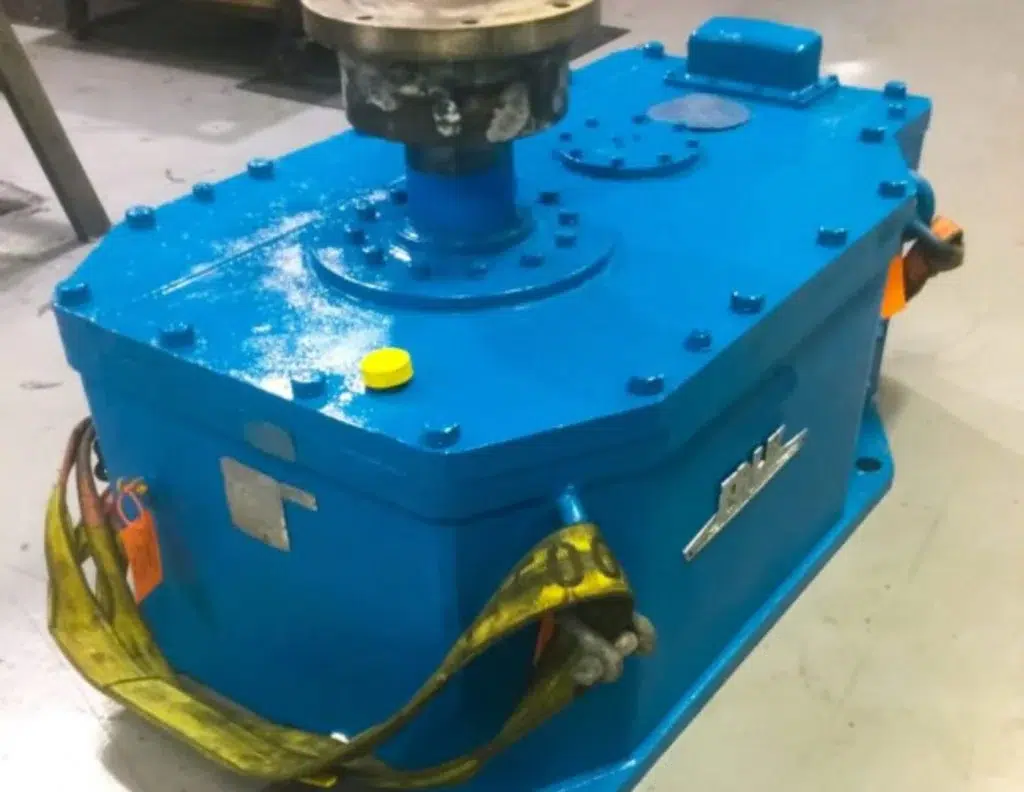
Industrial Drive Repair Keeps Heavy Gearboxes in Production
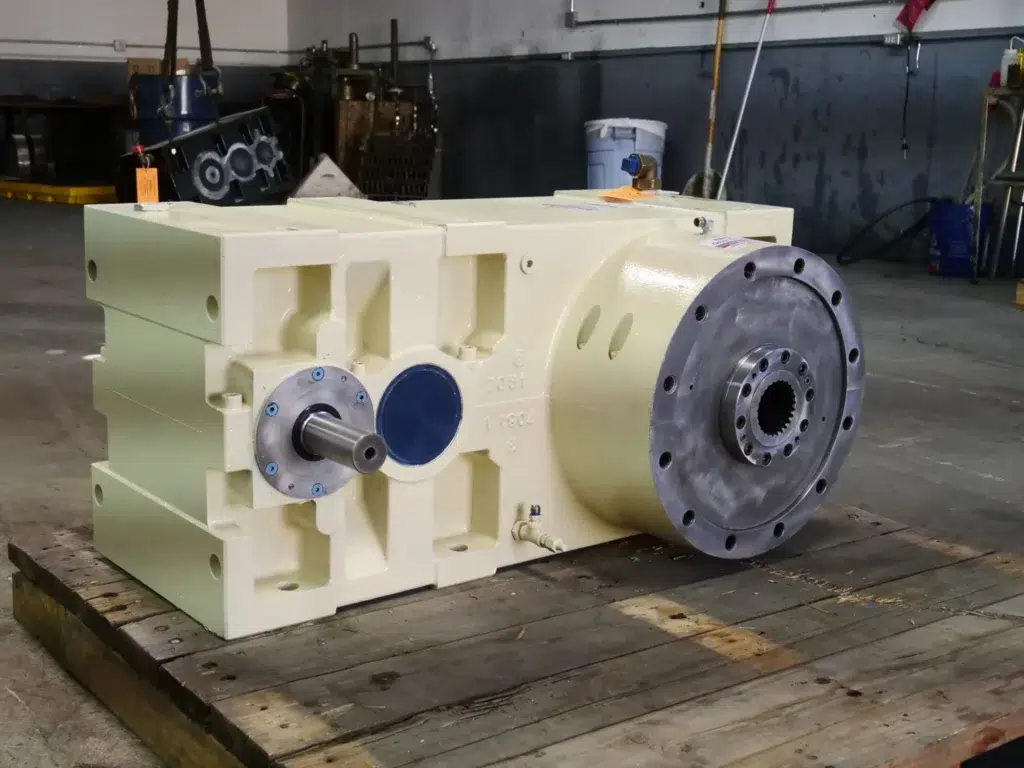
When a gearbox starts overheating, leaking oil, vibrating excessively, or producing gear chatter, remove it from service before a small defect becomes a major failure. Effective industrial drive repair starts with identifying the cause, then rebuilding worn gears, bearings, seals, shafts, or housing bores to correct tolerances and verifying performance under load.
For heavy-duty gear reducers and speed reducers, the goal is simple: restore dependable torque transfer without forcing a costly, slow equipment changeout. This applies to helical, bevel, and worm gearboxes used on conveyors, mining equipment, cement plants, marine systems, wind turbines, and heavy manufacturing lines.
A qualified rebuild should address the full drive system, not merely the visible damage. That means inspecting lubrication condition, gear tooth wear, bearing fit, shaft alignment, seals, and housing integrity. All repair and line-boring work at Specialty Gear Drives is performed in-house at our Florida facility, with expedited logistics and fast shop turnaround available for urgent production needs.
I am Peter Clark, Owner of Specialty Gear Drives. My work in industrial drive repair focuses on rebuilding and reverse-engineering heavy gearboxes for demanding industries where gearbox downtime can stop an entire operation.
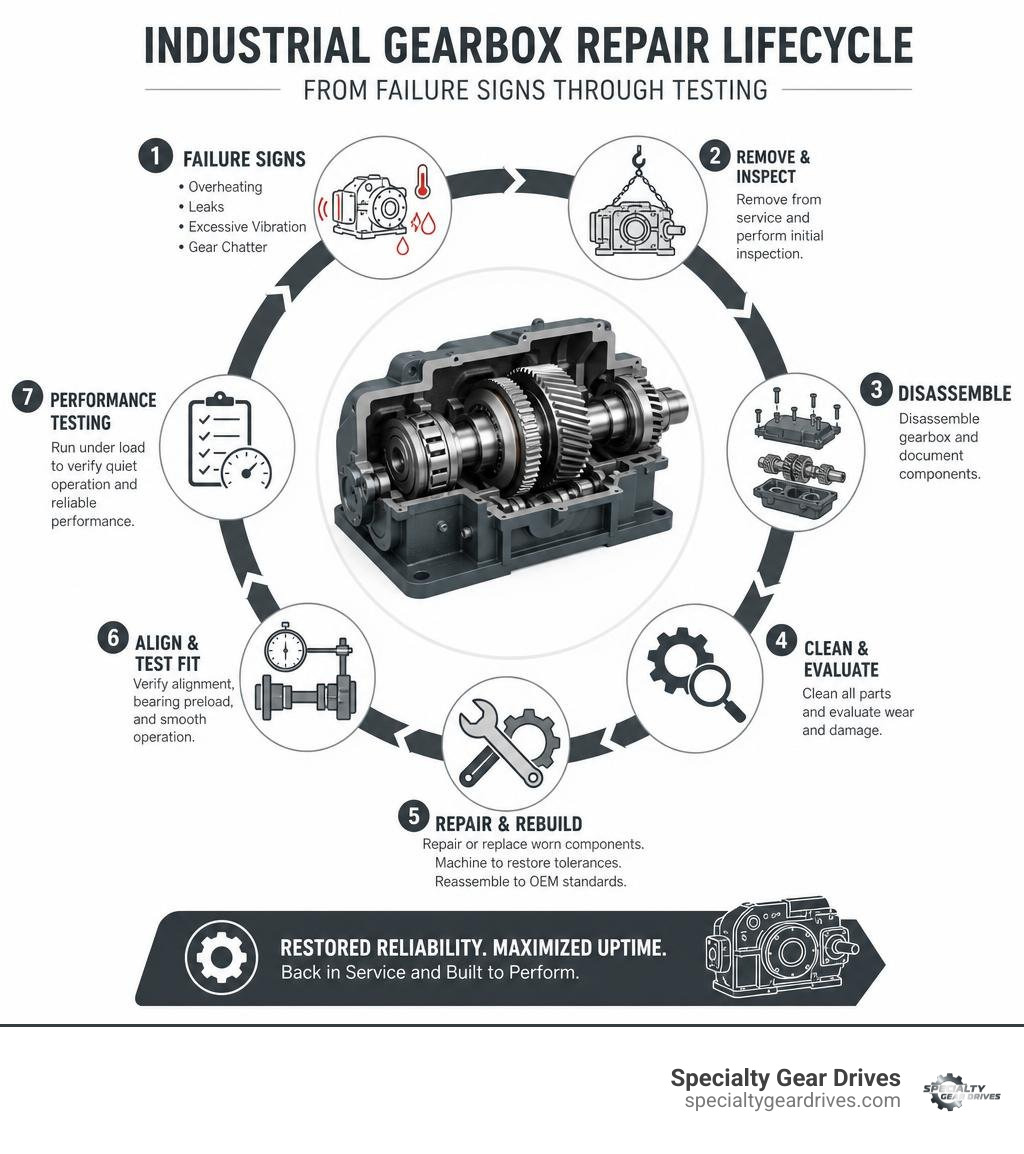
Industrial drive repair terms simplified:
Industrial Drive Failure Modes in Heavy Machinery
Heavy industrial equipment puts relentless stress on mechanical drivetrains. In facilities across Florida, Georgia, and Alabama, continuous operational demands expose gear drives to shock loads, extreme heat, airborne particulates, and moisture. Over time, these conditions degrade mechanical components, leading to progressive wear that threatens plant uptime.
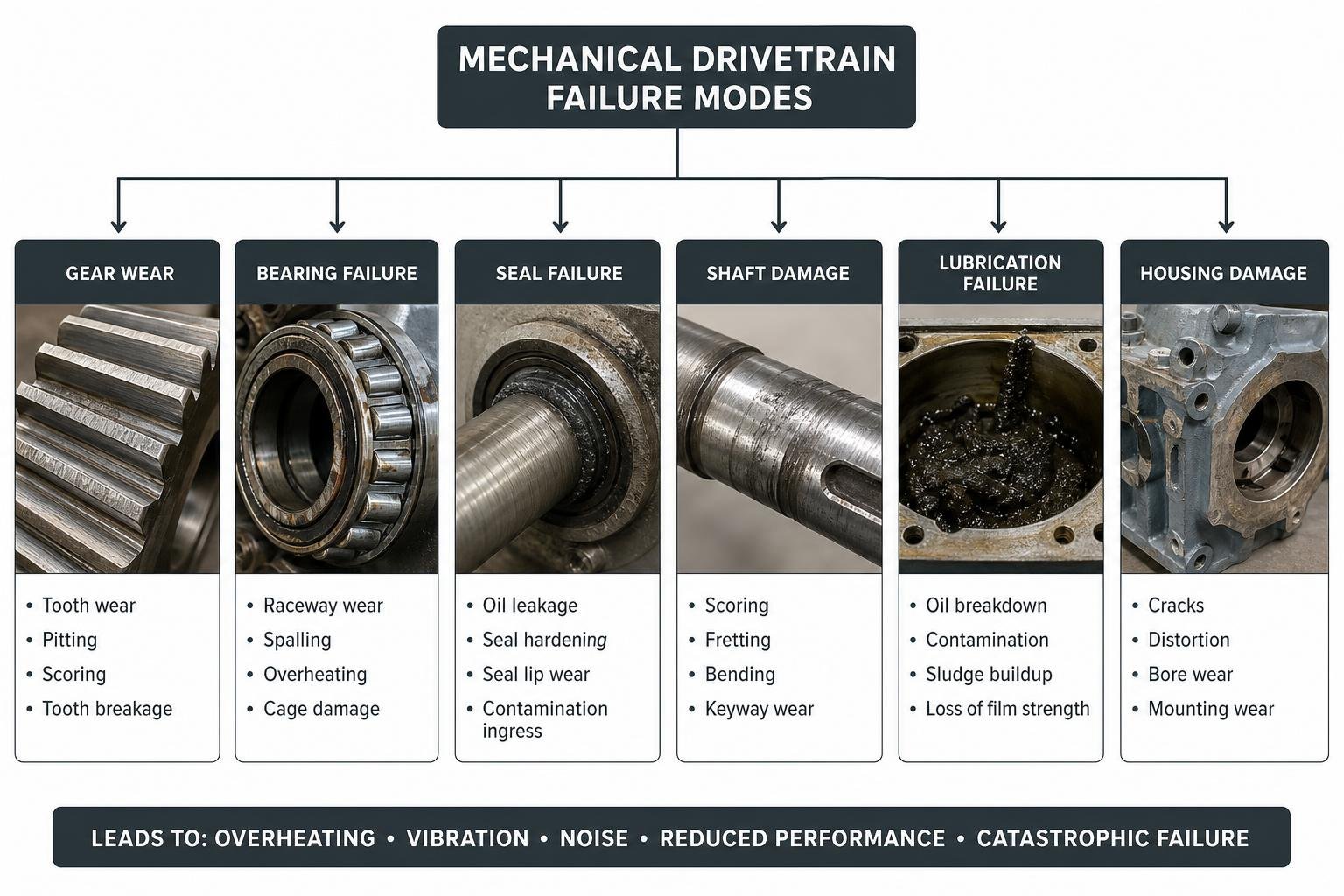
When high-torque gear reducers run continuously in mining operations or cement mills, boundary lubrication can break down. Without a stable hydrodynamic oil film, metal-to-metal contact accelerates tooth flank distress, bearing race micro-spalling, and localized overheating.
Operational Indicators Requiring Industrial Drive Repair
Catching mechanical deterioration before catastrophic lockup saves substantial capital. Plant operators should watch for specific physical warning signs during routine walk-downs:
- Elevated Housing Temperatures: When internal friction climbs due to bearing pre-load loss or oil starvation, housing skin temperatures can exceed acceptable thresholds.
- Audible Gear Chatter and Clatter: Worn gear teeth exhibit increased backlash, causing distinct metallic knocking under variable loads.
- Persistent Oil Leaks: Hardened, heat-damaged radial lip seals allow lubricant to escape while permitting abrasive dirt or process moisture to enter the sump.
- Rumbling Vibration Spectra: High-frequency vibration usually points to bearing race degradation, whereas running-speed harmonics typically indicate shaft misalignment or tooth pitting.
- Erratic Torque Transmission: Slipping fits or broken teeth create micro-surges in motor amperage as the drive struggles to maintain uniform output speed.
Tracking these symptoms through how gearbox condition monitoring saves your machinery and your sanity helps maintenance teams schedule planned overhauls before a housing fractures or a gear train shears.
Root Causes of Gear and Bearing Deterioration
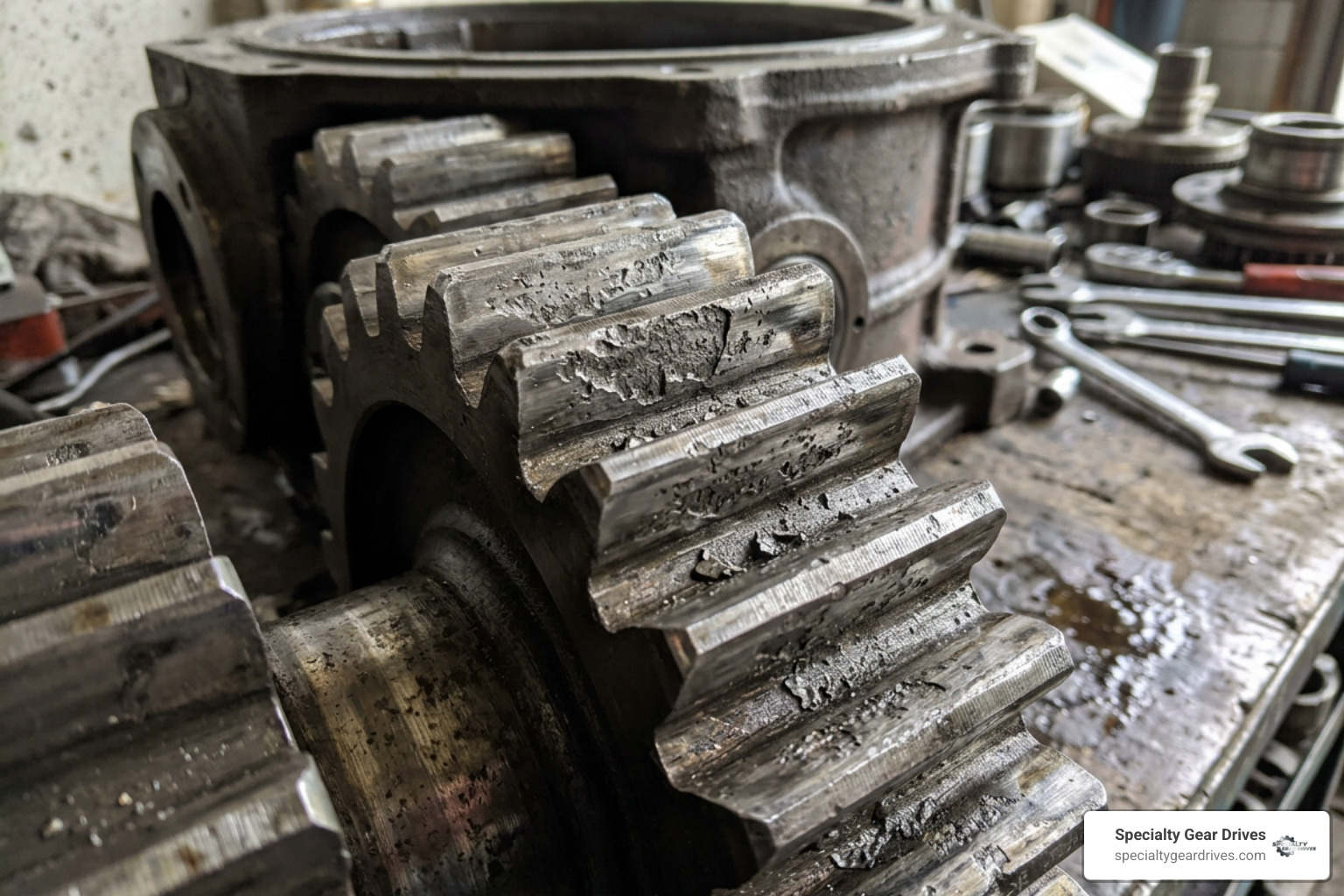
Mechanical failure rarely happens in isolation. It stems from compounding operational stressors that attack the weakest points in the drive assembly:
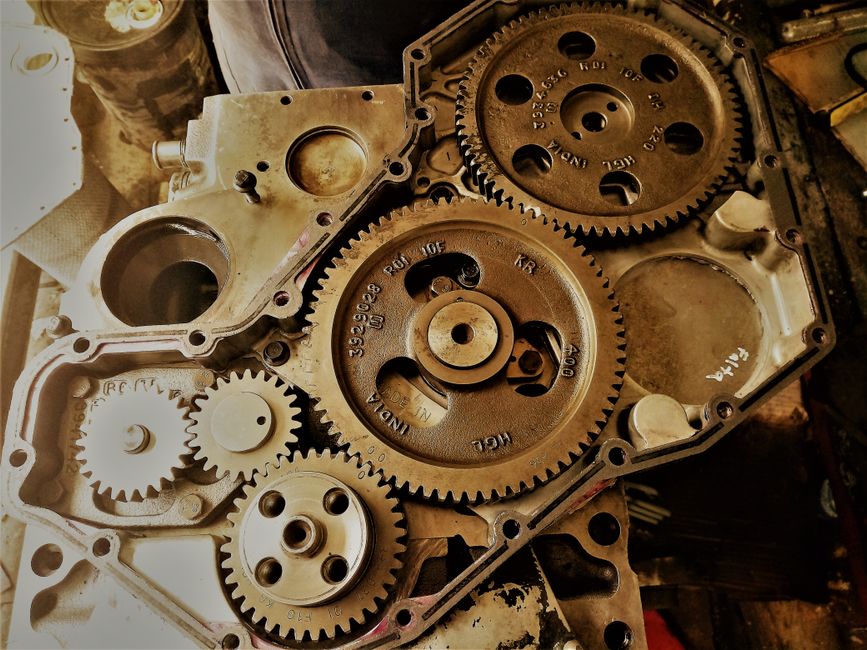
- Surface Contact Fatigue: Cyclic contact stresses cause micro-pitting along the pitch line of gear teeth. As sub-surface micro-cracks propagate, material flakes away, creating deep spalls that ruin tooth geometry.
- Shock Load Fractures: Impact loading from jammed conveyors or crushing mills exerts bending stresses beyond the yield strength of the gear root, causing sudden tooth breakage.
- Journal and Bore Fretting: Loose bearing fits permit the outer race to rotate within the housing saddle. This relative motion wears the bore out-of-round, generating metal fines and destroying critical shaft centerlines.
- Lubricant Contamination: Fine abrasive particles from crushing processes or pulp processing turn gear oil into grinding compound, accelerating seal slicing and tooth scoring.
Rushing a field fix often leads to common gear reducer repair mistakes you can’t afford to make, such as replacing broken bearings without correcting the out-of-round housing bore that destroyed them in the first place.
Precision In-House Workflow for Industrial Drive Repair
Restoring a heavy drive unit requires structured engineering procedures. Every step must focus on identifying the failure mechanism, correcting dimensional geometry, and verifying component integrity.
Comprehensive Teardown, Cleaning, and Non-Destructive Inspection
Our repair process starts the moment a drive arrives at our shop:
- Decontamination Washing: The gearbox is completely disassembled, and all castings, shafts, and gearing are thoroughly degreased in an industrial wash tank to remove sludge, burnt oil, and grit.
- Visual and Dimensional Inspection: Technicians measure bearing journals, seal surfaces, shaft runout, housing bore diameters, and gear tooth profiles using calibrated micrometers and bore gauges against OEM tolerance limits.
- Non-Destructive Testing (NDT): Critical stress areas undergo Wet Magnetic Particle Inspection (MPI) and Dye Penetrant testing to uncover sub-surface fatigue fractures in shafts and gear tooth roots.
- Root-Cause Analysis: We document the failure mechanism to ensure our rebuild addresses the source of the breakdown rather than just the symptoms.
In-House Machining, Line Boring, and Housing Reconditioning

A damaged housing ruins the alignment of fresh internal components. When bearing saddles show ovality, scoring, or fretting wear, we use the complete guide to line boring housing machining to re-establish true parallel and perpendicular centerlines across split-case or solid gearboxes.
Our machinists sleeve or weld-overlay worn bore pockets, stress-relieve the structural casting, and line-bore the housing back to exact factory dimensions. For precision assembly, bearings are thermal-fit using liquid nitrogen chilling or controlled induction heating, preventing the mechanical scoring and micro-fractures caused by brute-force pressing.
Documented Load Testing and Dynamic Quality Assurance
No rebuilt industrial drive leaves our shop without verification under operational conditions. We mount the completed unit on our dedicated testing stand and conduct a continuous 6-hour burn-in run.
During testing, technicians monitor bearing vibration levels across full frequency spectra, log thermal stabilization curves, verify oil pressure and containment, and evaluate tooth contact patterns using layout bluing. This documented quality assurance guarantees that the drive maintains smooth operation, proper backlash, and zero leakage before it ships back to your facility.
Rebuild Economics: Industrial Drive Repair vs. Replacement
Procurement managers in Mississippi, South Carolina, and Louisiana often face a tough decision when a critical gearbox fails: order a brand-new unit or rebuild the existing drive. Looking closely at real capital costs and production schedules makes the right path clear.
| Decision Factor | Complete OEM Replacement | Specialty Gear Drives Rebuild |
|---|---|---|
| Typical Cost Range | Baseline (100% Capital Expense) | 15% to 50% of new unit cost (40%–60% savings) |
| Standard Lead Time | 8 to 20+ weeks for heavy industrial units | 2 to 3 weeks standard; 24–48 hr emergency rush |
| Structural Modifications | Often required (different mounting feet/shafts) | None (100% drop-in dimensional match) |
| Obsolete Unit Support | Extremely limited or discontinued | Fully supported via custom gear manufacturing |
| Warranty Coverage | Typically 90 days to 1 year | 24-month comprehensive production warranty |
Financial Viability: Industrial Drive Repair vs. Complete Replacement
Ordering a new speed reducer or heavy gear drive often involves long manufacturing lead times and significant capital expenditure. Worse, newer replacement models frequently feature updated footprints, altered input shaft centerlines, or different baseplate hole patterns that require costly structural modifications to plant foundations and motor mounts.
Rebuilding an industrial drive costs roughly 15% to 50% of buying a new unit, saving plants 40% to 60% compared to OEM replacement. Because our rebuild restores the original housing casting, the unit drops straight back onto its base without field modifications, preserving existing shaft couplings, spare parts inventories, and piping connections.
Turnaround Benchmarks and Expedited Logistics Solutions
When a production line halts, downtime costs accumulate every hour. Standard OEM procurement lead times of 8 to 20 weeks are simply unacceptable for plants running continuous operations.
Specialty Gear Drives offers rapid turnaround programs, providing comprehensive rebuilds in 24 to 48 hours for urgent situations, backed by our streamlined logistics support. If an unexpected failure threatens your operation, emergency gearbox repair: how to never worry about it again outlines our structured intake, rapid teardown, and fast shop turnaround schedules designed to bring heavy production assets back online promptly.
Restoring Legacy and Discontinued Industrial Drives
Many plants in heavy industries rely on legacy gearboxes that have run dependably for decades. When these legacy units finally wear out, plant engineers discover that the original equipment manufacturer has gone out of business, discontinued the model line, or purged the technical drawings.
Rather than spending millions re-engineering an entire production section to fit modern units, reverse engineering offers a direct, cost-effective way to restore obsolete drives to original performance levels.
Reverse Engineering and Custom In-House Gear Manufacturing
At our Florida manufacturing facility, we do not depend on third-party supply chains or discontinued factory parts catalogs. We reverse-engineer worn gear sets directly from physical samples using precision optical scanning, coordinate measuring systems, and metallurgical spectrometry.
We identify the original alloy composition, case hardening depth, and core microstructure. Using heavy-duty CNC hobbing, shapers, and gear grinders, we manufacture precision replacement components up to 20 feet in diameter. Whether your drive uses spur gearing, helical sets, double-enveloping worm gears, or spiral bevel pinions, our manufacturing capabilities explained in the complete guide to custom industrial gears ensure that custom-cut gear profiles meet or exceed original AGMA quality standards.
Rebuild Quality Standards and Long-Term Warranty Protection
Every drive rebuild we complete incorporates premium materials engineered to outlast the original parts. We fit high-capacity Timken bearings, install premium fluoroelastomer seals resistant to aggressive industrial chemicals, and precision-grind shaft journals to exact surface finishes.
Because we maintain complete control over our machining, gear cutting, and assembly processes, we back our work with an industry-leading warranty. Plant managers can review the complete guide to gearbox rebuilds with a 24-month warranty to see how our 24-month operational warranty provides reliable protection and peace of mind across demanding industrial sectors.
Frequently Asked Questions About Industrial Drive Systems
What testing validation is performed after an industrial drive rebuild?
Every completed gearbox overhaul undergoes dynamic spin testing on our in-house test stand. We run the unit through a multi-hour burn-in period while monitoring vibration levels, bearing temperature stabilization, and mechanical sound profiles. Technicians apply layout bluing to verify tooth contact patterns across both driving and coasting flanks and perform pressure tests to ensure oil containment before final release.
How should heavy industrial drive units be prepared for freight transit?
Before shipping an industrial gear drive, completely drain all operating lubricant from the sump and secure the drain plugs. Fit rigid shaft locking clamps or keyed collar brackets to keep input and output shafts from rotating or moving axially during transit, which prevents bearing brinelling.
Seal all breathers and open ports with threaded steel plugs. Fasten the gearbox to a heavy-duty wooden skid or steel transport frame using high-tensile strapping, and protect machined shaft extensions with rust-preventative grease and heavy wrap.
Can obsolete or unsupported industrial drives be restored to OEM standards?
Yes. Even when OEM technical support and factory replacement parts are unavailable, our facility can fully restore obsolete gear drives. We take 3D dimensional scans of broken internal parts, determine metallurgical properties, and machine brand-new gears, shafts, and bearing carriers in-house. We can also line-bore damaged housings back to true centerlines, bringing the drive to factory tolerances.
Conclusion: Maximizing Industrial Drive Longevity
Maintaining mechanical drive systems is essential for continuous industrial production. When excessive vibration, gear chatter, bore fretting, or oil loss threatens your heavy machinery, choosing precision rebuilds over long OEM procurement cycles protects your operating margins and shortens downtime.
Specialty Gear Drives delivers full-service restoration for heavy gear reducers, speed reducers, and custom industrial drive assemblies. From our Largo, Florida facility, we provide responsive service across Florida, Georgia, Alabama, South Carolina, Mississippi, and Louisiana. With rapid shop turnaround, free freight pickup and delivery, cost savings of up to 60% compared to new equipment, and a comprehensive 24-month warranty, our in-house engineering team keeps your critical drivetrains running smoothly.
Contact us today to arrange rapid freight intake or learn more about our comprehensive industrial gearbox repair services.