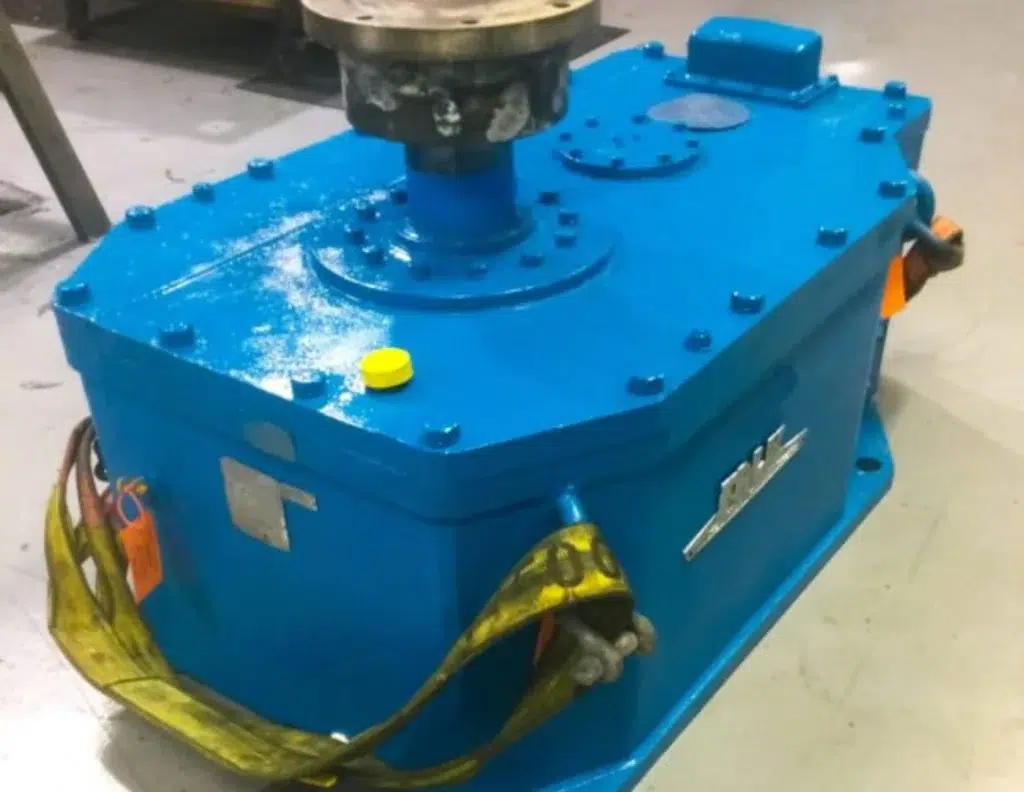
Common Gear Reducer Repair Mistakes You Can’t Afford to Make
Why Gear Reducer Repair Mistakes Cost More Than the Repair Itself
Gear reducer repair done wrong doesn’t just fail to fix the problem. It creates a bigger one.
A single failed gearbox on a conveyor line or processing system can shut down an entire production shift. In phosphate plants across central Florida, pulp mills in Alabama and Mississippi, or petrochemical facilities along the Louisiana Gulf Coast, that kind of unplanned downtime adds up fast. The heat, humidity, and salt air in the Southeast make gear reducers work harder than they would in more forgiving climates, which means failures happen faster when something is already wrong.
Here’s a quick summary of what gear reducer repair actually involves, and where things go wrong:
- Ignoring early warning signs like noise, vibration, or leaks until the unit seizes completely
- Wrong lubrication or missed oil changes, shortening the life of bearings and gear teeth
- Poor alignment and skipped backlash checks after reassembly, causing premature re-failure
- Using a general machine shop that lacks the precision equipment or technical depth for proper gearbox work
Repairing a gearbox correctly can save 40% to 60% compared to buying a new unit, often with faster turnaround. But those savings disappear quickly if the repair is done poorly and the unit fails again in six months.
This article covers the mistakes that cause exactly that, and what proper gear reducer repair looks like when it’s done right.
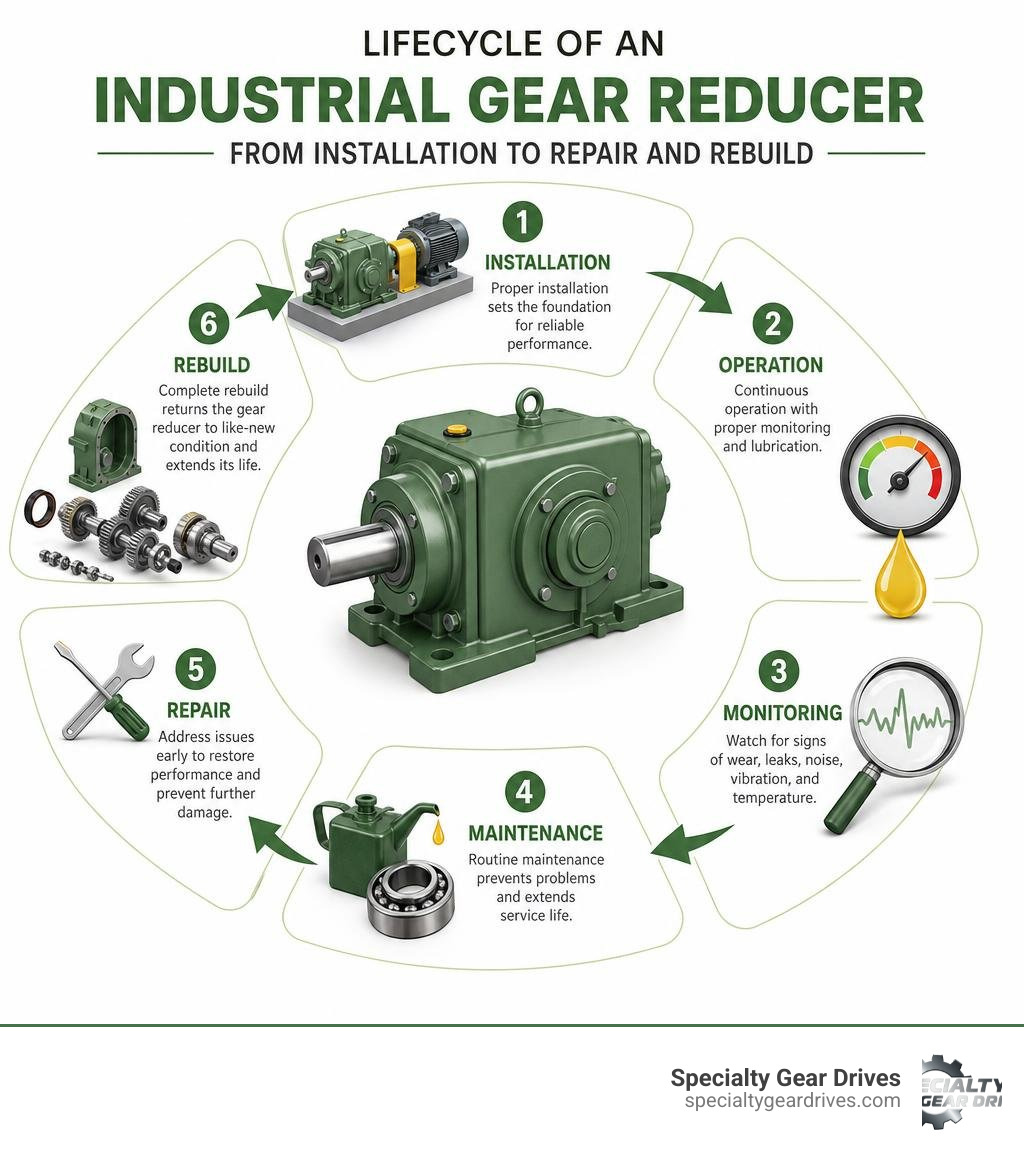
Mistake 1: Ignoring Early Warning Signs of Gear Reducer Failure
Early warning signs of gear reducer failure include abnormal vibration, elevated operating temperatures, oil leaks, and unusual noises. Ignoring these symptoms leads to catastrophic damage like high-speed bearing seizure, gear tooth breakage, or shaft seal grooving. Catching these indicators early allows for planned maintenance rather than emergency shutdowns.
Vibration is often the first physical sign that internal components are wearing out. It typically points to misaligned shafts, worn bearings, or gear teeth that have lost their original profile. When a gearbox vibrates, the internal stress increases, accelerating the wear on every other component.
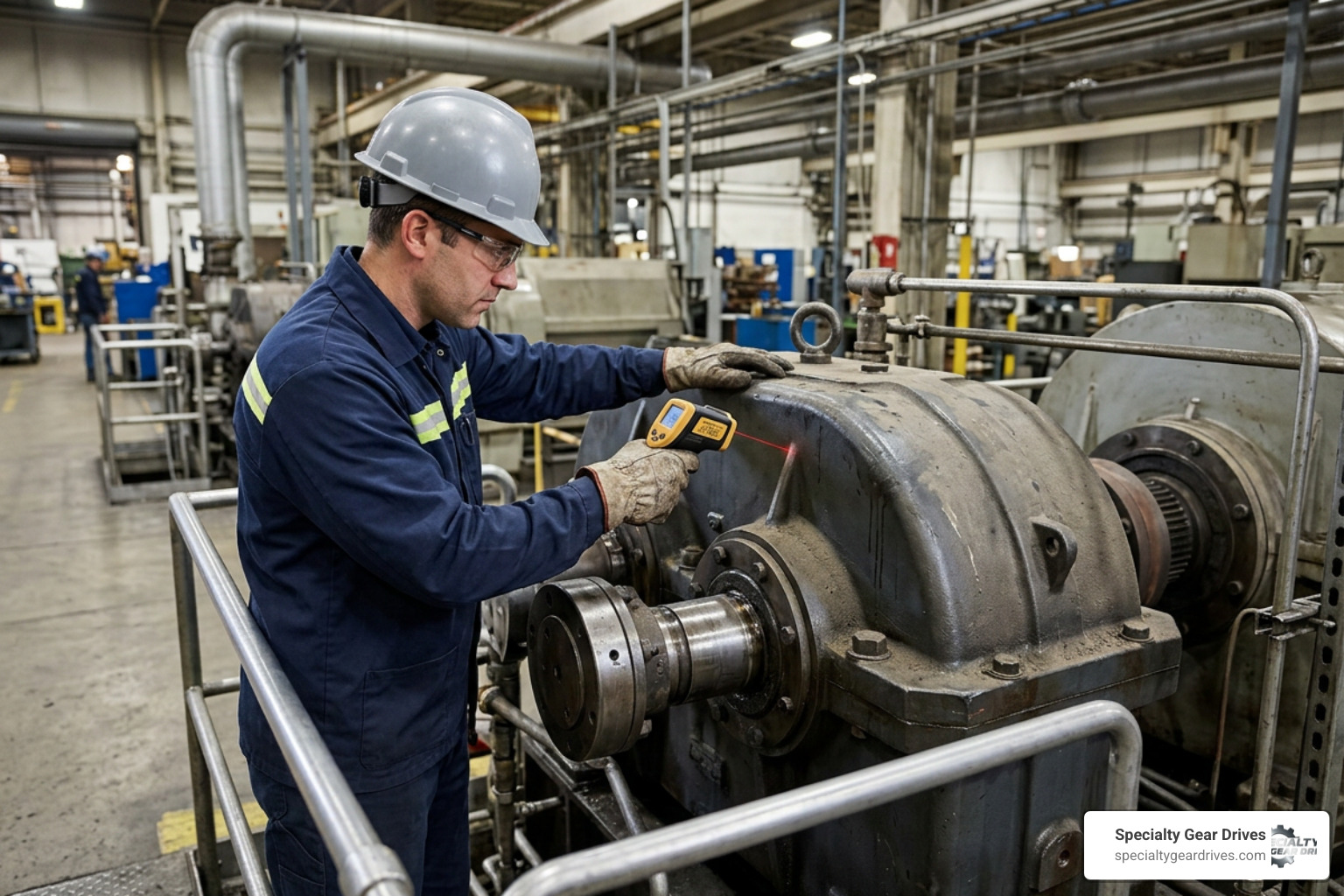
Overheating is another common issue that is easy to identify. If you spray water on the gearbox housing and it sizzles, or if you notice discolored paint and melted plastic components, the internal temperature is too high. High temperatures degrade the lubricant, which leads to micropitting and rapid gear wear.
Oil leaks should never be ignored. A leaking seal does more than just lower the oil level. It creates a path for water, dirt, and chemical contaminants to enter the gearcase. In the humid environments of coastal processing plants, airborne moisture will quickly contaminate the oil and cause internal rust.
When these signs are ignored, a simple bearing replacement turns into a catastrophic failure. Taking action at the first sign of trouble prevents the need for an expensive Emergency Gearbox Repair: How to Never Worry About It Again.
Mistake 2: Improper Lubrication and Oil Change Intervals
Standard industrial gear reducers require oil changes every 10,000 operating hours or three years for mineral oil, whichever comes first. Using a synthetic lubricant can extend this service interval to 20,000 operating hours or six years. Failing to stick to these schedules leads to oil film breakdown and rapid gear tooth wear.
Lubrication is essential to all rotating elements because it prevents metal-to-metal contact. The initial factory oil fill is designed to protect the gears during their first years of service, but the oil eventually loses its viscosity due to constant shear forces and heat. Once the oil breaks down, it can no longer support the heavy loads on the gear teeth.
Over-filling a gear reducer is just as damaging as under-filling it. When a gearbox is over-filled, the gears churn the oil, which generates excessive heat and creates foam. This foaming action reduces the lubricating capability of the oil and forces it out through the shaft seals and breather plugs.
The table below outlines the standard oil change intervals for industrial gearboxes under normal operating conditions.
| Lubricant Type | Normal Change Interval (Hours) | Normal Change Interval (Years) | High-Temperature / High-Load Conditions |
|---|---|---|---|
| Mineral Oil (ISO 220 EP) | 10,000 hours | 3 years | Every 6 to 12 months |
| Synthetic Lubricant | 20,000 hours | 6 years | Every 12 to 24 months |
Mistake 3: Skipping Precision Alignment and Backlash Calibration
Skipping precision shaft alignment and backlash calibration during installation causes rapid gear wear, bearing failure, and broken shafts. Misalignment places excessive overhung loads on the input and output shafts, exceeding the design tolerances of internal bearings. Proper alignment ensures that the load is distributed evenly across the entire width of the gear teeth.
When mounting a gear reducer, the housing must sit on a completely flat and even surface. You should use SAE Grade 5 or Metric Class 8.8 mounting bolts, torqued to the exact specifications of the unit. After the first 40 hours of operation under load, these bolts must be rechecked and retorqued to prevent any shifting.
Misaligned gears will show pitting, scuffing, or wear on only one side of the teeth. This concentrated loading quickly overstresses the metal, leading to tooth breakage. Correcting these issues requires specialized tools and a clear understanding of shaft tolerances. You can read more about these mechanical requirements in our guide on Gearbox Repair Near Me: Essential Skills to Become a Pro.
How to Measure Backlash During Gear Reducer Repair
Backlash is measured using a dial indicator mounted against a gear tooth while holding the mating shaft completely stationary. For a standard worm gear reducer, normal backlash should read between 0.020 and 0.030 inches Total Indicator Reading (TIR).
A reading between 0.040 and 0.050 inches TIR indicates excessive backlash, which means the worm gear and hub are worn and need replacement. Worm gear reducers often feature a bi-metal cast hub and precision wear sleeves with dual-lip oil seals. During reassembly, you must keep the shims in the exact same order and with their corresponding bearing retainers to maintain the correct end play.
Mistake 4: Choosing DIY or General Machine Shops Over Specialized Gear Reducer Repair

General machine shops lack the specialized testing equipment, metallurgical analysis tools, and gear-cutting machinery required to restore industrial gearboxes to original specifications. Specialized repair facilities utilize advanced diagnostic tools like Magnetic Particle Inspection (MPI), Nital etching, and load spin-testing to guarantee performance. Choosing a general shop often results in recurring failures.
Industrial gear reducers operate under massive loads and require precise tolerances. A general machine shop might replace the bearings but fail to notice microscopic cracks in the gear teeth. We use MPI and Nital etching to find these hidden defects before they cause a major breakdown on your production line.
If a gear is damaged beyond repair and original parts are obsolete, specialized shops can reverse engineer the gear geometry. We can manufacture replacement gears from premium alloy steels, grinding them to exact tolerances in our facility. This level of customization is something a standard machine shop cannot offer.
Sending your units to a dedicated facility ensures the job is done right the first time. You can learn more about finding local specialized support in Don’t Grind Your Gears and Find the Best Gearbox Repairing Near Me and explore how we handle logistics in Industrial Gearbox Repair – Don’t Let Shipping Costs Grind Your Gears.
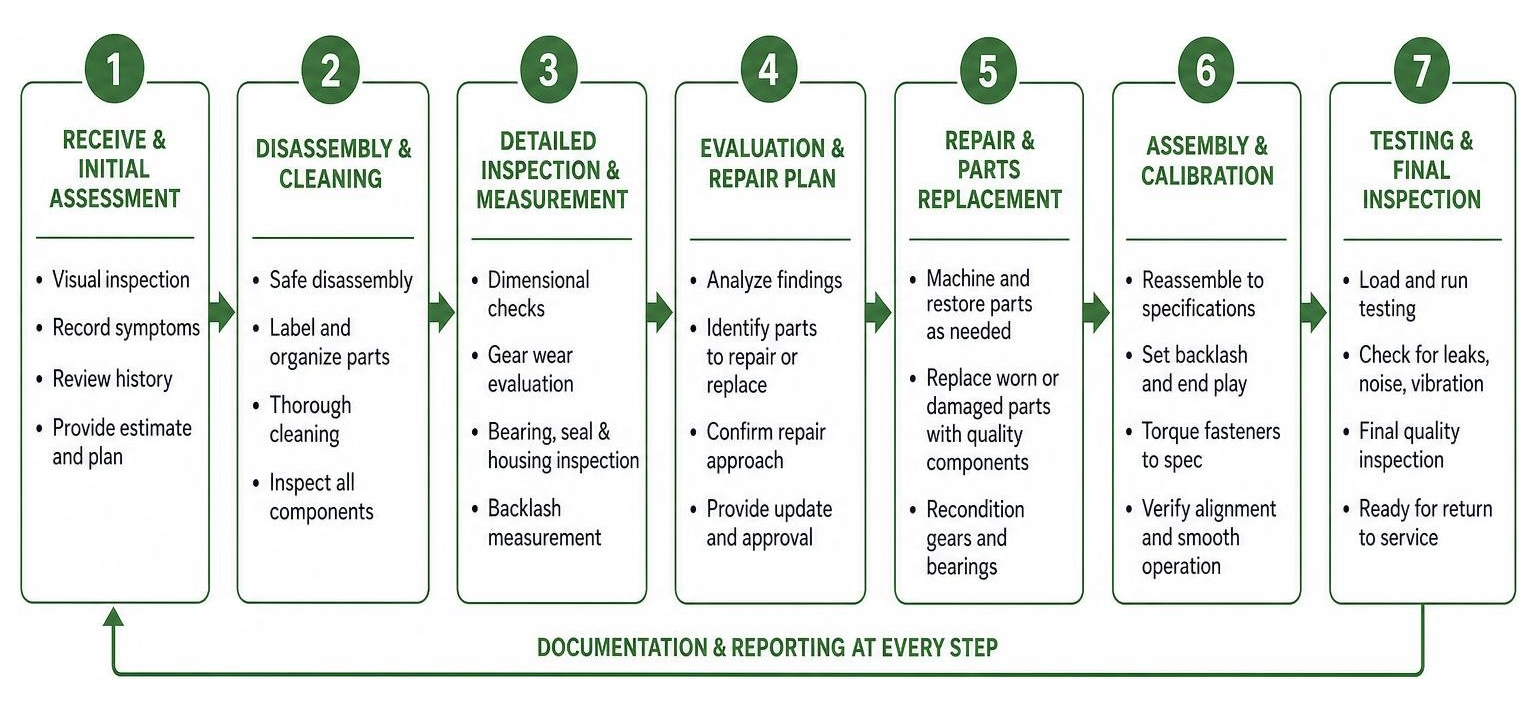
The Cost Benefits of Professional Gear Reducer Repair
Professional gear reducer repair saves between 40% and 60% compared to the cost of purchasing a brand-new replacement unit. These savings are achieved while restoring the gearbox to original performance standards, often with a much faster turnaround time than waiting for a new factory shipment.
A new gearbox can take weeks or even months to arrive from overseas manufacturers. A standard professional rebuild typically takes only 7 to 10 business days. For critical situations where every hour of downtime costs your plant thousands of dollars, we offer 24 to 48-hour emergency rush repairs.
Choosing to rebuild is also a highly sustainable option that reduces raw material waste. You can view our full range of rebuilding services on our Industrial Gearbox Repair page, and see how we support local plants in A Comprehensive Guide to Trusted Gearbox Repair Florida.
Frequently Asked Questions About Gear Reducer Repair
How long does a typical gear reducer repair take?
A standard industrial gear reducer repair or rebuild takes around 7 to 10 business days. For urgent situations, emergency repair services can turn a gearbox around in as little as 24 to 48 hours. Turnaround times depend on parts availability, the extent of gear wear, and whether custom gear manufacturing is required.
What is the warranty on a rebuilt gear reducer?
We offer a 24-month warranty on our industrial gearbox rebuilds. This warranty covers both parts and labor, and it activates only when the equipment is actually put into service, ensuring you are protected from the moment your operations resume. You can read the specific details of this coverage in our 24 Month Limited Warranty documentation.
Can obsolete gear reducers be repaired?
Obsolete gear reducers can be fully repaired and rebuilt. When original manufacturer parts are no longer available, specialized repair facilities use reverse engineering to analyze the gear geometry, material composition, and heat-treatment profiles. Replacement gears are then manufactured in-house to match or exceed the original performance standards.
Conclusion
Based in Largo, Florida, Specialty Gear Drives serves industrial operations across the Southeast, including Florida, Georgia, South Carolina, Alabama, Mississippi, and Louisiana. Whether you run a phosphate mine, a citrus processing plant, a pulp mill, or a petrochemical facility, we keep your heavy machinery moving.
We offer free pickup and delivery, 24 to 48-hour emergency services, up to 60% savings compared to buying new, and a 24-month warranty. By avoiding the common mistakes of ignoring warning signs, skipping lubrication schedules, and relying on general machine shops, you protect your plant from costly unplanned downtime.
Check out our Industrial Gearbox Repair solutions or Contact Us today to schedule a free inspection and receive a detailed diagnostic report.