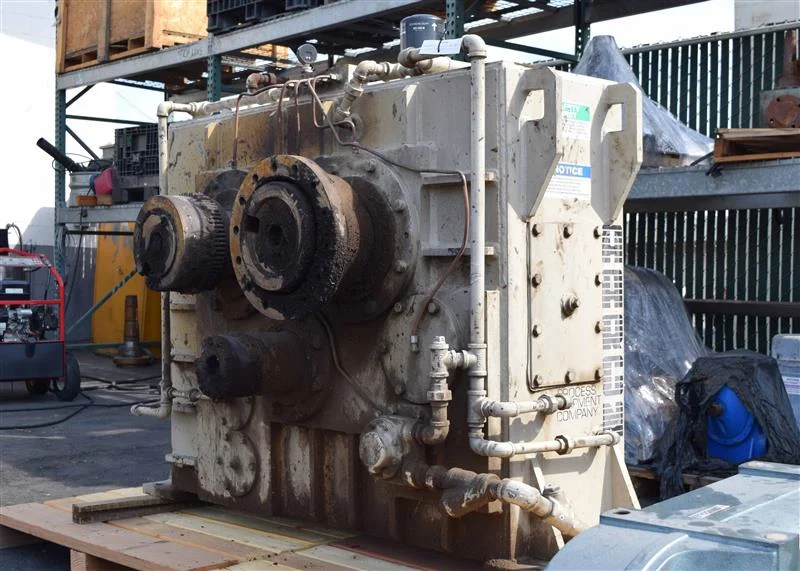
Why Finding Reliable Gearbox Repair Near Me Can Make or Break Your Operation
When a gearbox fails on a conveyor line, a processing mill, or a petrochemical drive system, the question of gearbox repair near me becomes urgent fast. A single failed gear reducer can halt an entire production shift, and waiting weeks for an OEM replacement is not always an option.
Here is what most plant managers and maintenance engineers need to know upfront:
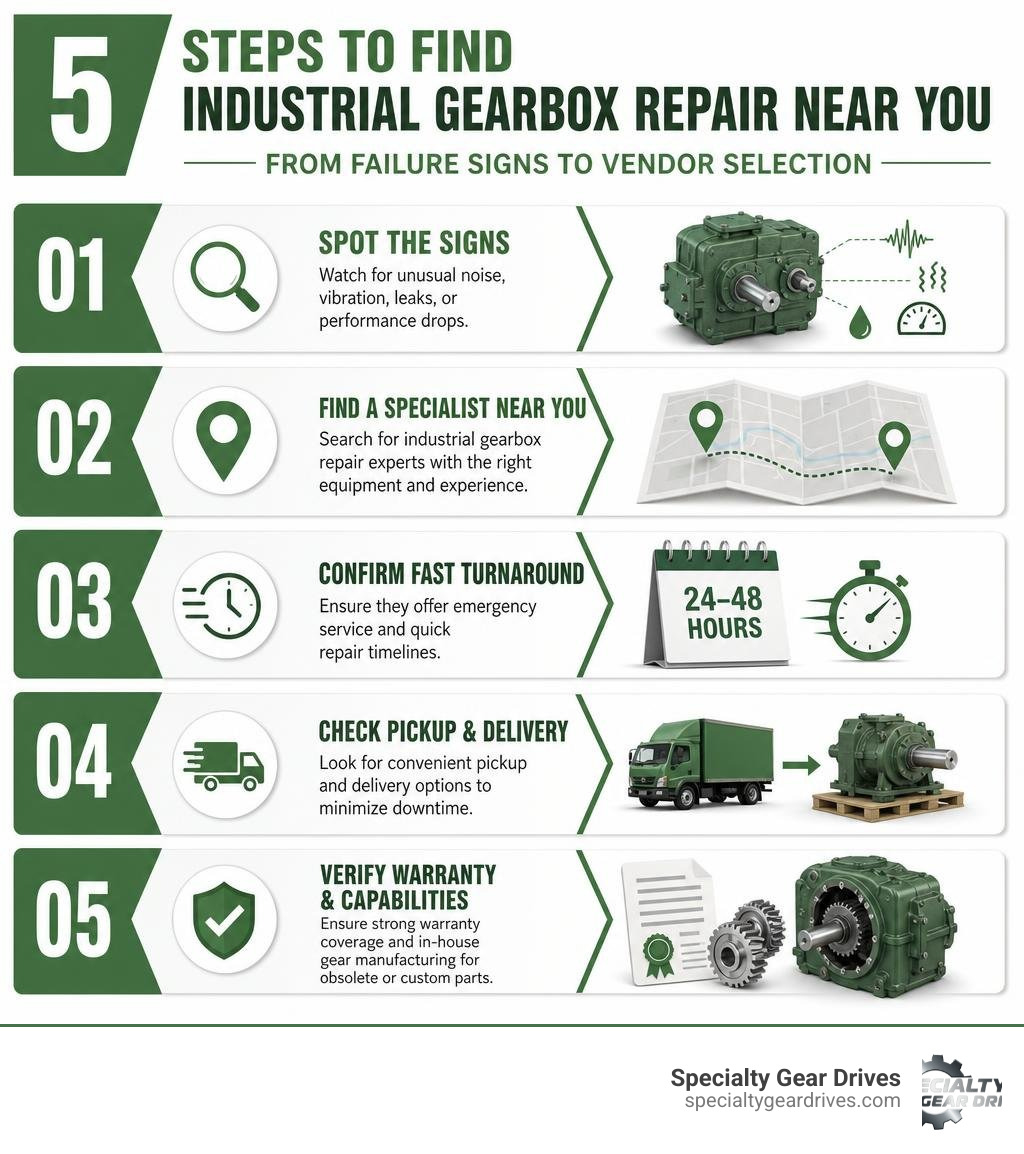
How to find industrial gearbox repair near you:
- Search for a specialist, not a general machine shop. Look for shops with gear cutting capability, load testing equipment, and experience with your specific gearbox type (helical, bevel, worm, planetary).
- Confirm they can handle emergency turnaround. Reputable industrial repair shops offer 24 to 48-hour emergency service for critical failures.
- Ask about free pickup and delivery. Many industrial gearbox repair specialists offer freight-included service across wide regional areas, including the Southeast U.S.
- Verify warranty terms before committing. A quality repair should come with a written warranty covering parts and labor, starting from the date the unit goes back into service.
- Check if they can reverse-engineer obsolete parts. If your gearbox is older or the OEM no longer supports it, in-house gear manufacturing capability is critical.
For facilities across the Gulf Coast, from Florida and Alabama to Louisiana and Georgia, unplanned downtime is expensive. Pulp and paper mills, phosphate processing plants, and petrochemical operations in this region run hard, often in high-humidity and high-temperature environments that accelerate gear wear and bearing fatigue.
The difference between a fast, quality repair and a slow, unreliable one is not just money. It is production continuity.
Identifying Industrial Gearbox Failure Modes
Early detection of gear reducer failure modes prevents catastrophic housing destruction and saves thousands of dollars in components. Most industrial gearboxes fail due to predictable mechanical wear patterns, lubrication breakdown, or misalignment.
Understanding these failure modes allows plant maintenance teams to make informed decisions before a unit seizes.
Gear Tooth Wear and Pitting
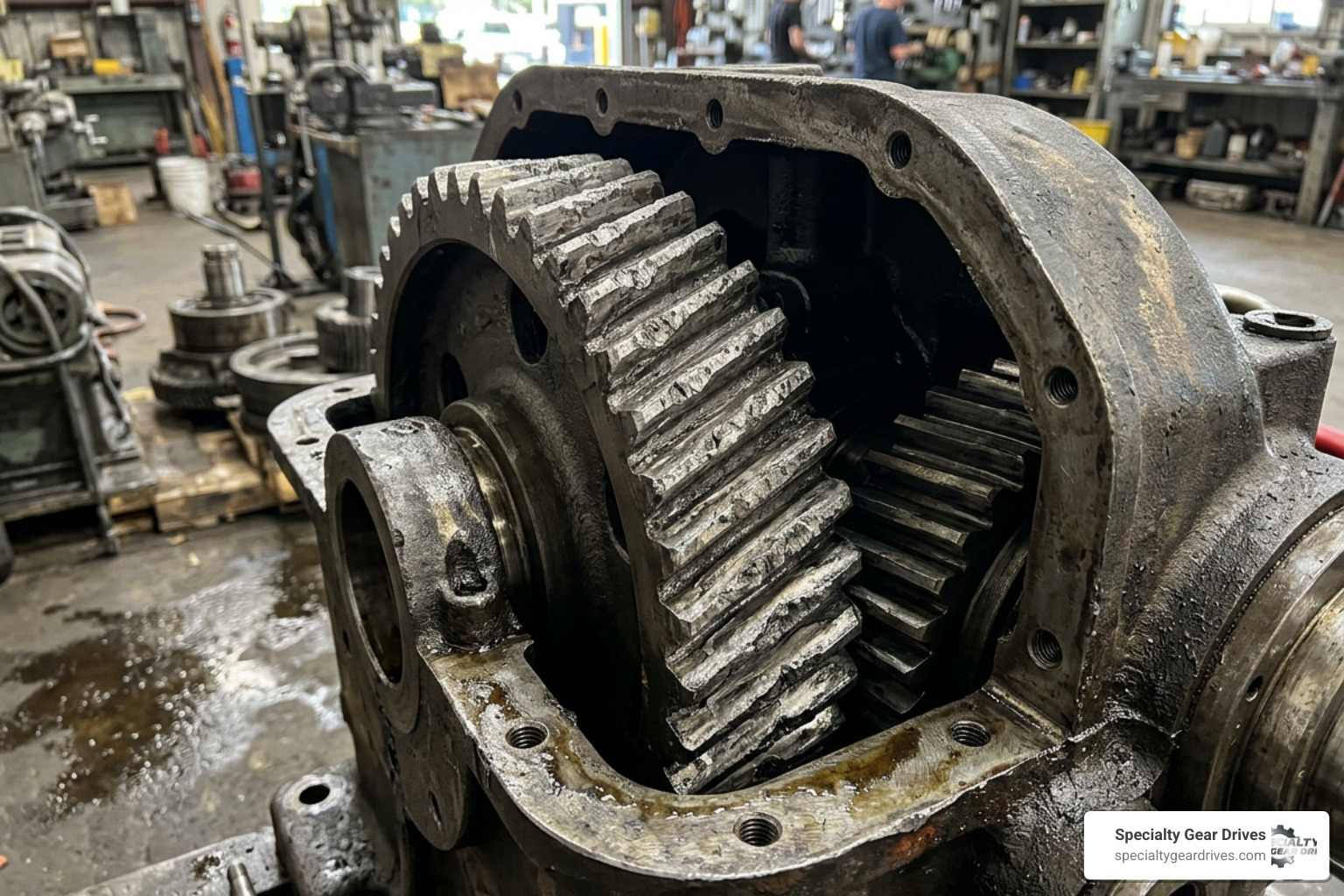
Gear teeth are subject to intense surface stress, which eventually leads to pitting, spalling, or plastic deformation. Pitting begins as microscopic cracks on the tooth surface, usually along the pitch line where sliding forces transition to rolling forces.
Left unaddressed, these tiny pits merge into larger craters, a stage known as spalling, which eventually shears the teeth under normal operating loads.
Bearing Fatigue and Bore Wear
Bearings keep the high-speed and low-speed shafts aligned under load. When a bearing begins to fatigue, the rollers or races develop micro-fractures, releasing metal flakes into the lubrication system.
This metal debris acts as an abrasive, wearing down the gear profiles and widening the bearing bores in the cast iron or steel housing. Once a housing bore is worn out of tolerance, the shafts deflect, causing rapid gear failure.
Shaft Misalignment and Fatigue
Misalignment between the electric motor and the gearbox input shaft, or between the output shaft and the driven machinery, introduces bending moments that shafts are not designed to handle. This cyclic bending leads to fatigue cracks, typically starting at keyways or step-down radiuses on the shaft.
Continuous monitoring of these stresses prevents sudden shaft breakage. You can learn more about managing these variables in our guide on How Gearbox Condition Monitoring Saves Your Machinery and Your Sanity.
Common Signs You Need Gearbox Repair Near Me
High operating temperatures, abnormal vibrations, and oil discoloration are the most reliable physical indicators that a gear reducer requires immediate service.
If you notice any of these signs in your facility, searching for an industrial specialist in gearbox repair near me should be your next step to prevent total equipment loss.
- Abnormal Vibration: A sudden increase in structural vibration, measured in inches per second or Gs of acceleration, indicates gear misalignment, tooth damage, or bearing failure.
- Elevated Temperatures: Industrial gearboxes running above 200 degrees Fahrenheit usually suffer from low oil levels, incorrect lubricant viscosity, or excessive internal friction from failing bearings.
- Metallic Debris in Oil: Finding bronze flakes, steel slivers, or grey metallic sludge during a routine oil change is a clear sign of severe component wear.
- Oil Leaks: Damaged shaft seals allow oil to escape while letting moisture and abrasive plant dust enter the gear chamber.
- Gear Chattering or Whining: High-pitched whining points to gear tooth wear or incorrect backlash, while rhythmic clunking or chattering indicates a broken tooth.
Addressing these issues early keeps your repair costs manageable. Neglecting them can lead to a complete mechanical lockup. For a deeper look at diagnosing these sounds and symptoms, read our article on how to Don’t Grind Your Gears and Find the Best Gearbox Repairing Near Me.
Choosing the Right Industrial Gearbox Repair Near Me
Selecting an industrial gearbox repair partner requires evaluating their engineering depth, machine shop capabilities, and regional logistics. A general machine shop can replace bearings, but they lack the specialized equipment needed to restore precise gear geometry and perform full-load testing.

For industrial plants in the Southeast, transport logistics are a major factor in turnaround times. Working with a regional specialist who provides dedicated freight services eliminates the delays and risk of damage associated with common carriers.
When production is down, look for a partner who offers rapid response times. You can read about setting up a contingency plan in our article on Emergency Gearbox Repair: How to Never Worry About It Again.
Evaluating Local Engineering Capabilities
A qualified industrial gearbox repair shop must possess specialized engineering capabilities to return a unit to OEM specifications. When vetting a local facility, look for these critical services:
- In-House Gear Cutting: The ability to manufacture custom helical, spur, bevel, and worm gears up to several feet in diameter when OEM parts are obsolete or have long lead times.
- Non-Destructive Testing (NDT): Utilizing magnetic particle, liquid penetrant, and ultrasonic testing to identify invisible hairline cracks in shafts, gears, and housings.
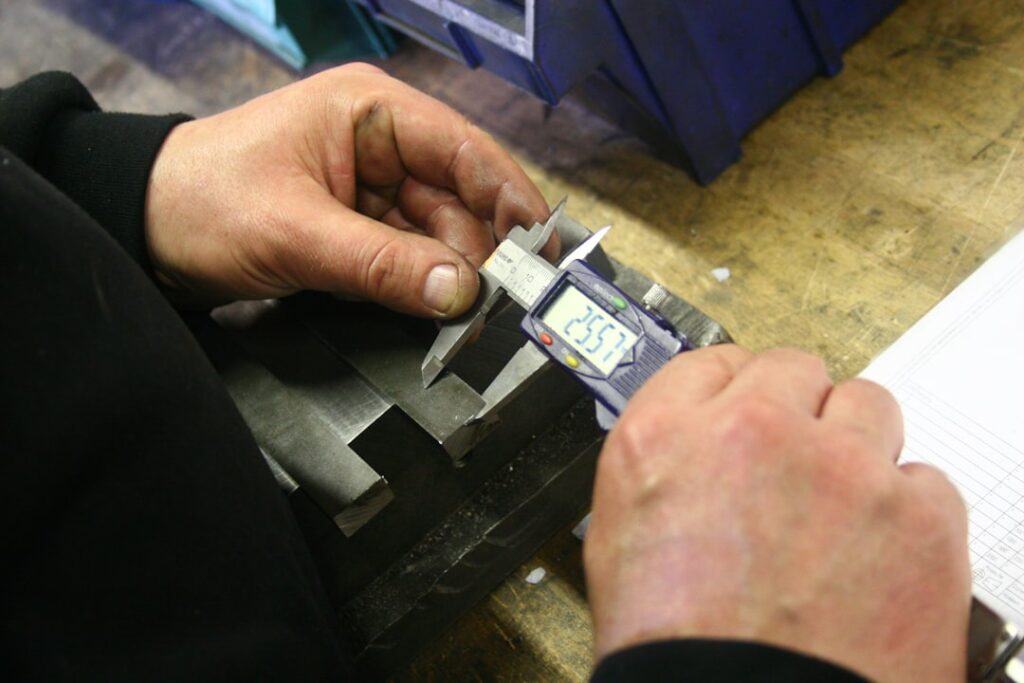
- Coordinate Measuring Machines (CMM): Precision metrology equipment to verify housing bore alignment and gear tooth profiles down to the micron.
- Full-Load Test Rigs: Testing the rebuilt gearbox under simulated load conditions while monitoring temperature, vibration, and noise levels before delivery.
- Reverse Engineering: The capability to rebuild a gearbox without original manufacturer drawings by measuring and drafting worn components.
The Industrial Gearbox Rebuild Process
The process of rebuilding an industrial gear reducer requires a systematic, multi-step engineering approach to ensure the unit performs reliably under heavy operational loads.
Every stage, from the initial cleaning to the final spin test, must be executed with high precision.
Our standard rebuilding process follows these phases to guarantee quality:
- Receiving and External Inspection: The unit is logged, photographed, and checked for external damage, shaft play, and oil leaks.
- Complete Teardown: Technicians completely disassemble the gearbox, removing all gears, shafts, bearings, and seals from the housing.
- Chemical Cleaning: All components undergo deep cleaning in hot chemical wash tanks to remove baked-on grease, rust, and paint.
- NDT and Metrology: Engineers inspect all load-bearing components for microscopic cracks and measure critical tolerances against original specifications.
- Component Repair and Manufacturing: Worn shafts are built up and machined, housings are line-bored if necessary, and damaged gears are replaced or manufactured from scratch.
- Reassembly and Backlash Adjustment: The gearbox is reassembled with new bearings, seals, and gaskets, with backlash and gear tooth contact patterns adjusted to exact tolerances.
- Testing and Painting: The unit is run on our test stand for several hours to monitor operating parameters, then prepped, painted, and readied for shipment.
For more details on how we execute each of these steps to restore your equipment, visit our dedicated Industrial Gearbox Repair service page.
Diagnostic Inspections for Gearbox Repair Near Me
A professional diagnostic inspection focuses on finding the root cause of the failure, rather than simply replacing broken parts. If a gearbox failed due to shaft misalignment, installing new bearings without correcting the housing bores or shaft straightness will only lead to another failure within weeks.
During our inspection, we perform ultrasonic testing on the shafts to check for subsurface fatigue. We also measure the bearing bore diameters to ensure they have not stretched out of round.
This thorough assessment is compiled into a detailed diagnostic report, which is shared with the plant maintenance team before any repair work begins.
Rebuild vs. Full Replacement Decisions
Deciding whether to rebuild an existing industrial gearbox or purchase a brand-new replacement unit depends on several factors, including housing integrity, cost, and lead times.
For large, heavy-duty gear reducers, rebuilding is almost always the more economical and faster option.
| Decision Factor | Gearbox Rebuilding | Full OEM Replacement |
|---|---|---|
| Typical Cost | Up to 60% savings compared to new | Full retail price plus shipping |
| Lead Time | 1 to 2 weeks (or 24-48 hours for emergencies) | 8 to 24 weeks for large industrial units |
| Housing Integrity | Re-machined and line-bored to OEM spec | Brand new cast housing |
| Engineering Upgrades | Can upgrade gear materials and bearing specs | Standard factory configuration |
| Warranty | 24-month operational warranty | 12-month standard factory warranty |
If the cast iron housing is cracked through a major load-bearing section, or if the internal components are entirely destroyed, a replacement may be necessary.
However, in the vast majority of cases, reverse-engineering worn gears and rebuilding the unit restores it to like-new condition at a fraction of the cost and time.
Frequently Asked Questions about Industrial Gearbox Maintenance
How often should industrial gearbox oil be changed?
Industrial gearbox oil should generally be changed every 2,500 to 5,000 operating hours, or every six months, for standard mineral oils. If your facility uses high-quality synthetic lubricants, this interval can often be extended to 10,000 hours or two years, depending on operating conditions.
Operating environment plays a major role in oil life. Facilities in the Southeast U.S. deal with high humidity and ambient heat, which accelerates oil oxidation and moisture contamination.
We recommend implementing a regular oil analysis program to monitor water content, acid number, and wear metals, allowing you to change the oil based on actual fluid condition rather than a strict calendar schedule.
What is the standard turnaround time for a rebuild?
A standard industrial gearbox rebuild typically takes between 7 and 14 business days, depending on the availability of replacement parts and the complexity of the gear geometry. If custom gear manufacturing or housing line-boring is required, the process may lean toward the upper end of that range.
When a critical production line is down, emergency repair services can turn a gearbox around in 24 to 48 hours. This accelerated timeline involves round-the-clock shift work, immediate reverse-engineering of damaged components, and expedited logistics to get the machinery back online as fast as possible.
What warranty coverage should a local shop provide?
A reputable industrial gearbox repair shop should provide a written warranty of at least 12 to 24 months. This warranty should cover both parts and labor for any defects in workmanship or materials.
You should look for an operational warranty that does not activate until the gearbox is actually put into service, rather than starting on the shipment date. This protection is valuable for plants that keep rebuilt gearboxes in storage as spare units for several months before installing them.
Partnering with Specialty Gear Drives for Your Industrial Repair Needs
When you need reliable, heavy-duty gearbox repair near me, Specialty Gear Drives delivers the engineering expertise and rapid response times required to keep your plant running. Based in Largo, Florida, we specialize in repairing, rebuilding, and manufacturing industrial gearboxes for heavy industries across the Southeast, including pulp and paper, petrochemical, phosphate mining, food processing, and marine sectors.
We serve facilities throughout Florida, Georgia, Alabama, South Carolina, Mississippi, and Louisiana. Our key operational advantages include:
- 24 to 48-Hour Emergency Service: We work around the clock to minimize your unplanned downtime during critical outages.
- Free Pickup and Delivery: We handle the regional logistics, picking up your damaged gearbox and returning it fully restored at no freight cost to you.
- Up to 60% Savings: Rebuilding your gear reducer with us costs a fraction of the price of purchasing a new OEM replacement.
- 24-Month Warranty: We stand behind our craftsmanship with a written 24-month warranty that begins when your equipment goes back into service.
Our team has the technical capability to reverse-engineer obsolete parts and manufacture custom gears up to modern industry standards. Whether you are dealing with a failed helical speed reducer, a worn worm drive, or a complex planetary system, we have the tools and experience to restore your equipment to OEM specifications.
To schedule a free inspection, arrange a pickup, or request an emergency quote, Contact Us today. You can also explore our complete range of capabilities on our Industrial Gearbox Repair page.