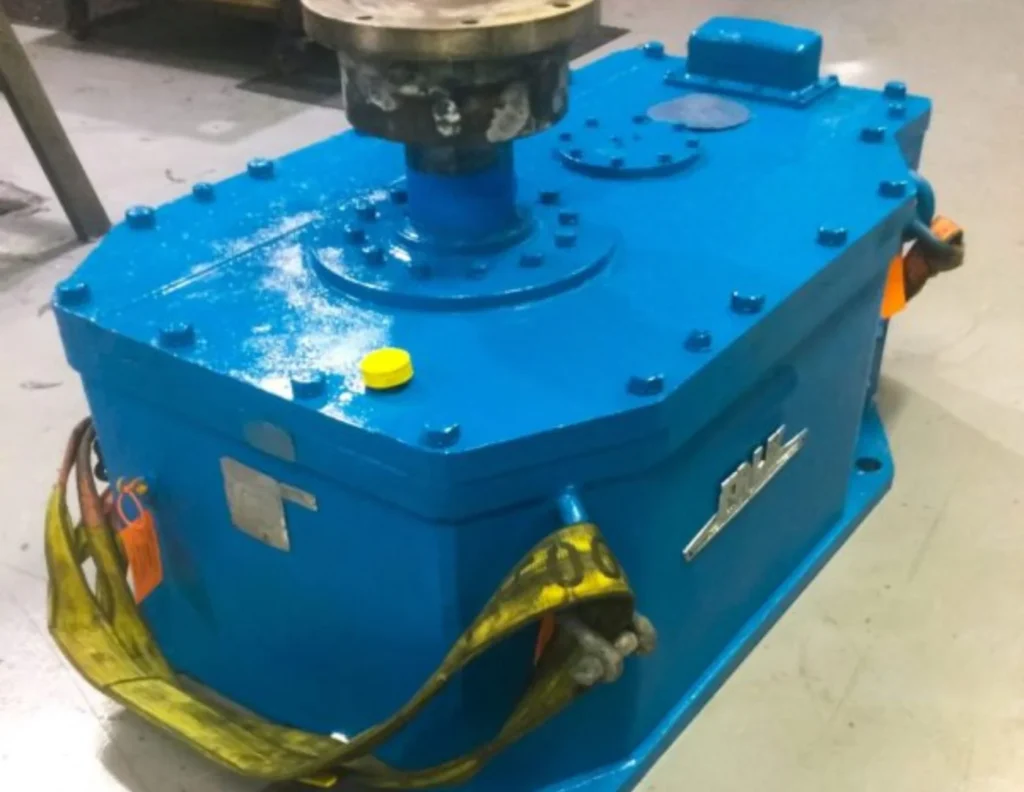
Why Gearbox Mounting Repair Can’t Wait on a Production Line
Gearbox mounting repair is the process of inspecting, correcting, and restoring the structural connection between an industrial gearbox and its baseplate or mounting frame, including addressing misalignment, housing damage, worn hardware, and soft foot conditions.
Here is what you need to know at a glance:
| Question | Quick Answer |
|---|---|
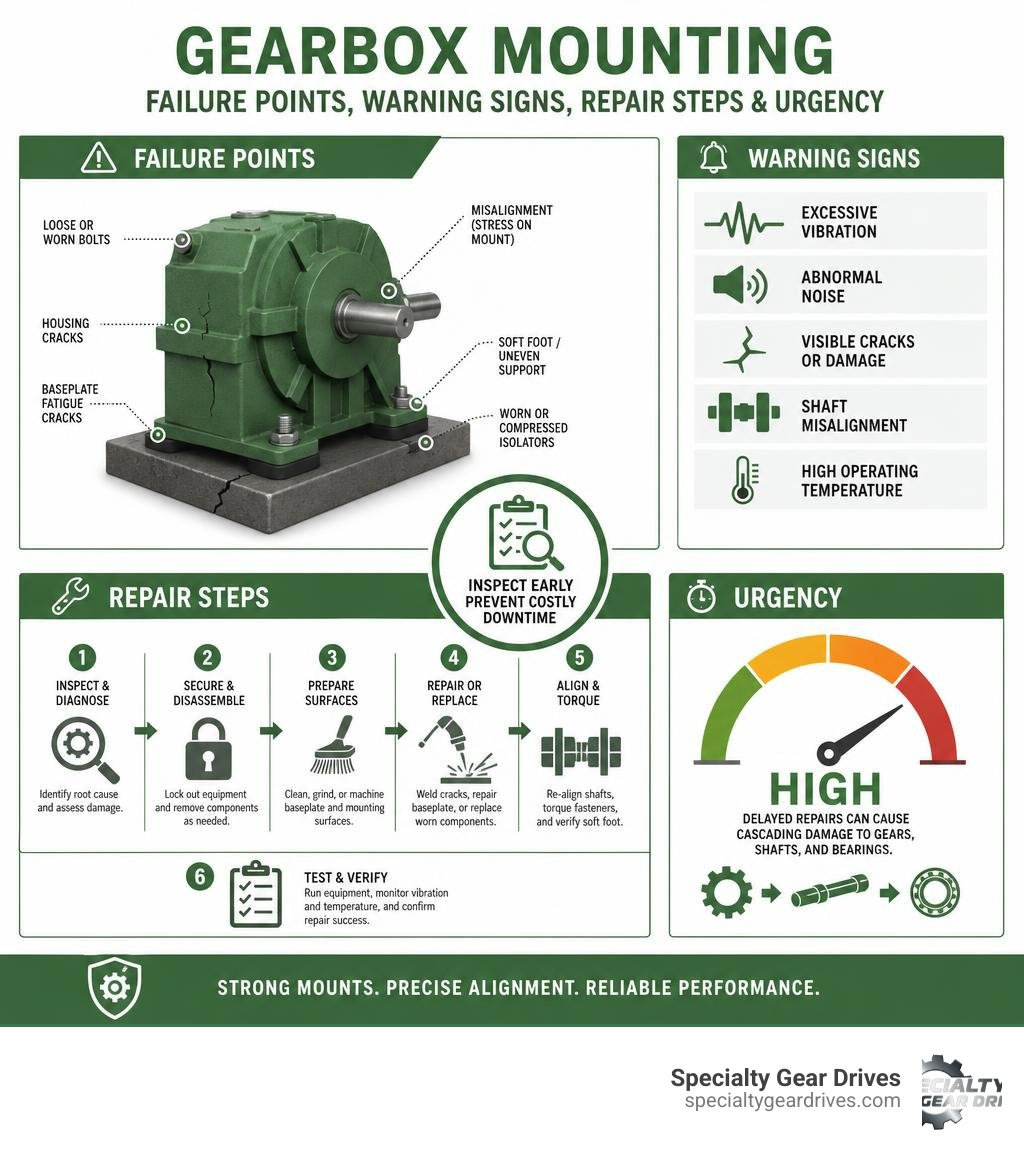
| What causes mounting failure? | Misalignment, baseplate fatigue, loose bolts, vibration, and thermal cycling |
| Key warning signs | Excessive vibration, abnormal noise, visible cracks, shaft misalignment |
| Repair or replace? | Repair is typically 30-60% of OEM replacement cost |
| Can it be done on-site? | Minor repairs yes; full rebuilds require shop environment |
| How urgent is it? | High. Delayed repairs cause cascading damage to gears, shafts, and bearings |
A single failed gearbox on a conveyor line can shut down an entire production shift. When the mounting system holding that gearbox fails, the consequences compound fast. Misalignment puts uneven load on gear teeth. Vibration accelerates bearing wear. And if the housing cracks at the baseplate, you are no longer looking at a mount repair. You are looking at a full rebuild.
This is a real pattern in heavy manufacturing across the Southeast. Plants running paper mills in Alabama, phosphate processing lines in Florida, or petrochemical drives along the Gulf Coast often push equipment hard, in high-humidity, high-heat environments that accelerate wear on mounting hardware and rubber isolation components alike.
The good news is that most gearbox mounting failures are repairable, and when caught early, the repair scope stays manageable. This guide walks through the complete process, from identifying the first warning signs to completing a proper mount repair that restores alignment and protects the rest of the drivetrain.
Identifying Symptoms of Industrial Gearbox Mounting Failure
The primary symptoms of industrial gearbox mounting failure are high-frequency vibration, recurring shaft misalignment, and structural cracks near the baseplate. These signs point to a breakdown in the rigid support system that keeps the drive components aligned under high torque loads.
When a gearbox mount begins to fail, the entire system loses its structural stability. You might first notice a subtle change in the operating sound of the machinery. This is often followed by physical movement of the housing during startup or high-load operations. If left unaddressed, this movement shifts the input and output shafts out of their specified tolerances, which rapidly destroys couplings and seals.
External environmental factors in our region, such as salt air near coastal ports in Louisiana or high humidity in Georgia textile mills, accelerate the corrosion of mounting fasteners and baseplates. This corrosion weakens the steel-to-concrete or steel-to-steel connections, leading to micro-movements that eventually cause catastrophic failure. Understanding these early warning signs is the first step in avoiding unplanned downtime. If you notice persistent coupling wear or seal leaks, scheduling a professional evaluation is critical to protecting your assets. You can learn more about how these issues affect your entire drivetrain by reading about Why Shaft Repair Services Can Help You Today.
Structural Damage and Gearbox Mounting Repair Indicators
Structural indicators of mounting failure include visible fractures in the cast iron or steel housing feet, paint flaking due to metal fatigue, and concrete grout degradation beneath the baseplate.
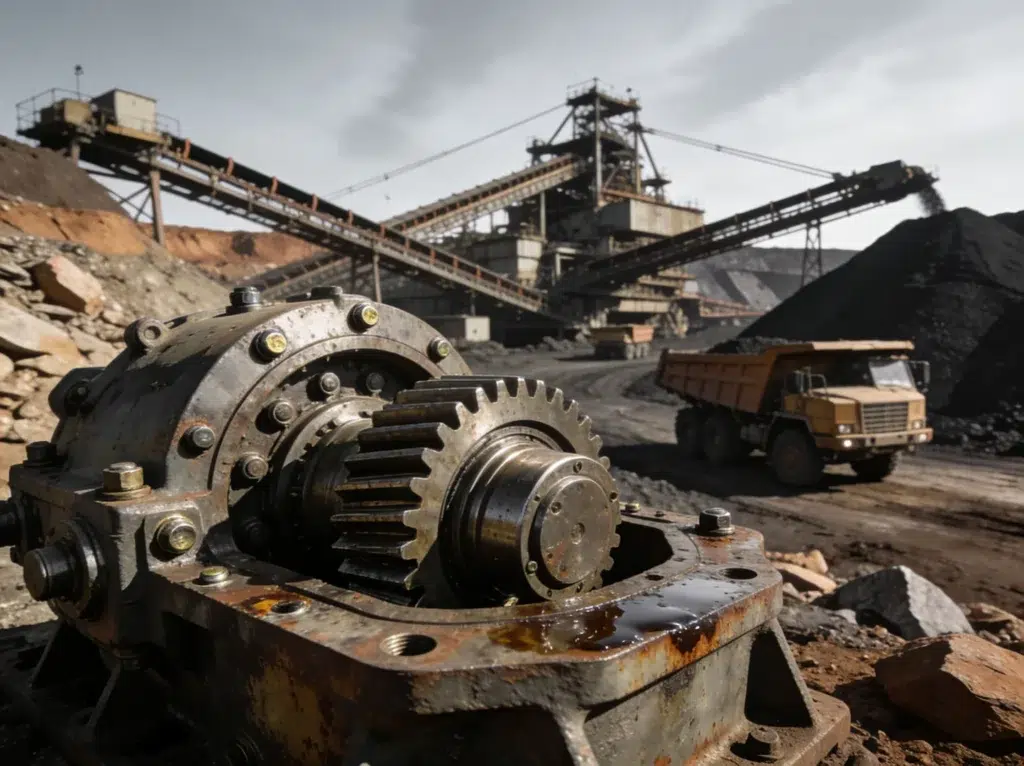
When a mounting bolt loosens, the dynamic forces of the gearbox are transferred directly to the remaining secure feet. This unequal stress distribution causes the metal surrounding the mounting holes to flex and fatigue. Over time, hairline cracks develop in the casting of the housing feet.
If you discover cracks in your gearbox housing, you do not necessarily need to purchase an entirely new unit. Specialized welding procedures can restore the structural integrity of cast iron and steel housings at a fraction of the replacement cost. To understand how these specialized repairs are executed to save your existing equipment, read about How Gearbox Housing Welding Services Restore Damaged Castings.
Secondary Risks of Operating with Damaged Mounts
Running an industrial gearbox with damaged mounts leads to rapid gear wear, bearing failure, and bent shafts. When the housing moves under load, the shaft centerline shifts, which forces the coupling to bind and destroys internal seals.
The internal components of an industrial speed reducer are engineered to operate with precise tooth contact patterns. When the mounting system fails to hold the housing perfectly rigid, the input and output shafts experience bending moments they were never designed to handle. This misalignment alters the gear mesh, concentrating the torque load onto a fraction of the tooth face rather than distributing it evenly.
This localized stress results in pitting, chipping, and eventual tooth breakage. Furthermore, the bending forces put severe radial loads on the bearings, causing rapid overheating and fatigue. If the shaft itself becomes worn or scored due to coupling failure or bearing seizure, it must be restored to its original dimensions. For a detailed breakdown of the welding and machining techniques used to salvage these critical components, refer to The Art of the Weld: How to Build Up and Repair Worn Shafts.
The Step-by-Step Gearbox Mounting Repair Process
A standard gearbox mounting repair involves performing soft foot checks, checking alignment with laser tools, repairing housing cracks, and torquing mounting fasteners to specification.
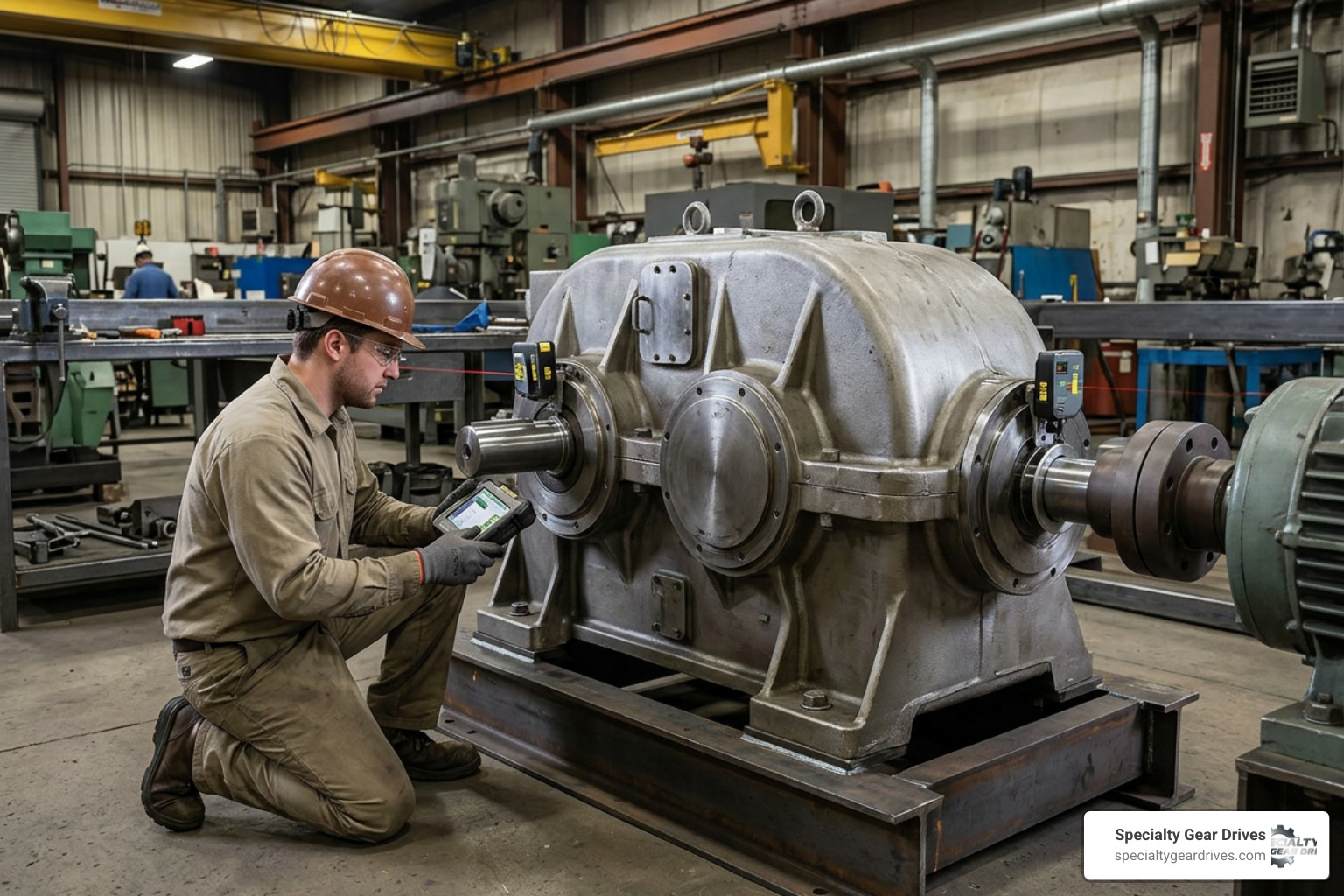
The repair process begins with a thorough safety protocol to isolate the drive system from all power sources. Once the unit is safe to work on, technicians perform a soft foot check using dial indicators. This test determines if all mounting feet sit flat on the baseplate when the bolts are loose. If any foot is elevated, it creates structural stress when tightened.
After correcting the baseplate contact, technicians inspect the mounting bolts and the baseplate itself for structural integrity. If the baseplate holes are elongated or the threads are stripped, machining is required to restore the correct dimensions. Once the mounting interface is flat and secure, the gearbox is aligned to the motor and driven equipment using precision laser alignment systems, ensuring tooth contact patterns meet or exceed 75% coverage.
In-House vs. Field Service Gearbox Mounting Repair
Field service teams can perform on-site baseplate leveling, soft foot corrections, and emergency welding. Full housing repairs, line boring, and complete gear remanufacturing must be performed inside a controlled shop environment.
Deciding whether to perform a mounting repair on-site or ship the unit to a specialized facility depends on the severity of the damage. Minor alignment issues, shim replacements, and basic bolt extractions are easily handled on the plant floor. This minimizes downtime and keeps your production line moving.
However, if the mounting feet are severely cracked or the internal bearing bores have become misaligned due to housing distortion, the gearbox must be transported to a specialized machine shop. In a controlled shop environment, technicians use heavy-duty boring mills to restore the concentricity of the housing bores. To find out how these specialized services restore distorted housings to original OEM specifications, read about Line Boring & Gearbox Housing: Find Professional Services.
Correcting Baseplate Misalignment and Soft Foot
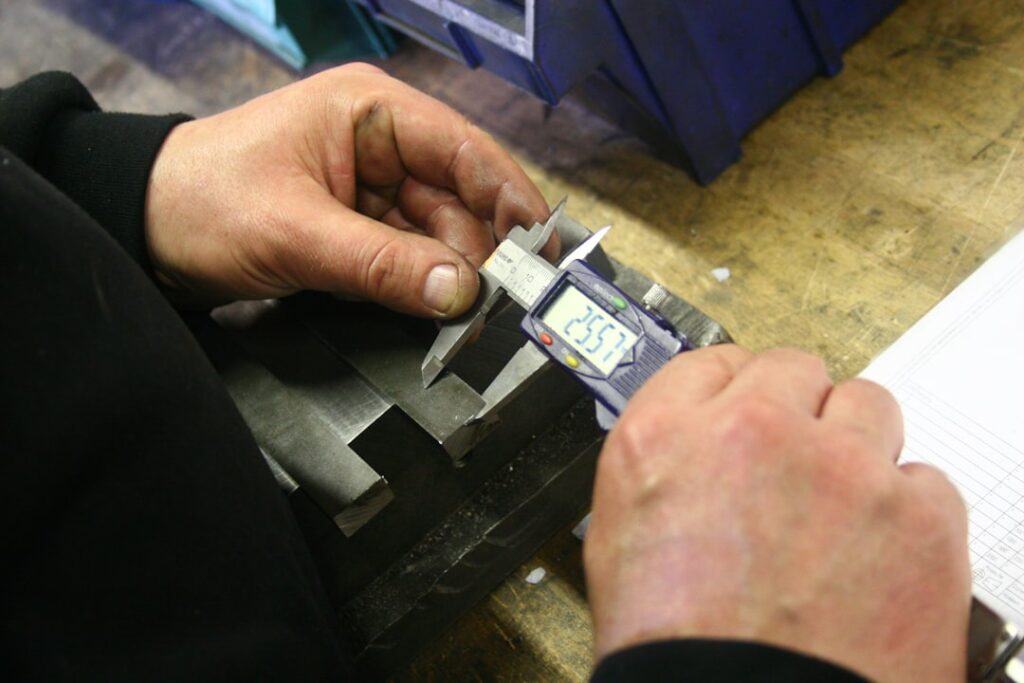
Correcting soft foot requires using dial indicators or laser systems to measure gaps under each mounting foot while loosening bolts individually. Gaps must be filled with precision stainless steel shims to prevent housing distortion when bolts are torqued.
Soft foot is one of the most common causes of recurring gearbox mounting failure. When a bolt is tightened down on a mounting foot that does not sit flat, it forces the entire housing to twist. This twist distorts the internal bearing alignments, leading to rapid bearing failure and gear wear.
To correct this, technicians loosen all mounting bolts and use feeler gauges or dial indicators to measure the gap under each foot. Precision stainless steel shims are placed under the high feet until the gap is completely eliminated. If the baseplate itself is warped or out of square, line boring or on-site milling may be necessary to establish a true, flat mounting plane. For an in-depth look at how line boring corrects severe housing and baseplate misalignment, see Bore No More: How Housing Line Boring Repairs Heavy Equipment.
Cost Factors and Timelines for Industrial Mount Repairs
Industrial gearbox mounting repairs typically cost 30% to 60% of the price of an OEM replacement. Standard shop turnaround ranges from 5 to 14 business days, while emergency field repairs can be completed within 24 to 48 hours.
The total cost of a mounting repair is influenced by several variables:
- Extent of Housing Damage: Simple bolt replacement is inexpensive, while repairing cracked cast iron housing feet requires specialized thermal welding and subsequent stress-relieving processes.
- Baseplate Condition: If the concrete foundation or steel baseplate has degraded, it must be rebuilt or machined, which adds labor and material costs.
- Alignment Complexity: High-speed drives or multi-stage gearboxes require highly precise laser alignment, which takes more engineering hours than simple, low-speed conveyor drives.
- Downtime Losses: In many cases, the cost of lost production far outweighs the physical cost of the repair, making rapid turnaround times critical.
To understand the structural differences and repair complexities between standard industrial motor mounts and heavy-duty industrial gearbox mounts, review the comparison below:
| Feature | Industrial Motor Mounts | Industrial Gearbox Mounts |
|---|---|---|
| Primary Function | Support motor weight and resist rotational torque | Support extreme radial/axial loads and maintain precise gear alignment |
| Material Construction | Pressed steel or cast iron with rubber isolation | Heavy-duty cast iron or welded steel fabrications |
| Common Failure Modes | Rubber degradation, fastener loosening | Housing foot cracking, baseplate fatigue, soft foot |
| Alignment Tolerance | Moderate (typically managed by flexible couplings) | Extremely tight (requires laser alignment to protect gear mesh) |
| Repair Complexity | Low to moderate (often involves shim or mount replacement) | High (requires structural welding, line boring, and baseplate machining) |
Frequently Asked Questions about Industrial Gearbox Mounts
How often should industrial gearbox mounts be inspected?
Industrial gearbox mounts should be visually inspected during every routine maintenance shift, with comprehensive vibration analysis performed monthly. Facilities operating in harsh environments like pulp mills or chemical plants require more frequent checks.
Regular inspections help catch loose fasteners and early signs of paint flaking or concrete cracking before they lead to structural failure. Monthly vibration analysis is particularly effective because it detects the subtle high-frequency signatures of mounting looseness long before it is visible to the naked eye. For plants operating in high-humidity areas, such as paper mills in Alabama or Mississippi, checking for corrosion around the mounting studs should be a standard part of the quarterly PM checklist.
Can a mobile field crew repair a gearbox mount on-site?
Yes, a qualified mobile field crew can repair gearbox mounts on-site by performing structural welding, baseplate slotting, and precision alignment.
On-site repairs are highly effective for correcting soft foot, replacing worn mounting hardware, and performing emergency structural welding on steel baseplates. This minimizes transport time and gets your equipment back online quickly. However, if the gearbox housing requires extensive machining or internal line boring to correct bore misalignment caused by a severe mounting failure, the unit must be sent to a dedicated repair facility. To understand how to choose the right repair path for your specific situation, read Don’t Grind Your Gears and Find the Best Gearbox Repairing Near Me.
What are the primary causes of mounting bolt failure?
The primary causes of mounting bolt failure are improper initial torque, high cyclic shear stress, and thermal expansion of the gearbox housing.
When mounting bolts are not torqued to the exact manufacturer specifications, they can back out under the normal vibration of operation. Once a bolt becomes loose, the remaining bolts are subjected to extreme shear forces they were not designed to withstand, leading to rapid fatigue failure. Additionally, as the gearbox reaches its operating temperature, the housing expands. If the mounting system does not allow for this thermal growth, it generates massive internal stresses that can snap mounting studs.
Conclusion
Mastering gearbox mounting repair is essential for maintaining the reliability of heavy industrial operations throughout the Southeast. From the paper mills of Alabama and Mississippi to the petrochemical facilities of Louisiana and the citrus plants of Florida, keeping your drive systems rigidly supported and perfectly aligned is the key to preventing costly unplanned downtime.
When mounting issues arise, we are here to help. Specialty Gear Drives, based in Largo, Florida, specializes in the repair, rebuilding, and manufacturing of heavy industrial gearboxes. We serve facilities across Florida, Georgia, Alabama, Mississippi, South Carolina, and Louisiana.
Our key advantages include 24 to 48-hour emergency service, free pickup and delivery, up to 60% savings compared to purchasing a new OEM gearbox, and a comprehensive 24-month warranty on our workmanship. If you suspect your gearbox mounting system is failing, contact us today to schedule an inspection or arrange for rapid transport to our facility. To learn more about our complete rebuilding capabilities, visit our Industrial Gearbox Repair service page.