Ultimate Checklist for Cooling Tower Gearbox
What Is a Cooling Tower Gearbox and Why It Matters
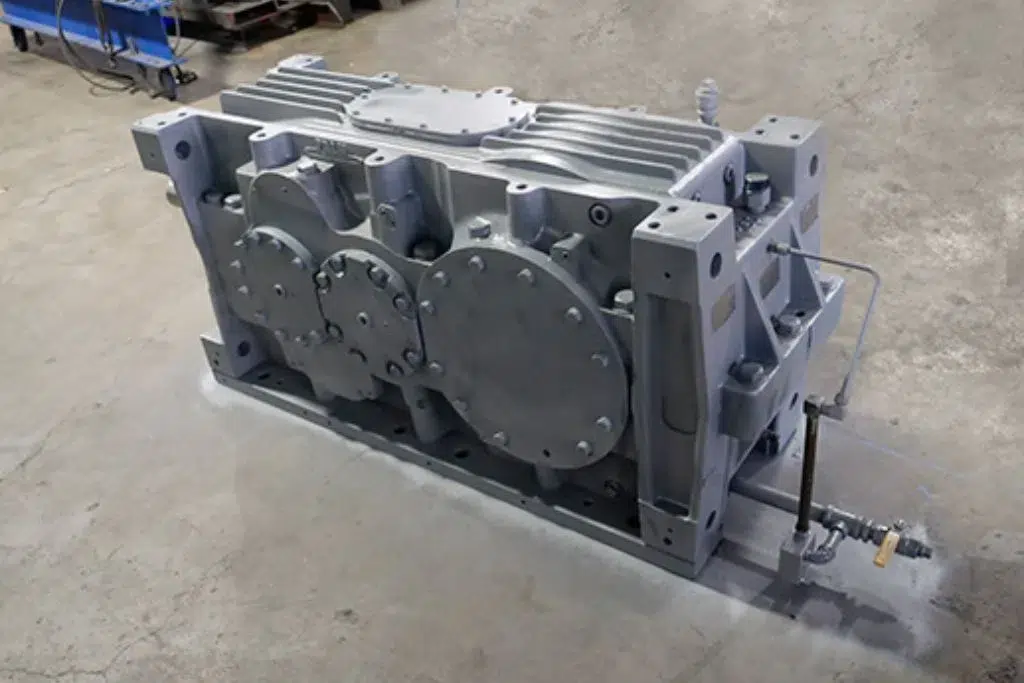
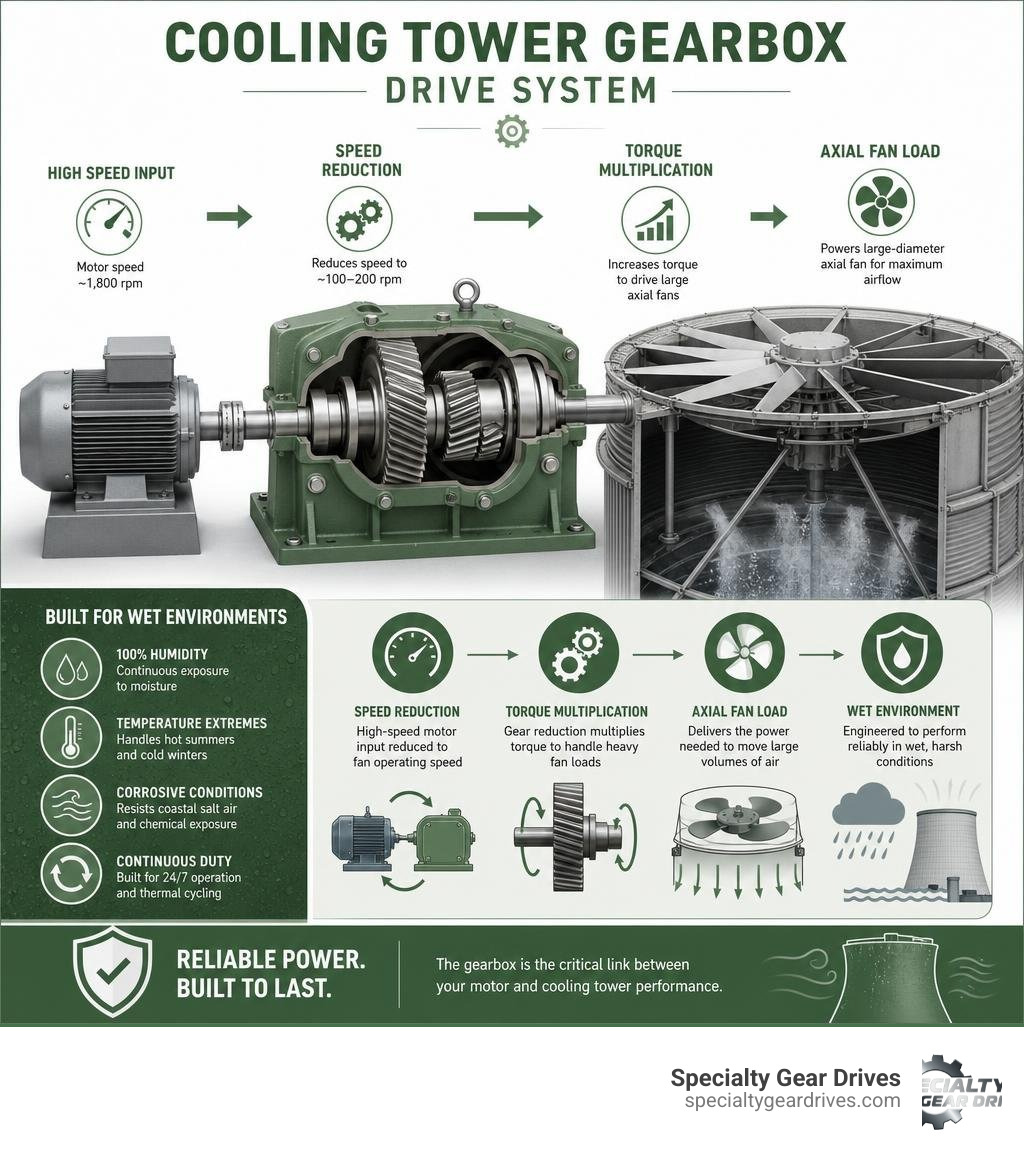
A cooling tower gearbox is a right-angle gear reducer mounted between the drive motor and the axial fan in a cooling tower. Its job is straightforward: take the high-speed rotation from the motor (typically around 1,800 rpm) and reduce it down to the 100 to 200 rpm range that large-diameter fans require. That speed reduction comes with torque multiplication, which is what allows a reasonably sized motor to drive a massive fan without being oversized.
Here is a quick breakdown of what these units do and what to look for when buying or replacing one:
| What to Know | Key Detail |
|---|---|
| Primary function | Speed reduction and torque multiplication for axial cooling fans |
| Typical reduction ratio | 9:1 to 18:1 (single or double reduction) |
| Common configurations | Single reduction (low to mid power), double reduction (high power) |
| Power range | 7 HP to 500+ HP depending on unit size |
| Operating environment | 100% humidity, temperature extremes, continuous duty cycles |
| Main failure causes | Improper lubrication, vibration, moisture contamination, bearing wear |
| Recommended service life | 12 to 15 years with proper maintenance |
| Oil change interval | Every 6 months or 2,500 hours |
| Key standards | AGMA Service Factor 2.0 per CTI STD 111 |
| Common OEM designs | Marley, Amarillo |
The operating environment is what separates a cooling tower gearbox from a standard industrial reducer. These units run at 100% humidity, often outdoors, through hundreds of thermal cycles per year. In the Southeast United States, add coastal salt air at Gulf and Atlantic facilities, and summer heat loads that push oil temperatures toward their limits. A gearbox that works fine in a dry plant environment will not necessarily hold up in a cooling tower application.
The stakes are real. A single gearbox failure on a large industrial cooling tower can force a facility-wide shutdown while replacement or repair is arranged. At a petrochemical plant in Louisiana or a pulp mill in Alabama, that downtime is measured in production losses that dwarf the cost of the gearbox itself.
This guide covers everything you need to select, maintain, and when needed, repair or replace a cooling tower gear reducer, whether you are running a Marley M Series, an Amarillo A-Series, or evaluating alternatives.
Selecting the Right Cooling Tower Gearbox for High-Humidity Environments
Choosing a cooling tower gearbox requires looking beyond basic torque and speed ratings. The combination of water spray, high humidity, and constant temperature cycling means your gear drive must be engineered specifically for wet-deck service. Standard off-the-shelf industrial reducers will fail prematurely if drop-mounted into a cooling tower fan stack.
To protect your machinery, look for gearboxes certified to CTI STD 111 specifications. This standard, set by the Cooling Technology Institute, mandates an AGMA Service Factor of 2.0 or higher based on the motor nameplate horsepower. A service factor of 2.0 ensures that the internal gears, shafts, and bearings can withstand the continuous cyclic loading and aerodynamic thrust forces exerted by large axial fans.
Environmental sealing is the next priority. The input and output shafts require specialized protection to prevent moisture from entering the gear housing. Standard rubber lip seals degrade within three to five years under continuous operation. Specifying isolator-type seals or Viton-faced radial seals with integrated dust gutters prevents water ingress and oil migration.
For facilities operating in the humid Gulf Coast region, understanding specialized drive terminology is essential. You can learn more about these specific engineering requirements in our guide to Cooling Tower Drive Alabama Terms Demystified.
Single vs. Double Reduction Cooling Tower Gearbox Designs
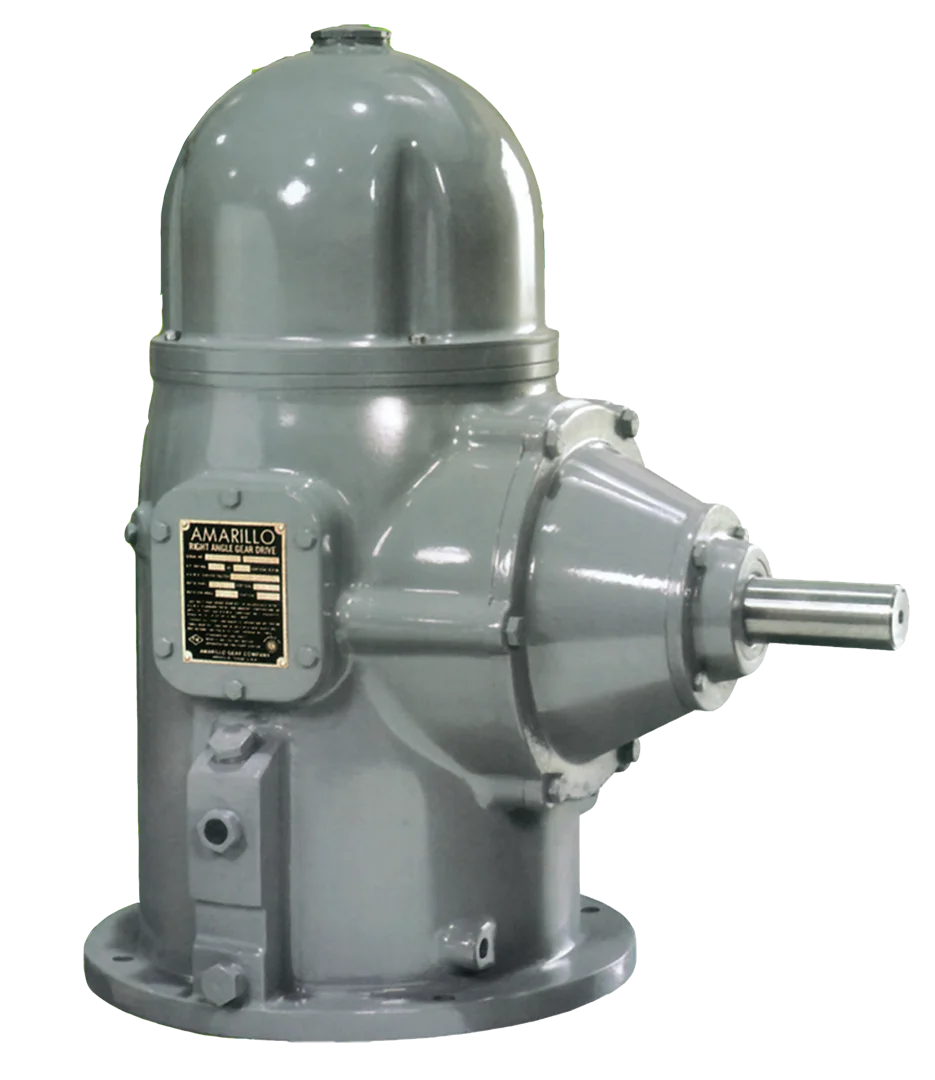
Selecting between single and double reduction gearboxes depends on your fan speed requirements and motor power. Single reduction units are simpler and highly efficient, while double reduction units provide the high ratios needed for large-diameter fan assemblies.
| Specification | Single Reduction Units | Double Reduction Units |
|---|---|---|
| Typical Gear Ratio Range | 2:1 to 9.5:1 | 7.5:1 to 20:1+ |
| Power Capacity Range | 7 HP (5.2 kW) to 134 HP (100 kW) | 60 HP (45 kW) to 500+ HP (375 kW) |
| Output Thrust Capacity | 550 to 7,100 lbs | 3,000 to 22,000 lbs |
| Transmission Efficiency | Over 95% | Approximately 92% to 94% |
| Primary Gear Types | Spiral Bevel | Spiral Bevel and Helical |
Single reduction units use a single set of spiral bevel gears to transfer power at a right angle. They are ideal for smaller HVAC towers and light industrial applications where the speed reduction ratio is under 10:1. Because they have fewer rotating components, their mechanical efficiency remains high, often exceeding 95% under full load.
Double reduction units add an intermediate helical gear set after the initial spiral bevel reduction. This design is necessary for larger field-erected towers, such as those found in power plants and chemical facilities. The helical gears handle the heavy torque multiplication, while the bevel gears facilitate the right-angle turn. Double reduction units also feature heavy-duty double-row bearings to support the high axial thrust loads generated by fans with diameters exceeding 18 feet.
Motor Operations and VFD Integration
The way you start and control your drive motor directly affects the lifespan of the gearbox teeth. High starting torque can shock-load the gear teeth, leading to micro-pitting or tooth fractures over time.
To minimize starting shocks, use a NEMA Design B motor. This motor configuration limits the initial torque spike during startup. Avoid using Y-Delta starters, which can create severe transient torque spikes when switching from the start to run configuration.
Variable Frequency Drives (VFDs) are excellent for energy management and precise temperature control, but they introduce mechanical challenges. Every cooling tower structure has natural resonant frequencies. When a VFD modulates fan speed, it may operate at a speed that excites these natural frequencies, causing severe vibration throughout the fan deck.
During commissioning, you must perform a vibration sweep across the entire operating range. Identify any resonant frequencies and program your VFD to lock out those specific speed bands, typically within ±5 Hz of the critical frequency.
Ensure your VFD settings respect the minimum speed requirements of the gearbox. Many right-angle gearboxes rely on splash lubrication, which requires a minimum rotational speed to sling oil to the upper bearings. Running too slow on a VFD can starve the upper shaft bearings of oil. If your application requires low-speed operation, install a non-reverse backstop or a mechanical oil pump to maintain positive lubrication.
Operational Challenges and Failure Prevention
Preventing unplanned downtime requires a structured maintenance program. Because cooling tower gearboxes are located inside the fan stack, they are difficult to access, which often leads to neglected maintenance.
Implementing continuous condition monitoring is the most effective way to identify internal wear before a catastrophic failure occurs. Using remote sensors allows you to track equipment health from the plant floor. To understand how to set up these monitoring systems, read our analysis on How Gearbox Condition Monitoring Saves Your Machinery and Your Sanity.

Key Failure Modes of a Cooling Tower Gearbox
The combination of heavy loads and wet operating conditions leads to several common failure modes. Understanding these mechanisms helps maintenance teams spot trouble early.
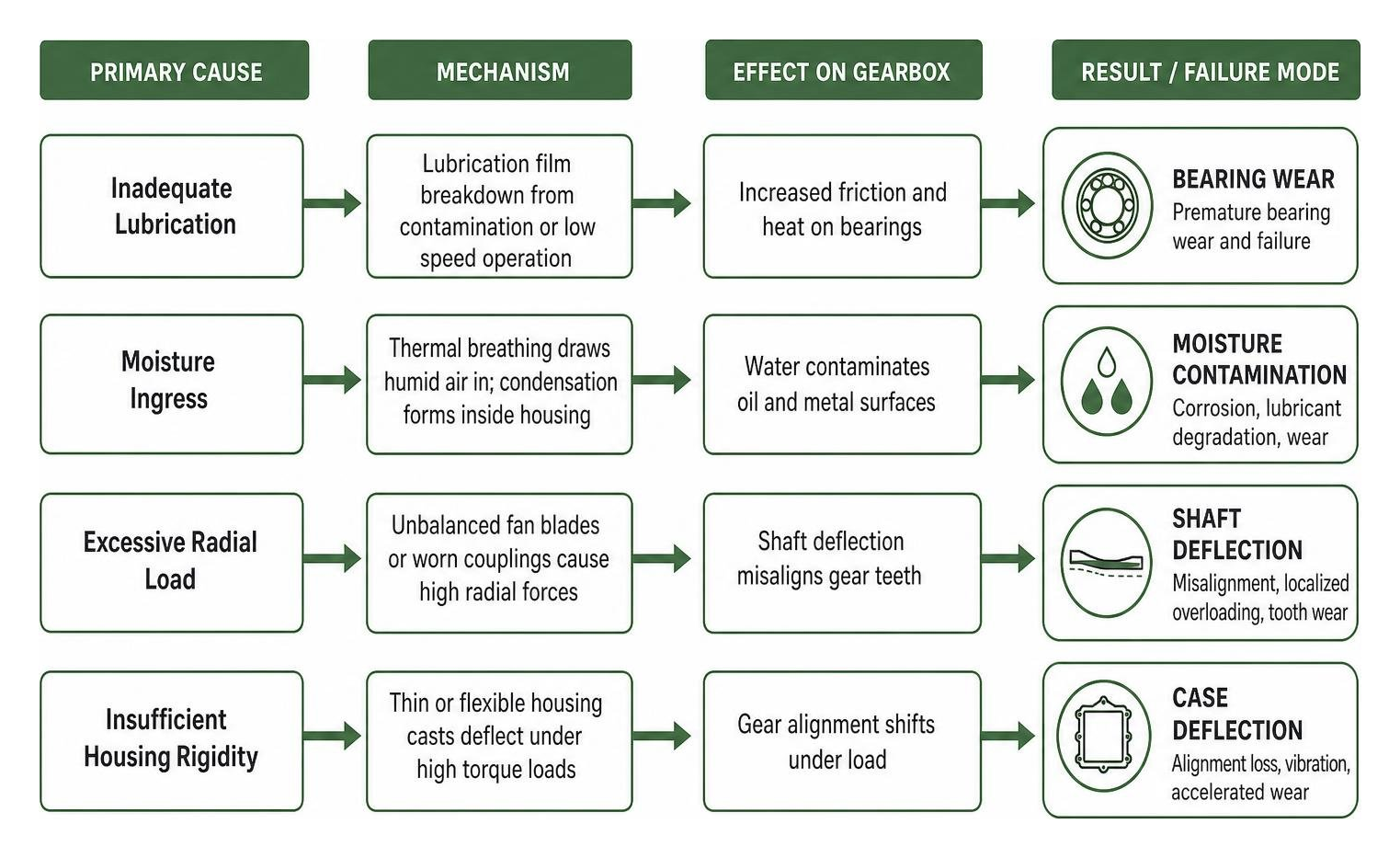
- Bearing Wear: Bearings fail when the lubrication film degrades. This is often caused by water contamination or running at speeds below the splash lubrication threshold.
- Moisture Contamination: As the gearbox heats up during operation and cools down during shutdown, the air inside the housing expands and contracts. This breathing cycle draws humid air into the housing, where it condenses into liquid water.
- Shaft Deflection: Unbalanced fan blades or worn couplings exert high radial forces on the output shaft, causing it to bend slightly. This misaligns the gear teeth, leading to localized overloading.
- Case Deflection: Thin housing castings can flex under high torque loads. Modern heavy-duty designs feature castings that are up to 40% thicker to maintain precise gear alignment under load.
If you notice oil leaks, unusual noises, or increased structural vibration, you must act quickly. Learn about the primary indicators of gear damage in our guide to Industrial Gearbox Repair Florida: 7 Signs You Need a Pro.
Lubrication Best Practices and Oil Analysis
Lubrication is the single most critical factor in gearbox longevity. Without clean, dry oil, a cooling tower gearbox can fail in less than two years of continuous operation, whereas a properly lubricated unit can easily last 12 to 15 years.
Use a high-quality ISO VG 220 or ISO VG 680 gear oil, depending on your ambient operating temperatures. Synthetic oils are highly recommended for cooling tower service. They maintain their viscosity better at high operating temperatures (up to 220°F) and offer better water-separation properties than standard mineral oils. Avoid using gear oils with heavy Extreme Pressure (EP) additives if your gearbox contains yellow metals or internal backstops, as these additives can chemically attack those components at elevated temperatures.
Establish a strict oil analysis program. Oil samples should be pulled every three to six months. When reviewing the laboratory reports, pay close attention to three key metrics:
- Water Content: Water must remain below 0.01% (100 ppm). Use Karl Fisher titration analysis for accurate water measurements, as standard crackle tests are not precise enough to detect low-level water contamination.
- Viscosity: A change in viscosity of more than 10% indicates oil oxidation or shear degradation, requiring an immediate oil change.
- Total Acid Number (TAN): An elevated TAN indicates that the oil is breaking down and forming acidic compounds that will corrode the bearings and gears.
The standard oil change interval is every 6 months or 2,500 hours of operation for mineral oils. This interval can be extended to 5,000 hours or 12 months when using high-grade synthetic oils, provided that regular oil analysis confirms the lubricant remains free of water and wear debris.
Rebuilding and Repairing Industry-Standard Gear Reducers
When a cooling tower gearbox reaches the end of its service life or suffers an operational failure, you must choose between purchasing a new OEM replacement or rebuilding the existing unit. Rebuilding your current gearbox is often the most practical choice, offering up to 60% cost savings compared to buying new, while returning the unit to OEM-equivalent specifications.
During a professional rebuild, we replace all bearings, seals, and shims. We upgrade case connection points by replacing plastic shims with precision-ground steel shims, which maintain gear alignment much better under extreme thermal cycles. We also install upgraded isolator seals to prevent future water contamination.
To learn more about our complete restoration process, visit our service page on Industrial Gearbox Repair.
Restoring Marley and Amarillo OEM Units
Marley and Amarillo are the dominant gearbox designs found in industrial cooling towers across the Southeast. Each brand has specific design characteristics that must be respected during the rebuilding process.
Marley Geareducers, such as the M Series, are known for their integrated oil ports and custom housing shapes. When we rebuild these units, we ensure that the internal oil distribution channels are completely clear of debris. We also verify that the internal oil pump, if equipped, is restored to full pressure capacity. You can find detailed information on our specialized services for these units on our Marley Gearbox Repair page.
Amarillo gearboxes, including the A-Series and classic right-angle drives, use robust castings and are often utilized as direct drop-in replacements for other brands. Rebuilding an Amarillo unit requires precise setting of the spiral bevel gear backlash and tooth contact pattern. We use specialized fixtures to align the gears to exact factory tolerances. Explore our dedicated Amarillo restoration capabilities on our Amarillo Gearbox Repair page.
Emergency Repair Services for Southeast Facilities
Cooling tower failures do not happen on a convenient schedule. When a gearbox goes down at a pulp and paper mill in Mississippi or a petrochemical plant in Louisiana, every hour of lost cooling capacity impacts your bottom line.
We provide 24-to-48-hour emergency repair services for facilities throughout Florida, Georgia, Alabama, South Carolina, Mississippi, and Louisiana. Our service includes free pickup of your damaged gearbox, rapid disassembly and inspection, and delivery of the fully rebuilt unit back to your facility. Every rebuilt gearbox comes with a 24-month warranty, giving you long-term reliability.
To avoid costly mistakes during an unexpected outage, read our guide on Emergency Gearbox Repair Florida: 5 Common Mistakes You Can’t Afford to Make. For long-term emergency planning, consult our resource on Emergency Gearbox Repair: How to Never Worry About It Again.
Frequently Asked Questions about Cooling Tower Drives
How often should cooling tower gearbox oil be changed?
Change mineral-based gear oil every 6 months or 2,500 operating hours, whichever comes first. If you use high-quality synthetic oil, you can extend this interval to 12 months or 5,000 hours, provided you perform regular oil analysis to monitor for water contamination. In humid Southeast environments, condensation builds up quickly inside the housing, making regular oil changes essential to prevent bearing corrosion.
For more details on developing the technical skills required to maintain these systems, read our guide on Gearbox Repair Near Me: Essential Skills to Become a Pro.
What causes excessive vibration in cooling tower gear drives?
Excessive vibration is typically caused by unbalanced fan blades, drive shaft misalignment, worn couplings, or internal bearing wear. Because cooling tower fans operate in a wet, corrosive environment, blade pitch can drift, or deposits can accumulate on the blades, throwing the system out of balance. Structural flexing of the fan deck can also misalign the input drive shaft relative to the motor.
If you are experiencing severe vibration and need to find local repair expertise, read our advice on how to Don’t Grind Your Gears and Find the Best Gearbox Repairing Near Me.
Why is water contamination so common in these gearboxes?
Water contamination occurs because the gearbox operates inside a saturated 100% humidity environment. When the cooling tower is running, the gearbox gets hot. When the system cycles off, the air inside the gearbox cools and contracts, drawing moisture-laden air through the breathers and shaft seals. This moisture condenses into liquid water inside the housing. Utilizing high-quality Viton seals and installing desiccant breathers helps mitigate this issue.
Conclusion
A cooling tower gearbox operates under some of the most demanding environmental conditions in any industrial plant. Protecting this critical asset requires a combination of proper specification, disciplined lubrication management, and proactive vibration monitoring.
When your gear drive shows signs of wear, or when an unexpected failure halts your production, you do not have to pay full price for a brand-new OEM unit. Specialty Gear Drives offers comprehensive rebuilding and manufacturing services that deliver up to 60% savings compared to buying new. Based in Largo, Florida, we serve industrial operations across Georgia, South Carolina, Alabama, Mississippi, and Louisiana with 24-to-48-hour emergency service, free pickup and delivery, and an industry-leading 24-month warranty.
If your cooling tower gearbox is showing signs of wear, contact us today through our Industrial Gearbox Repair page to schedule an inspection or arrange for emergency pickup.