How to Find Compatible Gearbox Rebuild Kit Parts in Less Than an Hour
Fast-Tracking Identification: How to Spec Compatible Industrial Rebuild Parts Under 60 Minutes
Specifying compatible industrial rebuild components in under an hour comes down to a systematic process: gather the casing nameplate data, confirm physical shaft and journal geometry with micrometers, and match internal bearings and seals to operational demands. Across Southeast operations—from central Florida phosphate facilities and Georgia paper mills to Louisiana chemical plants—speedy identification prevents costly downtime during unplanned shutdowns. Following a reliable Step by Step Guide to Shaft Rebuild Services ensures you capture every mechanical variable before parts are dispatched to the facility.
Decoding Nameplates and Housing Castings on Industrial Speed Reducers
The metal nameplate stamped on the drive housing provides the quickest path to sourcing compatible components. Dirt, oil, and paint buildup often obscure these plates, so a quick wipe with solvent or a wire brush is step one.
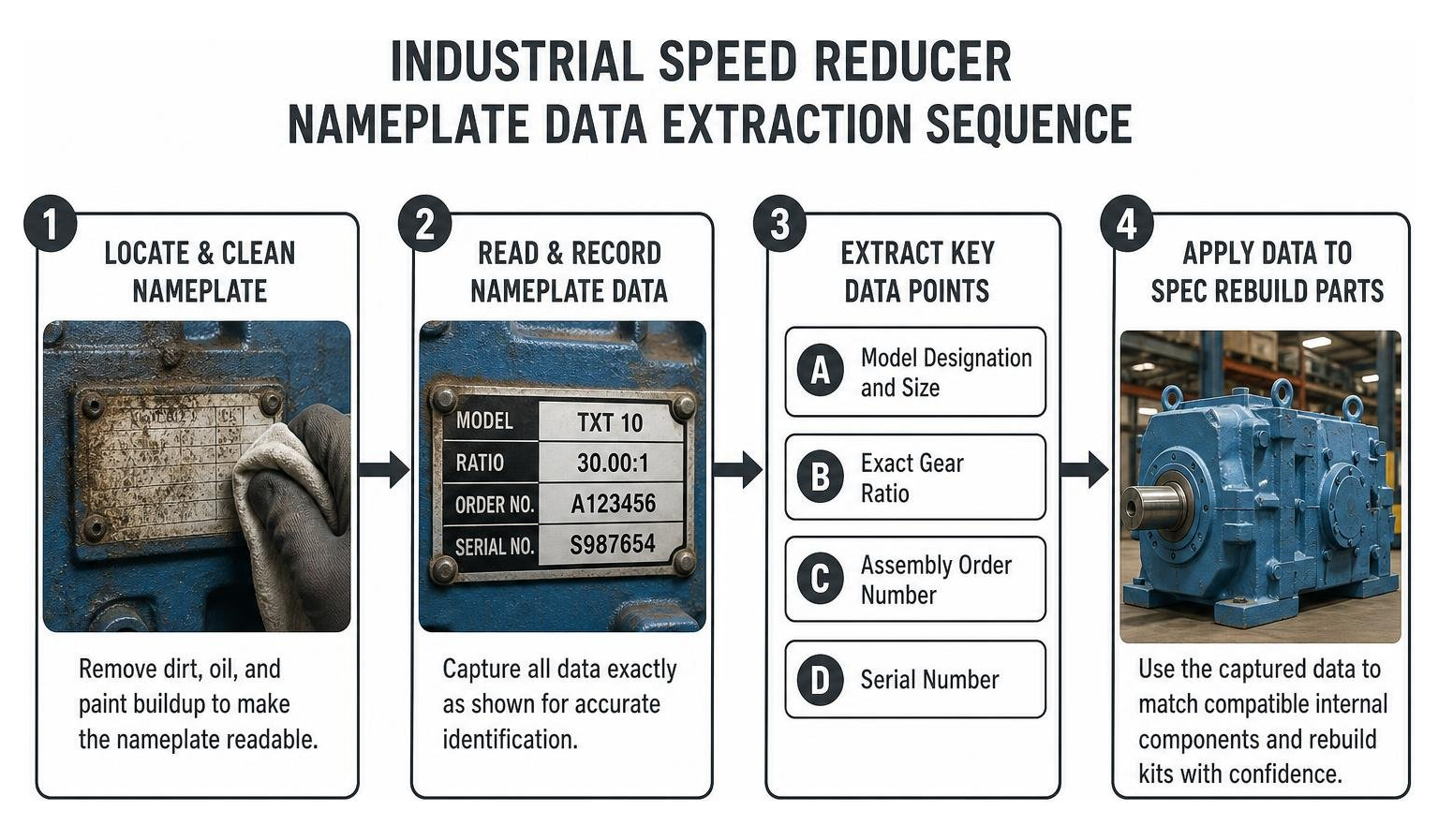
Look for four primary data points:
- Model Designation and Size: Details the frame size (such as TXT size 8 or size 10 torque-arm reducers), housing profile, and internal gear configuration.
- Exact Gear Ratio: Identifies tooth counts and center distances, which dictate the specific gearset, shaft layout, and bearing clearances required.
- Assembly Order Number / Serial Number: Tracks the engineering revision level, bill of materials, and any factory modifications made during manufacturing.
- Input and Output Configurations: Confirms whether the drive uses a hollow quill, solid keyed shaft, C-face motor adapter, or custom flange mount.
Cast letters or part numbers raised on the housing indicate the raw casting mold, not necessarily the internal gear ratio or final shaft configuration. A single casting mold frequently serves multiple reduction ratios and internal bearing configurations. Always cross-reference the stamped metal tag rather than relying solely on raised casting marks. If the nameplate is missing or illegible, follow our How to Rebuild Gearboxes Step by Step Guide to measure internal gear geometries and shaft centers directly during teardown.
Measuring Critical Shaft, Keyway, and Bearing Journals
When nameplate data is incomplete, precise physical measurement verifies component compatibility. Industrial reducers deployed in logging mills in Mississippi or steel processing plants in Alabama endure cyclic torque spikes that wear journals and deform keyways over years of service.
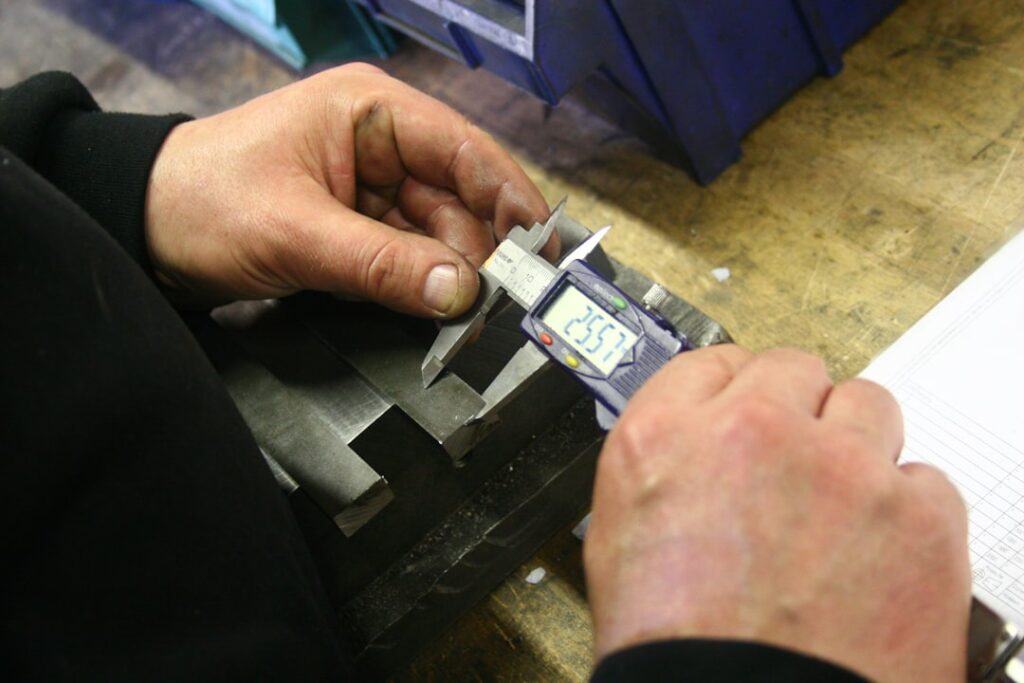
Use calibrated outside micrometers to check bearing seat diameters at three points along each journal to detect taper, out-of-roundness, or thermal scoring. Runout checks on input and output shafts with a dial indicator mounted on a magnetic base reveal hidden bent shafts that destroy new replacement seals in days. Inspect keyway width and depth with a depth micrometer; a wallowed keyway allows torsional play, accelerating cyclic tooth fatigue across the entire gear train.
Standard Scope and Components in Industrial Gearbox Rebuild Kits
Industrial drive rebuild packages differ fundamentally from standard light-duty hardware packages. They are engineered to restore full dynamic load ratings on severe-duty equipment handling hundreds of thousands of inch-pounds of torque.
| Rebuild Tier Level | Typical Contents | Best Suited Applications | Reusability Limitations |
|---|---|---|---|
| Seal & Gasket Kit | Input/output oil seals, housing split-line gaskets, O-rings, end cover shims | Routine planned maintenance, minor fluid leak remediation | Reuses all rotating elements; does not address bearing fatigue |
| Level 1 Overhaul Kit | Bearings (tapered roller, spherical, cylindrical), input/output seals, shims, hardware | Scheduled major overhauls, high-hour preventative rebuilds | Requires intact gear teeth and dimensionally true shafts/housings |
| Master Overhaul Kit | Premium bearings, harsh-duty seals, precision ground shim packs, wear sleeves, locknuts | Severe-duty rebuilds, corrosive or abrasive industrial operating environments | Unsuitable if housing bores are out-of-round or gear flanks are spalled |
Consulting The Ultimate Guide to Gearbox Rebuild helps maintenance planners select the right tier before pulling a drive off the line.
Selecting Tiered Levels of Gearbox Rebuild Kits for Heavy Machinery
Standardizing maintenance scopes prevents overspending on simple leak fixes while avoiding under-repairing heavily loaded drives. A Level 1 minor overhaul package works well for periodic turnarounds on light conveyor systems where gear sets and shafts pass non-destructive testing.
For critical assets like cement kiln drives, wind turbines, bevel and worm gearboxes, or mining crushers across South Carolina and Georgia, a master-level package containing matched bearing sets, specialized excluders, and high-tensile hardware is necessary. Reviewing A Practical Guide to Precision Gearbox Rebuild Service allows procurement teams to balance turnaround speed with operational reliability.
Quality Standards and Component Sourcing in Gearbox Rebuild Kits
Bearing quality directly dictates drive lifespan. High-capacity tapered roller and spherical roller bearings from premium manufacturers handle combined radial and axial thrust loads in heavy manufacturing lines.
Sealing technology must match the operating atmosphere. In taconite mining, cement manufacturing, or aggregate handling, standard nitrile seals fail rapidly against abrasive dust. Upgraded packages integrate Hydrogenated Nitrile Butadiene Rubber (HNBR) for elevated temperature stability and chemical resistance, paired with metallic auxiliary excluder seals that physically block abrasive grit before it contacts the primary sealing lip.
Diagnostic Evaluation: When a Rebuild Kit Is Not Enough
A parts package cannot correct severe mechanical damage to major structural components. Installing new bearings and seals into a compromised housing or onto a grooved shaft leads to rapid failure, often within hours of startup.

Understanding the failure modes detailed in Everything You Need to Know About Gearbox Repair protects operations teams from wasting labor on drives requiring machine shop intervention.
Severe Wear Indicators in Mining, Cement, and Heavy Industrial Drives
Inspect internal rotating elements for clear signs that simple field component replacement is insufficient:
- Micropitting and Surface Spalling: Advanced surface fatigue on gear teeth compromises tooth contact patterns and core strength.
- Excessive Backlash and Tooth Thinning: Abrasive wear that erodes the involute profile creates severe shock loading during reversals.
- Housing Bore Ovality and Fretting: Loose bearing cups spin inside cast housings, elongating the bore and causing shaft misalignment.
- Thermal Distortion and Shaft Runout: Excessive operating temperatures warp shafts, preventing accurate gear mesh and destroying dynamic seal contact.
Precision In-House Machining vs. Field Component Replacement
When wear limits are exceeded, the gearbox requires specialized industrial equipment rather than a simple bench assembly. Our Florida facility handles complete restorative machining, including horizontal CNC line boring to restore bearing housing centers to original factory tolerances, precision gear hobbing and grinding to manufacture custom replacement gearing, and dynamic balancing of high-speed shaft assemblies.
Full in-house remanufacturing restores the drive to original or upgraded specifications, delivering up to 60% savings compared to the cost of purchasing a brand-new replacement drive. Backing complete overhauls with a comprehensive guarantee, as detailed in The Complete Guide to Gearbox Rebuilds with a 24 Month Warranty, gives operations teams total confidence in long-term reliability.
Frequently Asked Questions About Industrial Gearbox Components
What components are standard in an industrial speed reducer rebuild kit?
A comprehensive industrial rebuild kit includes:
- Bearing Assemblies: Matched sets of tapered roller, cylindrical roller, or spherical roller bearings engineered for the drive’s specific radial and thrust loads.
- Dynamic Oil Seals: Input and output shaft seals, often upgraded to HNBR or fluoroelastomer compounds for heat resistance.
- Housing Gaskets and O-Rings: Precision die-cut split-line gaskets and elastomeric O-rings to prevent external fluid leakage.
- Precision Shim Packs: Color-coded or micrometer-ground steel shims to establish exact bearing endplay and gear backlash.
- Fasteners and Hardware: High-strength casing bolts, locknuts, lock washers, and magnetic oil drain plugs.
How do environmental conditions impact the selection of gearbox seals and bearings?
Environmental exposure dictates component metallurgy and elastomer selection. In chemical processing plants across Louisiana or pulp and paper mills in Mississippi, standard seals degrade rapidly from caustic vapors and moisture ingress. Harsh operating environments require auxiliary labyrinth seals or metal-clad excluder rings to keep out abrasive particulate, alongside synthetic lubricants and high-temperature seals that operate reliably up to 300°F (149°C).
Can minor rebuild kits resolve severe shaft misalignment or gear tooth spalling?
No. A parts kit only replaces wearable consumables like seals, gaskets, and rolling elements. If gear teeth exhibit spalling, surface pitting, or broken teeth, or if bearing bores in the housing have fretted and lost roundness, new parts will fail almost immediately. Those conditions demand precision machine shop services—such as internal line boring, thermal stress relieving, and gear cutting—to restore geometric alignment.
Conclusion
Sourcing the right industrial rebuild components requires systematic identification, careful measurement of critical journal tolerances, and matching seal compounds to operating environments. While basic wear can often be resolved with matched replacement parts, heavily loaded helical, bevel, and worm gearboxes across conveyors, mining equipment, cement plants, marine systems, wind turbines, and paper operations frequently suffer structural wear that simple parts cannot fix.
Specialty Gear Drives delivers complete precision industrial gearbox overhaul and remanufacturing solutions from our state-of-the-art facility in Largo, Florida. We provide rapid response logistics with free pickup and delivery throughout Florida, Georgia, Alabama, South Carolina, Mississippi, and Louisiana. Every repair, precision line boring operation, and custom gear manufacturing process is handled fully in-house by our machinists, offering up to 60% savings compared to replacement costs and backed by our industry-leading 24-month comprehensive warranty. Contact our engineering team today to evaluate your industrial drive assets.