An Essential Guide to the US Mining Industry Trends
Macroeconomic Footprint and Key Drivers in the Mining Industry United States
The mining, quarrying, and extraction sector classified under NAICS 212 forms the bedrock of domestic industrial output. Operating across 12,616 active mines, the industry contributes nearly $81 billion directly to the gross domestic product of the United States. When accounting for nonfuel mineral production, annual domestic output routinely hits $98.2 billion, split between $63.5 billion in industrial non-metallic minerals and $34.7 billion in refined metals.
The Industrial Production Index for mining registered at 124.2189 in June 2026, demonstrating sustained operational volume across quarries, open pits, and underground operations. High-volume industrial materials represent the vast majority of physical tonnage extracted across American operations. Construction aggregate, crushed stone, cement, and industrial sand make up the largest raw volume, keeping interstate highway projects, concrete fabrication plants, and heavy manufacturing lines supplied.
Base metals such as copper, alongside precious metals like gold, command massive financial values despite lower comparative bulk weights. The following table highlights the distribution of domestic mineral output based on USGS and federal production data:
| Commodity | Primary End-Use Sector | Annual Economic Value / Scale | Processing Equipment Required |
|---|---|---|---|
| Crushed Stone & Aggregate | Infrastructure, Concrete, Asphalt | >$18 Billion | Jaw Crushers, Cone Crushers, Screens |
| Portland & Masonry Cement | Commercial Construction, Civil Works | >$12 Billion | Rotary Kilns, Clinker Grinders, Ball Mills |
| Refined Copper | Power Grid, Data Centers, Electronics | Multi-Billion Dollar Tier | SAG Mills, Flotation Cells, Overland Belts |
| Construction Sand & Gravel | Ready-Mix Concrete, Road Beds | >$9 Billion | Heavy Washers, Sizing Screens, Conveyors |
| Gold & Precious Metals | Technology, Defense, Bullion Reserves | >$9 Billion | Primary Impactors, Agitators, Leaching Drives |
| Industrial Sand | Foundry Casting, Glass, Energy Extraction | >$3 Billion | Rotary Dryers, Classifiers, High-Speed Drives |
| Iron Ore | Steelmaking, Heavy Infrastructure | Multi-Billion Dollar Tier | Pellet Plants, Direct-Reduction Kilns, Conveyors |
Downstream manufacturing facilities that consume these processed materials inject an estimated $3.64 trillion back into the national economy. Processing plants face immense operational demands because continuous production lines cannot afford unpredicted stops during peak shipping quarters.
Historical Evolution and Resource Output in the Mining Industry United States
Commercial extraction began with early colonial ironworks in Jamestown around 1620 and expanded during the 19th-century gold rushes in North Carolina, Georgia, and California. Technological methods developed quickly, shifting from manual picks, black powder, and Chilean milling wheels toward mechanical dynamite blasting, steam shovels, and automated crushers.
Catastrophic events like the 1907 Monongah mine explosion prompted the creation of the U.S. Bureau of Mines in 1910, establishing standardized federal safety oversight that evolved into the modern Mine Safety and Health Administration (MSHA). Fatality rates dropped from over 1,000 workers annually in the early 1900s to historic lows below 30 per year in the 2020s. Today, mechanized extraction systems produce thousands of tons of high-grade raw material per hour, supplying every sector from structural steelmaking to electronics manufacturing.
State-Level Production Hubs Across the Mining Industry United States
Extraction hubs across the country reflect distinct regional geological profiles:
- Florida: Ranks seventh nationwide for nonfuel mineral production, delivering over $2.8 billion in value primarily from phosphate rock mining for agricultural fertilizers, crushed limestone, portland cement, and heavy mineral sands like zirconium.
- Georgia: A national leader in industrial clays, extracting massive deposits of kaolin, fuller’s earth, barite, and titanium for paper manufacturing, ceramics, and chemical processes.
- Alabama: Rich in metallurgical coal reserves along the Warrior Basin, supporting steelmaking operations, alongside substantial limestone quarries, industrial sand pits, and graphite extraction operations.
- South Carolina: Generates extensive output across structural clay, industrial sand, cement production, crushed granite, and active commercial gold recovery.
- Mississippi: Driven by construction sand, gravel, and specialty bentonite clay pits supporting industrial foundries and drilling fluids.
- Louisiana: Known for salt dome operations that supply basic industrial chemicals and national winter road de-icing programs, in addition to extensive construction aggregates.
Critical Minerals, Defense Initiatives, and Clean Energy Transition Demands
Federal national security policy has triggered unprecedented investment in domestic raw materials. The U.S. Geological Survey tracks 50 designated critical minerals required for industrial manufacturing, with specific focus placed on the “Electric 18″—a select group of elements including copper, lithium, nickel, graphite, silicon, and scandium essential for running modernized electrical grids, high-efficiency motors, and defense systems.
Over 160 mineral agreements totaling nearly $40 billion have been signed or authorized under federal programs since January 2025. This includes $2 billion allocated for critical mining infrastructure, $400 million to build out domestic scandium value chains for aerospace alloys, $1.4 billion for silicon-carbon battery anode production, and $85 million for refractory-grade bauxite supply chains. Tariffs implemented under Section 232 alongside Title III authorizations from the Defense Production Act encourage companies to extract, process, and retain vital materials domestically rather than relying on volatile foreign supply chains.
Processing these tough minerals requires durable mechanical equipment. Ball mills, rod mills, and heavy beneficiation drives run under high continuous torque to separate target elements from stubborn rock. Custom gearing plays a vital role here; knowing The Complete Guide to Custom Industrial Gears helps plant operators select optimal tooth profiles, hardening depths, and metallurgy to withstand the aggressive dynamic loads common in mineral separation circuits.
Labor Dynamics, Aging Workforces, and Operational Modernization
The domestic workforce faces an unprecedented demographic transition. More than half of the active workforce—roughly 221,000 operators, mechanics, and engineers—is projected to reach retirement age by 2029. Compounding this challenge, accredited mining and mineral engineering degree programs across the nation fell from 25 in 1982 to just 14 active departments.
Recent federal actions have directed $100 million into these 14 mining colleges to double the output of mining engineers, geologists, and metallurgists. Average hourly earnings for non-supervisory extraction personnel reached $39.43 in mid-2026, with first-line supervisors averaging $99,340 annually. High wages reflect the specialized technical skills needed to operate continuous mining machinery, hydraulic excavators, and complex beneficiation facilities safely.
To counter skilled labor shortages, processing plants are adopting automation, remote operations centers, and autonomous haul fleets. Implementing regular vibration analysis and oil telemetry prevents catastrophic machine failures, and understanding How Gearbox Condition Monitoring Saves Your Machinery and Your Sanity gives maintenance crews the tools to catch bearing pitting or gear tooth wear before a main line comes to a complete halt.
Mechanical Reliability and Heavy Drivetrain Maintenance in Mineral Beneficiation
Mineral processing environments subject mechanical drivetrains to harsh operating conditions. As average copper and base metal ore grades have declined by roughly 40% over the last few decades, beneficiation plants must process far higher volumes of rock to achieve target mineral yields.
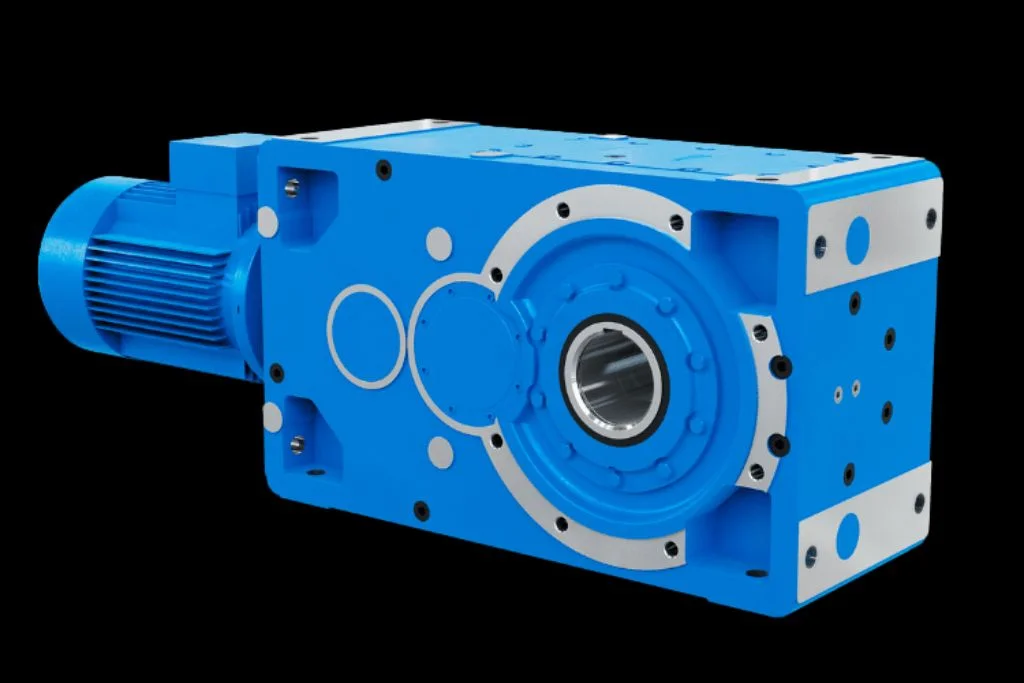
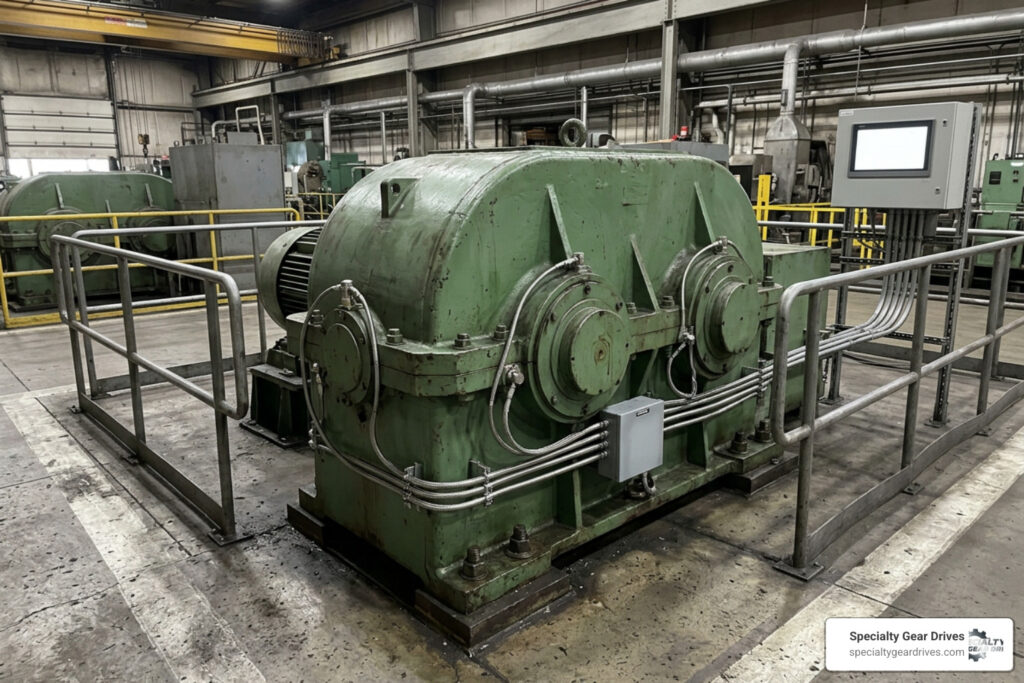
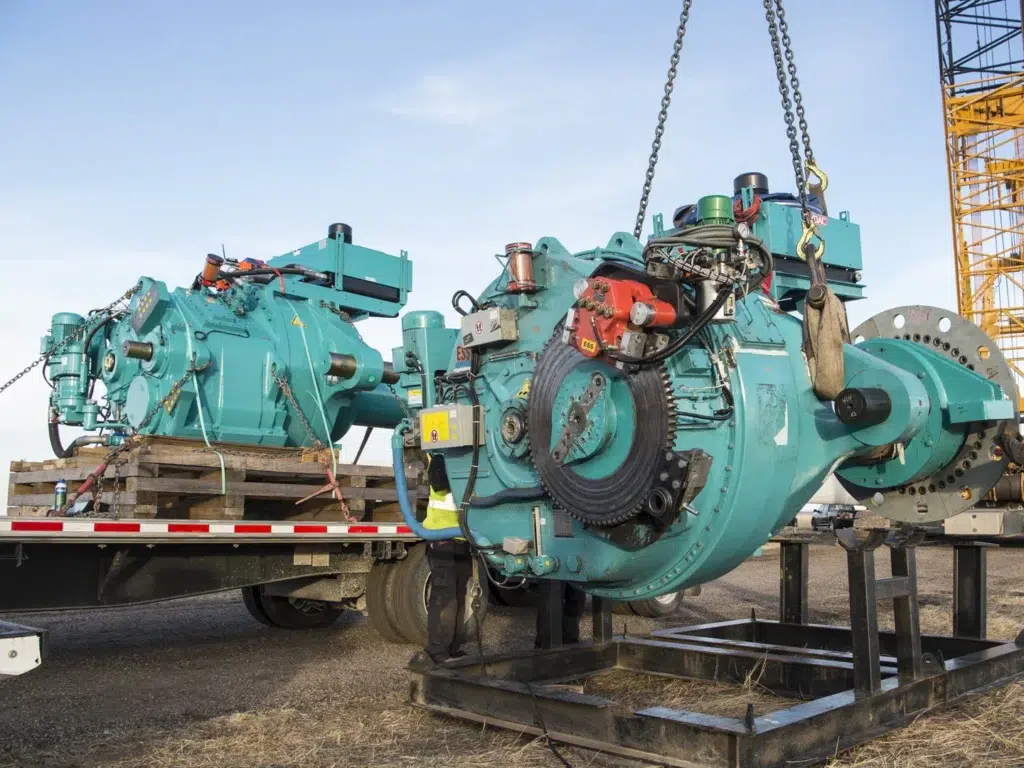
Primary jaw crushers, secondary cone crushers, semi-autogenous grinding (SAG) mills, and extensive overland conveyor networks operate under relentless conditions. Helical, bevel, and planetary gear reducers must withstand high shock loads, severe cyclical vibrations, and fine airborne abrasive dust.
When a multi-stage gear reducer on an ore apron feeder or overland conveyor fails, the entire facility stops. Following proper industrial practices outlined in Everything You Need to Know About Gearbox Repair helps maintenance teams identify root causes—whether that means lubricant breakdown, thermal stress, or mechanical misalignment—rather than simply replacing parts blindly.

High shock loads from massive rocks hitting crusher feed plates frequently cause bearing journal fretting and housing bore distortion. When bearing seats lose their roundness, shaft centerlines shift, causing gear teeth to misalign and chip. Re-machining the gearbox housing back to original factory tolerances is essential. Reviewing The Ultimate Guide to Line Boring Rebuild Services shows how precision horizontal line boring restores bore geometry and shaft parallelism, preventing premature tooth failures.
Similarly, heavily scored or undersized shaft journals can be rebuilt rather than scrapped. Maintenance engineers can read The Art of the Weld: How to Build Up and Repair Worn Shafts to see how specialized submerged arc welding, post-weld thermal stress relief, and final finish-machining restore original shaft dimensions and strength.
Environmental Regulations, Permitting Reforms, and Sustainability Standards
American mining operations run under comprehensive environmental regulatory frameworks overseen by multiple state and federal authorities, including the EPA, the U.S. Army Corps of Engineers, and the Bureau of Land Management.
Key regulatory considerations include:
- Toxics Release Inventory (TRI): Metal extraction facilities monitor and report annual material movements under EPA TRI regulations, accounting for waste rock disposition and metallurgical reagent handling.
- Clean Water Act Section 404: Wet processing facilities, sand and gravel dredging operations, and tailings containment facilities must maintain strict effluent control systems to protect local watersheds.
- Permitting Compression: FAST-41 federal tracking dashboards and targeted environmental review reforms have streamlined review times for qualifying critical mineral projects, cutting certain historical two-year delays down to several months.
- Land Reclamation & Carbon Management: Mining operations have restored more than 3.3 million acres of historical mine lands into agricultural acreage, commercial hubs, and wildlife reserves. Advanced industrial operations are also adopting carbon capture, utilization, and storage (CCUS) while repurposing coal combustion by-products into high-strength concrete.
Frequently Asked Questions About US Mining Trends
How many active mines operate in the United States and what do they produce?
There are 12,616 active mining operations across the United States according to federal agency databases. These sites range from high-tonnage construction aggregate, sand, gravel, and limestone quarries to massive open-pit copper mines, underground metallurgical coal mines, gold extraction facilities, and industrial phosphate operations.
What are the main critical minerals driving domestic investment through 2026?
Current investments focus heavily on lithium for high-density battery storage, rare earth elements for industrial permanent magnets, scandium for aerospace alloys, synthetic and natural graphite for battery anodes, bauxite for high-temperature refractory linings, and copper to support power transmission lines and AI data center infrastructure.
How are mining operators combating equipment downtime and declining ore grades?
Because lower ore grades require processing higher material volumes, operators depend on continuous throughput. Facilities use real-time acoustic sensors, automated process controls, and predictive vibration monitoring. When heavy drivetrains show wear, maintenance teams partner with dedicated rebuild centers to complete precision overhauls, custom gear grinding, and housing line boring before a catastrophic failure occurs.
Conclusion
Securing domestic mineral independence requires dependable extraction infrastructure and maximum plant uptime. When high shock loads, abrasive dust, and continuous operation wear down your equipment, having a reliable repair partner keeps your operation running efficiently.
At Specialty Gear Drives, we restore heavy industrial drive systems for quarries, open pits, cement plants, and mineral processing facilities. All overhaul, reverse engineering, custom gear manufacturing, and precision line boring work is performed in-house at our dedicated Largo, Florida machine shop. We provide 24–48 hour emergency repair turnaround, free pickup and delivery across Florida, Georgia, Alabama, South Carolina, Mississippi, and Louisiana, savings up to 60% compared to purchasing new units, and a comprehensive 24-month operational warranty.
If your plant is dealing with noisy drive units, excessive heat, or unexpected downtime on an apron feeder, grinding mill, or bucket elevator drive, visit our Industrial Gearbox Repair page to arrange fast transport and restore your equipment to factory tolerances.