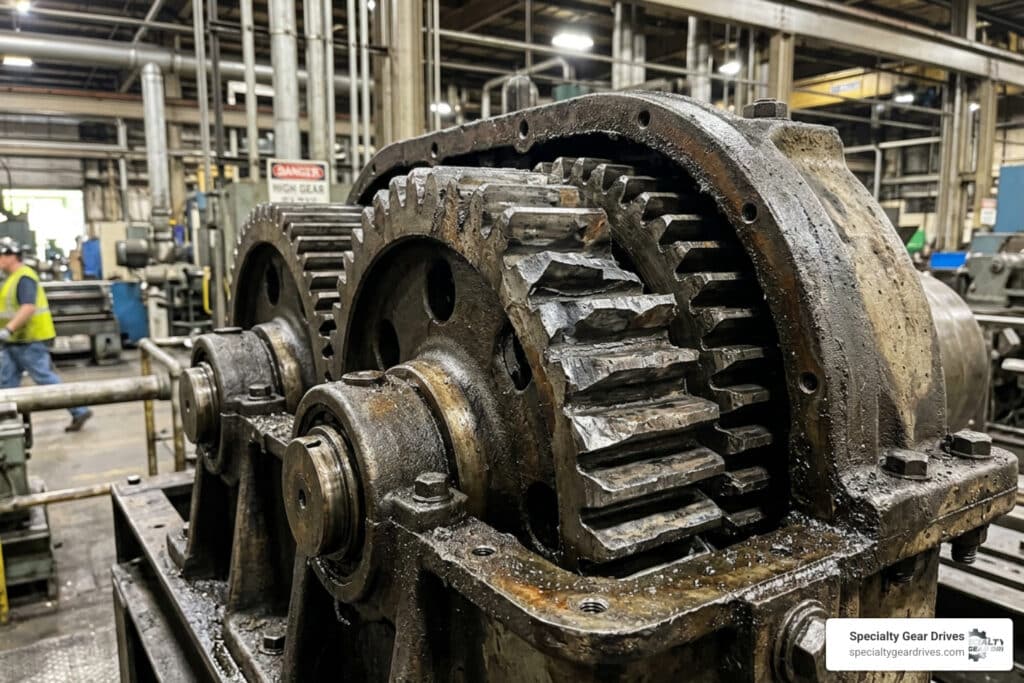
Finding reliable gearbox repairing near me can mean the difference between a half-day fix and a two-week production shutdown. Here’s a quick look at what to know before you pick up the phone:
| What You Need | What to Look For |
|---|---|
| Fast turnaround | Shops offering 24-48 hour emergency service |
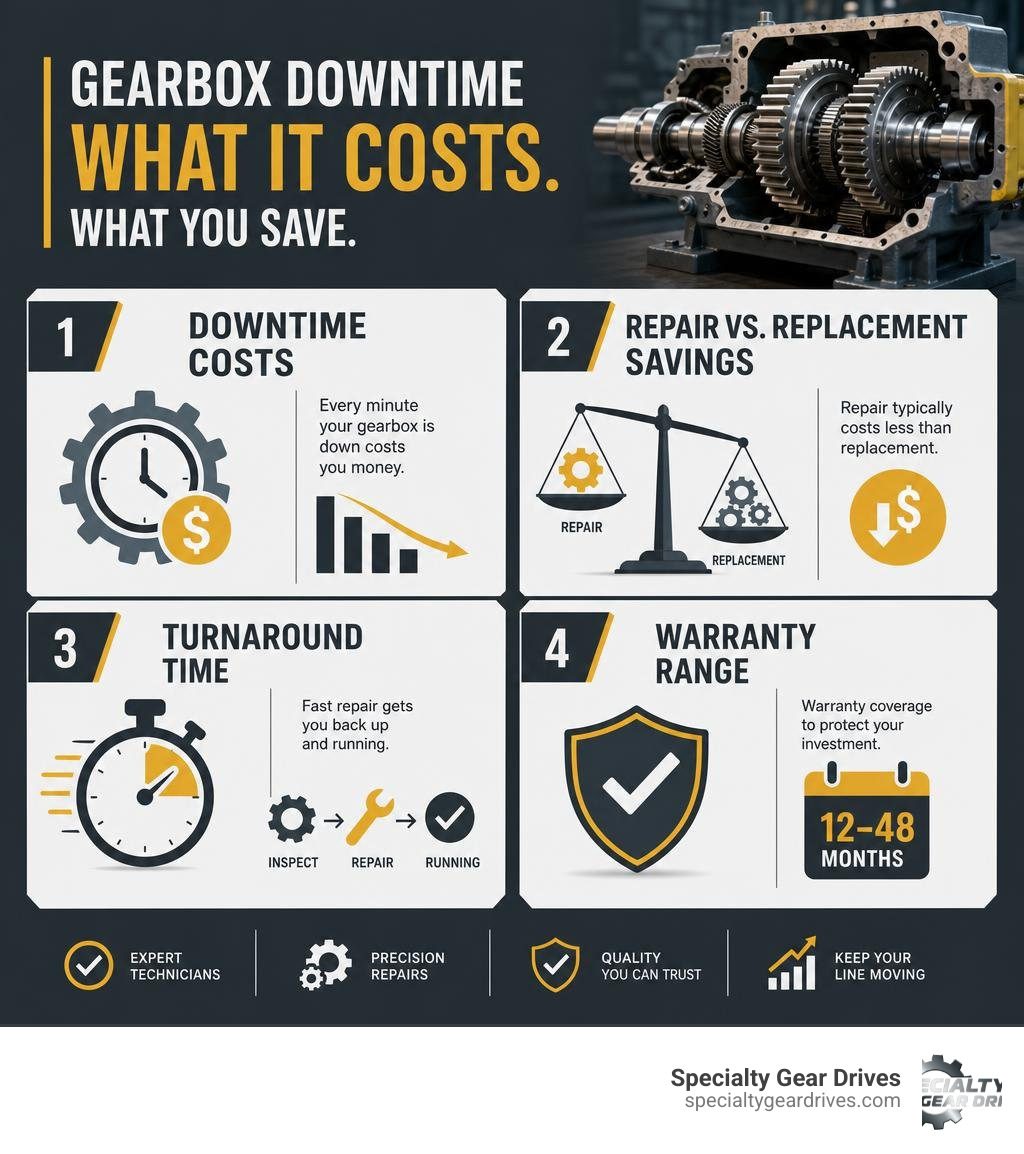
| Cost savings | Repair typically saves 40-60% vs. buying new |
| Quality assurance | AGMA-certified process, OEM-spec parts |
| Warranty | 12 to 48 months depending on the provider |
| Obsolete parts | Reverse engineering capability on-site |
If your plastics extruder or pulp mill gearbox just went down, you already know the math. Every hour offline isn’t just a maintenance headache — it’s lost throughput, missed orders, and pressure from above.
The problem is that OEM replacement units often carry lead times of weeks. A broken pinion tooth that would take an experienced repair shop a day or two to fix could sideline your line for months if you’re waiting on a new unit from the manufacturer.
That’s exactly why knowing where to find a trusted local industrial gearbox repair specialist — before you need one — is so important for plant managers.
This guide walks you through everything: warning signs, what the repair process actually looks like, how to compare repair versus replacement costs, and what questions to ask any shop before you hand over your equipment.
Why Local Businesses Need Fast Gearbox Repairing Near Me
In the industrial landscape of Florida and across the United States, logistics dictate your bottom line. When a critical speed reducer or gear drive fails in a plant, the physical distance between your facility and the repair shop directly impacts your recovery time.
If you ship a four-ton industrial gearbox across the country for service, you are looking at days of transit time, thousands of dollars in freight costs, and a complete lack of control over the process. Working with a regional specialist changes the entire equation.
Local logistics mean we can offer rapid response times that national conglomerates simply cannot match. When a gearbox fails, you cannot afford to wait for a freight broker to schedule a pickup next Tuesday. A regional partner can have a truck at your loading dock the same day, minimizing the shipping lag and getting the unit onto a teardown table immediately.
Furthermore, a regional relationship allows for direct communication. You can visit the shop, look at the disassembled components yourself, and discuss the failure analysis with the lead engineer. This level of transparency is impossible when your equipment is sitting in a massive, faceless facility halfway across the continent.
While automotive transmission repair shops—such as Randy’s Auto Repair and Tire or other consumer garages listed on Yelp in Largo—serve local drivers, industrial operations require heavy-duty engineering capable of handling massive torque and scale. Similarly, international automotive workshops like The Gearbox Centre Dorset in the UK, Gearbox Bradford, Spencer’s Workshop in South Africa, Gearbox King in Singapore, or The Gearbox Auto Services in Dubai keep local passenger vehicles running. However, for domestic manufacturing plants, finding a dedicated industrial partner right here in the USA is paramount to keeping the wheels of industry turning.
Industries That Rely on Gearbox Repairing Near Me
Industrial gearboxes are the unsung workhorses of modern manufacturing. They convert high-speed, low-torque motor outputs into the brute force required to move heavy materials, mix dense compounds, and run continuous production lines. Several key sectors rely heavily on local, high-speed repair services to keep their operations online:
- Plastics Manufacturing: Extruders and injection molding machines subject gearboxes to immense, continuous thrust loads. A sudden bearing failure or gear alignment issue can freeze an entire production run, causing raw polymer to cool and harden inside the machinery—a true maintenance nightmare.
- Food Processing: Conveyors, mixers, and packaging lines in food plants run on tight schedules where sanitation and uptime are critical. Gearboxes in these environments must withstand frequent washdowns and constant start-stop stress.
- Pulp and Paper: The massive rollers and pulpers used in paper mills require continuous, high-torque operation. Any interruption in these heavy-duty drives can cause paper webs to tear, resulting in hours of cleanup and thousands of dollars in lost product.
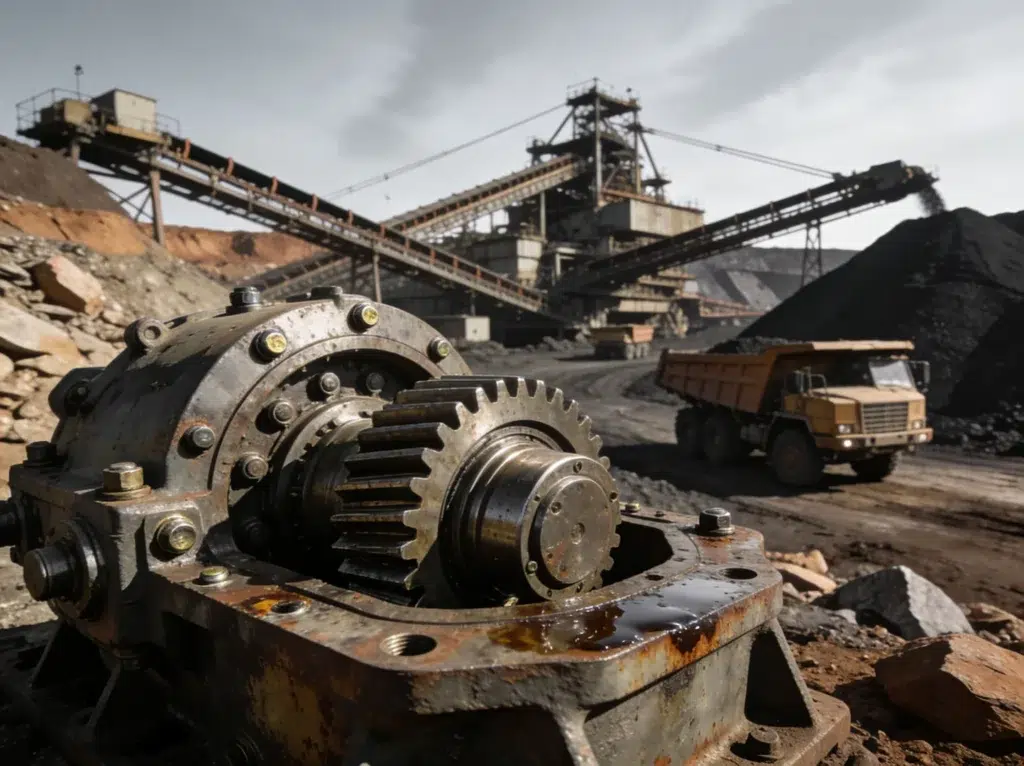
- Power Generation & Mining: From coal pulverizers to cooling tower drives and conveyor systems, these heavy industries subject gear drives to extreme dust, vibration, and environmental stress, making routine rebuilds a necessity.
Key Factors When Selecting Gearbox Repairing Near Me
When searching for the right partner to rebuild your machinery, you should look beyond a basic web search. A qualified industrial shop must possess specific capabilities to ensure your rebuilt gearbox performs as well as—or better than—a brand-new unit:
- Comprehensive Warranties: A shop’s confidence in its work is reflected in its warranty terms. Look for providers that offer substantial coverage, such as a 24-month warranty on rebuilds. Some premium services even offer warranties that only activate once the equipment is placed back into active service, protecting your investment if the unit is kept as a spare.
- Emergency Turnaround Times: Standard repairs typically take 7 to 10 business days. However, when an emergency strikes, you need a partner capable of executing a turnaround in 24 to 48 hours. This requires a dedicated night shift, in-house machining, and a deep inventory of raw materials.
- Reverse Engineering Capabilities: Original Equipment Manufacturers (OEMs) often charge premium prices for replacement parts, or worse, they may have discontinued support for your legacy model entirely. A top-tier repair shop can reverse engineer worn gears and shafts, producing exact replicas in-house without needing the original drawings.
- Adherence to AGMA Standards: The American Gear Manufacturers Association (AGMA) sets strict guidelines for gear tolerances, metallurgy, and assembly. Any shop you choose should build and test units to meet or exceed these rigorous industry standards.
For more details on how these factors impact your machinery’s lifespan, explore our comprehensive guide on Industrial Gearbox Repair.
The Step-by-Step Industrial Gearbox Repair Process
A reliable industrial repair is never a simple patch job. It is a highly structured, engineering-driven process designed to identify the root cause of a failure and rebuild the unit to withstand future operational stresses. Here is exactly what happens behind the scenes when a heavy-duty speed reducer enters a professional machine shop.
Inspection and Diagnostic Testing
The process begins the moment the gearbox arrives at the facility. Before a single bolt is turned, technicians document the external condition of the unit, noting any visible oil leaks, structural cracks, or missing hardware.
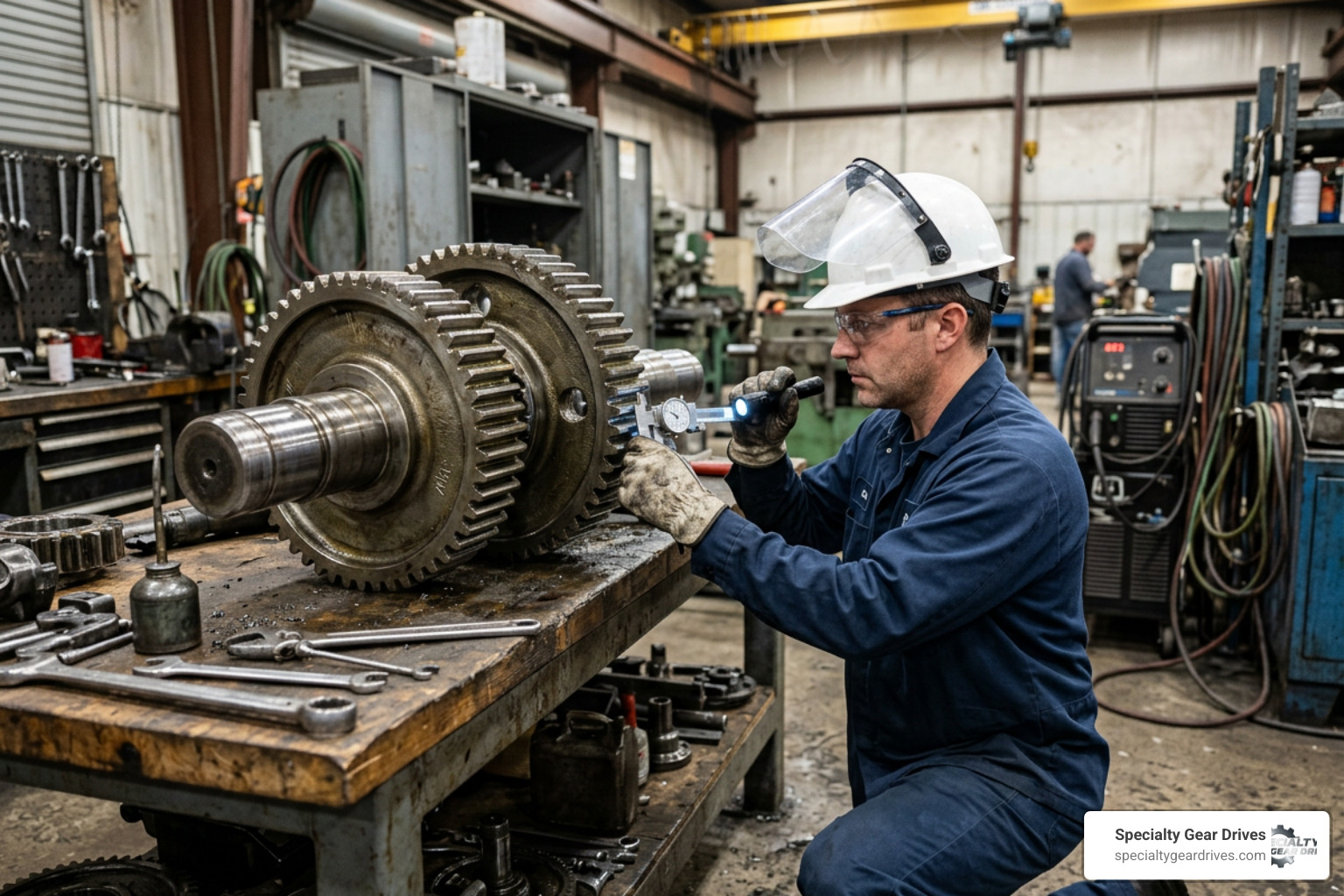
Once documented, the unit undergoes a careful teardown. Every component is cataloged, and the internal elements are thoroughly cleaned of old grease, oil, and metallic debris. This cleaning is essential for accurate non-destructive testing (NDT), which includes magnetic particle inspection to find microscopic cracks in the gear teeth and shafts that are invisible to the naked eye.
During this diagnostic phase, engineers focus on several critical measurements:
- Backlash Measurement: Checking the play between mating gear teeth to ensure it falls within OEM specifications.
- Tooth Contact Patterns: Applying a marking compound to the gear teeth to analyze how they mesh under load. Uneven wear patterns often point to shaft misalignment or housing distortion.
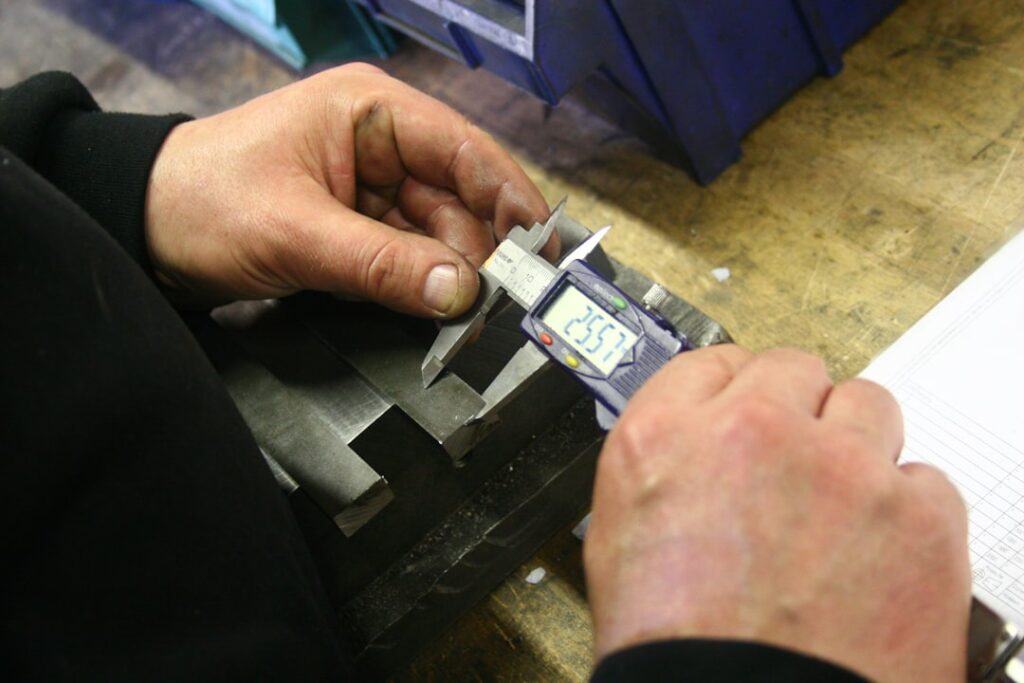
- Shaft Runout and Bearing Fits: Measuring the shafts to ensure they are perfectly straight and checking the bearing journals for wear that could cause rotational instability.
Once the inspection is complete, the shop compiles a detailed diagnostic report, complete with photographs of the damaged components. This report is shared with you alongside a firm quote before any repair work begins, ensuring there are no surprises on your final invoice.
Rebuilding and Quality Assurance Testing
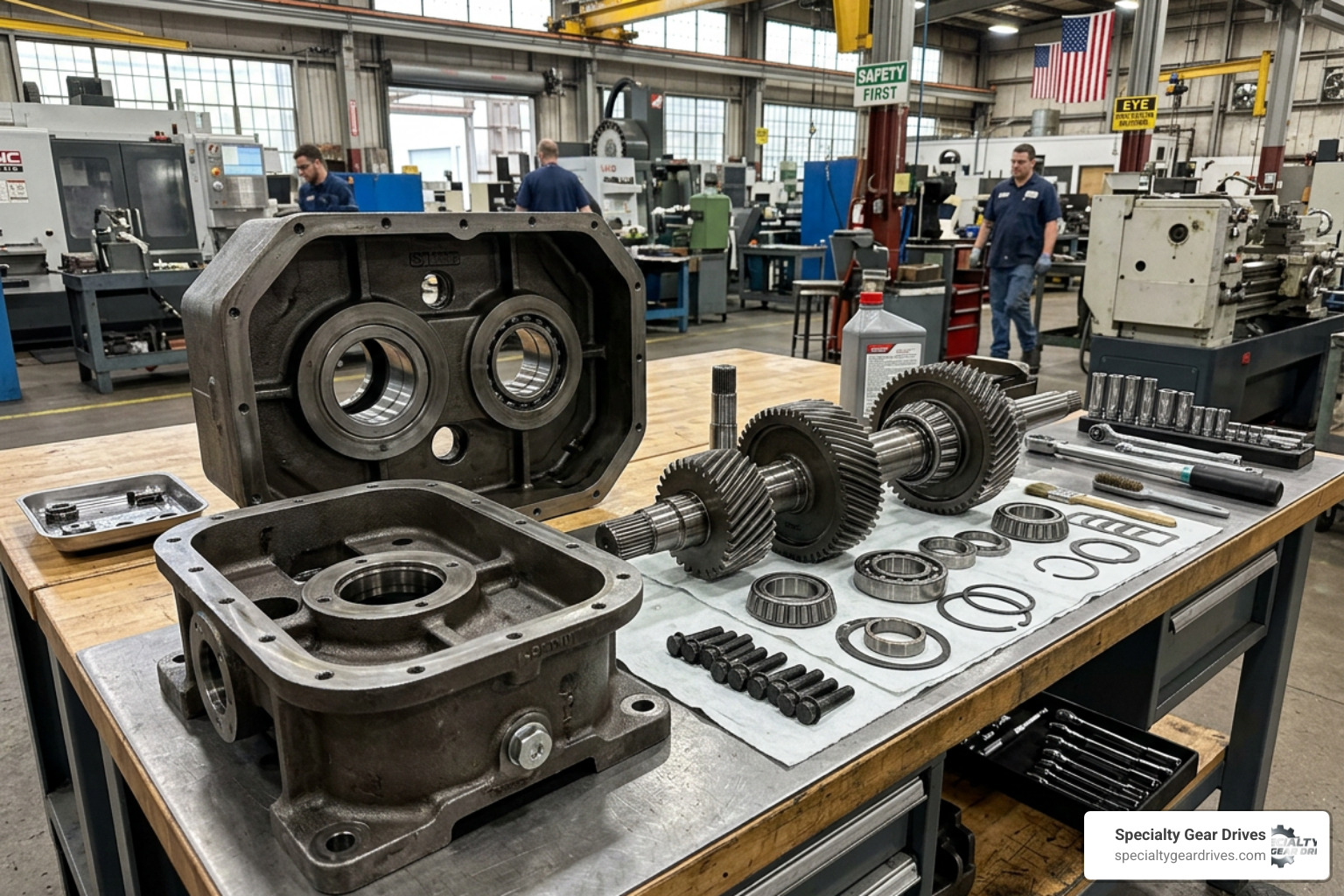
With your approval, the rebuild phase begins. Technicians replace all standard wear items, including bearings, seals, and gaskets. If the gears themselves are pitted, chipped, or broken, the shop will either source OEM replacements or manufacture custom gears to match. You can learn more about these specialized manufacturing capabilities by visiting our Custom Gear Manufacturing page.
After the new components are prepped, the gearbox is carefully reassembled. Technicians record tooth contact and backlash once again during assembly to verify that the internal geometry is flawless.
Before the gearbox is crated for shipping, it must pass a rigorous quality assurance protocol. This includes a no-load spin test at its rated operating speed. Engineers monitor the unit for several hours, using vibration sensors and thermal imaging cameras to ensure there is no abnormal heat buildup or rotational vibration. Only after passing these tests is the unit painted, sealed, and prepared for transport back to your facility.
Repair vs. Replacement: Making the Cost-Effective Choice
When a critical gearbox fails, plant managers face a fundamental decision: do you repair the existing unit or purchase a brand-new replacement? While buying new might seem like the simplest path, rebuilding the unit is almost always the more economical and efficient choice.
Rebuilding an industrial gearbox typically saves 40% to 60% compared to the cost of purchasing a new OEM unit. On large, high-torque gearboxes, this cost difference can easily translate into tens of thousands of dollars saved.
Beyond the direct financial savings, lead times are often the deciding factor. A new industrial gearbox from a major manufacturer can have a lead time of 12 to 20 weeks, especially if the unit is imported or custom-configured. In contrast, a comprehensive rebuild can usually be completed in 7 to 10 business days—or as quickly as 24 to 48 hours in emergency situations.
Additionally, rebuilding is a highly sustainable choice. It keeps tons of high-grade industrial steel out of scrap yards and drastically reduces the carbon footprint associated with manufacturing and shipping a brand-new housing and gear set.
| Factor | Rebuilding / Repairing | Buying a New OEM Unit |
|---|---|---|
| Average Cost | 40% to 60% of new unit price | 100% retail price + shipping |
| Typical Lead Time | 7 to 10 days (24-48 hours for emergencies) | 12 to 20+ weeks |
| Warranty Coverage | Up to 24 months (often match OEM) | 12 to 24 months |
| Environmental Impact | Low (reuses housing and viable gears) | High (requires full raw material processing) |
| Legacy Compatibility | Perfect (retains original footprints) | Risk of dimensional changes in newer models |
If you are currently weighing these options for a downed machine, you can get a rapid, no-obligation inspection and quote by visiting our Contact Us page.
Frequently Asked Questions About Industrial Gearbox Repair
How long does a typical industrial gearbox repair take?
Under normal circumstances, a standard industrial gearbox repair takes about 7 to 10 business days. This timeline allows for a complete teardown, cleaning, non-destructive testing, sourcing or machining of replacement parts, reassembly, and a multi-hour spin test. However, if your plant is experiencing catastrophic downtime, premium shops can provide 24-to-48-hour emergency rush services to get your operations back online over a single weekend.
Can obsolete or out-of-production gearboxes be repaired?
Yes, absolutely. A professional industrial gear shop does not rely solely on off-the-shelf OEM parts. By utilizing advanced reverse engineering, engineers can measure a worn or broken gear, determine its exact module, pressure angle, and metallurgy, and manufacture a brand-new replacement gear from scratch. This allows plants to extend the lifespan of legacy machinery indefinitely, avoiding the massive capital expenditure of retrofitting an entire production line to fit a modern gearbox footprint.
What kind of warranty should I expect on a rebuilt gearbox?
You should expect a warranty that matches or exceeds the original OEM coverage. A reputable industrial repair service will offer a 12-to-24-month warranty on all parts and labor. For the ultimate peace of mind, look for a warranty that only begins when the unit is installed and put into operation, rather than when it is delivered to your warehouse.
Conclusion
When an industrial gearbox fails, you do not have to accept weeks of costly downtime or the exorbitant expense of a brand-new replacement unit. By partnering with a local, specialized repair expert, you can restore your machinery to OEM-spec performance quickly, safely, and cost-effectively.
At Specialty Gear Drives, based in Largo, Florida, we specialize in rebuilding and repairing heavy-duty industrial gearboxes for demanding industries like plastics, food processing, and pulp and paper. We understand that downtime is your enemy, which is why we offer:
- 24 to 48-Hour Emergency Services to get your lines running fast.
- Free Pickup and Delivery throughout Florida and our regional service areas.
- Up to 60% Savings compared to the cost of buying a new unit.
- An Industry-Leading 24-Month Warranty on our work.
Don’t let broken machinery grind your production to a halt. Contact us today to schedule your industrial gearbox repair, or visit our Home page to browse our full capabilities and view our work in our Gallery. Let us help you keep your business moving forward.